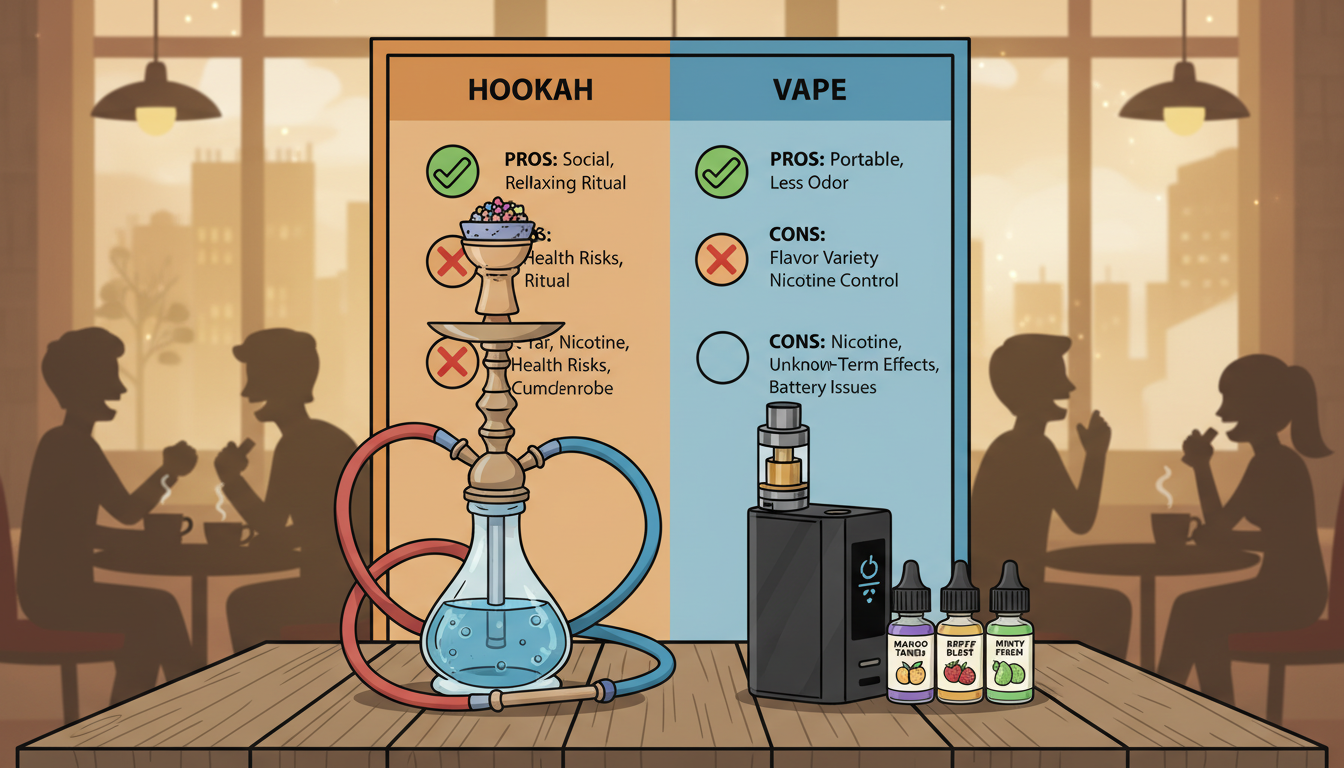
Did you know that over 40% of college students have tried waterpipe smoking at least once? This is according to the American Lung Association. It shows how popular alternative smoking methods have become in the United States.
You might be thinking, which one is better for me? The hookah vs vape comparison is a big debate among young adults. They’re looking for something different from traditional cigarettes.
Hookah and vaping offer unique experiences. They both give flavored nicotine, but in different ways. Each has its own social settings and health concerns.
Many think water filtration makes one safer. Others believe electronic devices get rid of combustion risks. The truth isn’t that simple.
This guide will tell you everything you need to know. You’ll learn the real benefits and drawbacks of each. We’ll look at health effects, costs, flavors, and lifestyle factors that matter to you.
By the end, you’ll have all the information you need. You’ll be able to choose what fits your personal values and priorities.
Key Takeaways
- Over 40% of college students have tried waterpipe smoking, making it a widespread practice among young adults in the United States
- Neither shisha nor vaping is risk-free, despite common beliefs about water filtration or lack of combustion making them safe
- Both methods offer flavored experiences and serve as alternatives to traditional cigarettes, but each carries unique health considerations
- The American Lung Association and CDC have raised concerns about both waterpipe smoking and electronic cigarette use
- Understanding the real benefits and drawbacks helps you make informed decisions aligned with your health priorities
- Social aspects, costs, flavor varieties, and lifestyle factors differ significantly between these two smoking methods
Understanding Hookah: A Brief Overview
Hookah has been around for centuries, giving a unique smoking experience unlike vaping. To understand the hookah vs vape differences, you need to know what hookah is. It’s a social ritual with deep historical roots.
The Waterpipe Device Explained
A hookah is a traditional waterpipe that uses burning charcoal to heat tobacco. It has several key parts that work together to create its unique smoking experience. At the top, you place flavored tobacco, known as shisha.
When using a hookah, burning charcoal heats the tobacco bowl. This process creates thick, flavorful smoke. The smoke then bubbles through water in the base chamber.
This cooling process makes the smoke smooth. The cooled smoke travels up through hoses, where you inhale it through a shared mouthpiece.
The shisha tobacco mixture combines tobacco leaves with molasses or honey, glycerin, and flavorings. This creates the aromatic smoke hookah is famous for.
This tobacco preparation is different from cigarettes or other smoking methods. The added ingredients make the smoke thick and sweet. Popular flavors include fruity options, minty blends, and exotic combinations.
Understanding these mechanics shows why hookah is different from vaping. Hookah involves actual combustion and tobacco, creating a unique experience.
Cultural Origins and Traditional Significance
Hookah smoking has roots over 400 years old in India and the Middle East. It quickly spread, becoming a big part of social and cultural life. Hookah is linked to many important traditions and celebrations in Middle Eastern communities.
Throughout history, people have gathered around hookahs during religious ceremonies, weddings, and community events. Today, it’s about sharing stories, music, and conversation. Hookah lounges and cafes became popular places for socializing.
These venues created spaces for meaningful social interaction. The shared mouthpiece and group setting highlight the collaborative nature of the experience.
This rich cultural heritage explains why hookah remains popular today. Many people value its social and traditional aspects as much as the smoking itself. The ceremonial and communal elements set hookah apart from vaping’s individual, convenience-focused approach.
Understanding this historical and social context helps appreciate the differences between hookah and vaping. While vaping is a modern alternative to cigarettes, hookah carries centuries of tradition and cultural meaning. This background is important when choosing between the two.
Understanding Vaping: A Brief Overview
If you’re looking into hookah vs vape differences, knowing what vaping is key. This modern smoking alternative has grown fast over 20 years. Learning about vaping’s mechanics and history helps you compare better.
The Mechanics of Electronic Vaping
Vaping uses electronic devices to heat liquid into an inhalable aerosol. These devices are called e-cigarettes, vape pens, or mods. Unlike hookah, which burns tobacco, vaping devices use battery-powered heating elements called atomizers.
The liquid being heated is called vape juice or e-liquid. It usually has propylene glycol and vegetable glycerin as base ingredients. Most also include flavorings and nicotine, but there are nicotine-free and THC options too.
When you turn on your device—by pressing a button or inhaling—the heating element warms the e-liquid. This turns the liquid into vapor without burning. You then inhale and exhale this vapor, a key difference from hookah.
Vaping devices vary in form and size. Some look like traditional cigarettes, while others are larger and customizable. Advanced mods let you adjust settings to your liking.
Vaping doesn’t involve combustion, unlike hookah. This difference affects everything from the user experience to the substances you inhale. Knowing this helps understand the main differences between these two methods.
How Electronic Cigarettes Emerged
Vaping is new compared to hookah’s long history. The modern electronic cigarette was developed in the early 2000s. Chinese pharmacist Hon Lik is often credited with creating the first commercially successful device in 2003.
Hon Lik’s invention was motivated by his father’s death from smoking. He wanted a safer alternative. His design used ultrasonic technology to vaporize a nicotine solution, laying the groundwork for today’s devices.
Vaping became popular in the 2010s. The United States and Europe saw fast adoption as manufacturers marketed them as smoking cessation tools. Many saw electronic cigarettes as a less harmful alternative to traditional tobacco.
Technology in vaping evolved quickly. Innovations like pod systems, nicotine salts, and temperature control became common in just a few years. This contrasts sharply with hookah’s unchanged design over centuries.
Today’s vaping offers a wide range of flavors and devices. This technological approach to nicotine delivery has attracted millions seeking convenience, customization, and variety that traditional methods can’t match.
While vaping lacks hookah’s cultural heritage, it represents a modern solution with technology at its core. Understanding its brief history helps appreciate why these two methods appeal to different preferences and lifestyles.
Health Effects of Hookah
Hookah smoking has serious health effects that go beyond what many think. It affects your immediate health and long-term well-being. The idea that water filters out harmful substances is a dangerous myth.
Knowing the hookah drawbacks vs vape drawbacks helps you choose better for your health. The data shows surprising facts about exposure levels, different from traditional cigarettes.
Immediate Physical Reactions
During a hookah session, your body changes in ways many users think are pleasant. But the reality is not. You get nine times more carbon monoxide than from a single cigarette, which can make you feel lightheaded.
Your heart rate goes up during smoking. Blood pressure also rises as your heart works harder to get enough oxygen.
A typical hour-long session involves over 100 puffs (sometimes up to 200), compared to just 20 puffs from a cigarette. This means you inhale about 90,000 ml of smoke versus only 500-600 ml from a traditional cigarette. This is a huge difference that stresses your respiratory system.
The charcoal used to heat the tobacco adds more toxins to your smoke. Heavy metals and harmful compounds enter your lungs with each breath. Many people experience respiratory irritation, coughing, and throat discomfort even during their first session.
According to health experts, the water in a hookah doesn’t filter out harmful chemicals as commonly believed. It merely cools the smoke, making it easier to inhale deeply and hold in your lungs, which actually increases your exposure to toxins.
| Exposure Metric | Hookah Session (1 hour) | Single Cigarette | Comparison Factor |
|---|---|---|---|
| Number of Puffs | 100-200 puffs | 20 puffs | 5-10x more |
| Smoke Volume Inhaled | 90,000 ml | 500-600 ml | 150-180x more |
| Carbon Monoxide Exposure | High concentration | Standard level | 9x more |
| Nicotine Content | Nearly double | Standard amount | 2x more |
| Session Duration | 60 minutes average | 5-7 minutes | 8-12x longer |
The table above clearly shows how hookah smoking sessions expose you to dramatically higher levels of harmful substances. A daily hookah session is equivalent to smoking 10 cigarettes in terms of overall exposure and health impact.
Chronic Disease Development
Regular hookah use leads to serious long-term health consequences. Your risk profile changes significantly when hookah becomes a routine habit.
Cancer risks increase substantially with long-term use. Your chances of developing lung cancer more than double compared to non-smokers. You also face elevated risks for bladder cancer, stomach cancer, esophageal cancer, and oral cancers.
At least 82 toxic chemicals and carcinogens have been identified in hookah smoke. These include nicotine, tar, and heavy metals that accumulate in your body over time. The smoke contains many of the same unhealthy chemicals found in cigarettes, despite the filtering through water.
Your cardiovascular system takes a serious beating from regular hookah smoking. Long-term use significantly raises your risk for heart disease, high blood pressure, and high cholesterol. Clogged arteries become more likely as plaque builds up in your blood vessels.
Heart attacks and strokes become real threats as your vascular health deteriorates. The combination of reduced oxygen, increased carbon monoxide, and vascular constriction creates a perfect storm for cardiovascular problems.
Respiratory diseases develop in many long-term users. Research shows that about 10 out of every 100 long-term hookah smokers develop COPD (chronic obstructive pulmonary disease). This serious lung condition makes breathing progressively more difficult and significantly reduces quality of life.
The American Lung Association emphasizes that there’s no safe level of hookah use. The longer you smoke, the more likely it becomes that damage to your lungs will be irreversible. Your lung capacity decreases, and respiratory infections become more frequent and severe.
If you’re pregnant and smoke hookah, your baby faces higher risks for low birth weight and respiratory diseases. The toxins pass through the placenta, affecting fetal development in ways that can have lifelong consequences.
When comparing hookah drawbacks vs vape drawbacks, these serious long-term health effects represent some of the most significant concerns. Understanding the full scope of health implications is key for making informed decisions about which option might be less harmful for your specific situation.
Health Effects of Vaping
Vaping affects your body in many ways, both right away and over time. It offers nicotine without the smoke of regular cigarettes. But, it brings its own set of chemicals and health worries. Knowing these effects helps you decide if vaping is good for your health.
The debate on hookah vs vape health effects focuses on what happens in your body when you breathe in vapor. It’s not just flavored air you’re inhaling. You’re also exposing your respiratory system to a mix of substances that can affect your throat and heart.
Immediate Physical Reactions
Right after you start vaping, your body reacts quickly. You might feel throat irritation or a scratchy throat. This is because the vapor contains chemicals that can dry out your mouth and airways.
Many people cough a lot when they vape for the first time. Your lungs are trying to handle the new chemicals. You might also feel short of breath, which is worse when you’re active.
The nicotine in vape juices makes your heart rate and blood pressure go up fast. You might feel more alert at first. But, you could also feel jittery or anxious, which is more likely with high-nicotine products.
Vaping devices give you a lot of nicotine quickly. Unlike hookah, which takes time to set up, vaping is easy to do all day. This makes it easier to get addicted to nicotine faster.
The vapor you breathe in has harmful substances like volatile organic compounds and heavy metals. These chemicals can harm your lungs and are not found in hookah smoke. Flavoring chemicals like diacetyl can cause serious lung damage.
Some people get “vaper’s tongue,” a temporary loss of taste. Others feel dizzy or nauseous, which is more common with high-nicotine e-liquids. These symptoms show your body is struggling with the chemicals.
Accidental poisoning from e-liquid is a big concern. Children and adults can get poisoned by swallowing, breathing, or touching the liquid. The high nicotine in refill bottles is very dangerous, even for adults.
Extended Use Consequences
The long-term effects of vaping are not fully understood yet. But, research shows vaping can lead to nicotine addiction. This is very dangerous for young people whose brains are not fully developed.
In recent years, there have been cases of EVALI—E-cigarette or Vaping product use-Associated Lung Injury. While most cases were linked to THC products, these incidents show we don’t know enough about vaping’s long-term effects. Some patients suffered permanent lung damage.
Vaping can also harm your heart and blood vessels. Studies show it can affect how your blood vessels work, increasing your risk of heart disease. Researchers are studying these effects worldwide.
Pregnant women should avoid vaping because it can harm their baby’s brain development. Nicotine can affect your baby’s cognitive function and behavior later in life. Some e-cigarettes have even more nicotine than regular cigarettes, making these risks worse.
How Vaping Stacks Up Against Hookah
Comparing hookah vs vape health effects shows both have risks. Hookah exposes you to tar and carbon monoxide, but vaping avoids these. You won’t inhale smoke particles or deal with carbon monoxide poisoning like with hookah.
But, vaping has its own chemical concerns. The diacetyl used for flavoring, metals from the coils, and volatile organic compounds created during vaping don’t appear in hookah smoke. These substances pose their own health risks that researchers are studying.
| Health Factor | Hookah Effects | Vaping Effects |
|---|---|---|
| Nicotine Delivery | High amounts during occasional sessions | Frequent doses throughout the day |
| Combustion Byproducts | Tar, carbon monoxide, ash particles | None (uses heating, not burning) |
| Unique Chemicals | Charcoal toxins, tobacco-specific compounds | Diacetyl, heavy metals, volatile organic compounds |
| Usage Frequency | Typically weekly or monthly social events | Often multiple times daily |
| Addiction Potentia | High due to nicotine content | Very high due to convenience and frequency |
Hookah and vaping differ in how often you use them. Hookah is for occasional social events, while vaping is easy to use anytime. This means vaping can lead to more nicotine intake, even if you vape less often.
Both methods can lead to nicotine addiction. Neither is safe, despite claims that they are better than cigarettes. The tobacco industry has promoted both as safer options, but research shows they have their own health risks.
Choosing between hookah and vaping should not be based on thinking one is safer. Both deliver addictive nicotine and expose you to harmful chemicals. The truth is, neither protects your long-term health, no matter what you’ve heard.
Flavor Options: Hookah vs Vape
Exploring the world of hookah or vaping starts with understanding the big differences between them. Both offer amazing taste experiences that regular cigarettes can’t match. The wide range of flavors available is a key benefit of both options.
Flavor is a big reason people choose these alternatives. Whether you like the traditional taste of shisha or the modern e-liquids, there’s a lot to choose from. Let’s look at what each offers.
Traditional Shisha Taste Experiences
Hookah tobacco, or shisha, has flavors that have been refined over centuries. It’s made by soaking tobacco in molasses or honey with glycerin and flavorings. This creates a rich smoke with complex tastes.
Classic fruit flavors like apple, grape, watermelon, cherry, and peach are popular in hookah. These flavors are deep and fill your mouth with every inhale.
Exotic options like guava, lychee, passion fruit, and mango take you to tropical places. Mint and citrus flavors offer refreshing choices, great for mixing with fruit.
Dessert flavors like vanilla, chocolate, cappuccino, and caramel are also popular. You can even find unique flavors like rose and jasmine that show off hookah’s Middle Eastern roots.
Hookah turns simple tobacco into a symphony of flavors that dance on your palate with each draw.
Hookah lets you mix different shisha flavors to create custom blends. Many people mix two or three flavors in one bowl. Hookah sessions are great for sharing and trying different flavors together.
Premium shisha brands focus a lot on flavor development. They spend years perfecting their recipes. But, it’s important to know that even herbal or tobacco-free shisha can have harmful chemicals from burning, as noted in the differences between hookah and vape.
E-Liquid Variety and Selection
The vaping world has an absolutely staggering number of flavors. With thousands of e-liquid options, vaping offers a huge variety that hookah can’t match. This variety is a big reason vape users like it.
Fruit flavors in vaping range from simple strawberry to complex tropical blends. You can find single-note fruits and sophisticated blends with cooling agents. E-liquid manufacturing allows for very accurate flavor replication.
Dessert e-liquids are a big category. You can find flavors like cookies, cakes, custards, ice cream, donuts, and pastries. These flavors often taste very close to the real thing, satisfying sweet cravings without sugar.
Beverage-inspired options include coffee, tea, soda, energy drinks, and cocktails. Candy flavors replicate gummy bears, sour candies, chocolate bars, and childhood treats. Menthol and mint provide cooling sensations, while tobacco flavors help those quitting cigarettes.
One big benefit of vaping is being able to switch flavors instantly. You can change cartridges or refill your tank in seconds. Hookah requires cleaning and repacking the bowl between flavor changes, which takes more time and effort.
| Feature | Hookah Flavors | Vape Flavors |
|---|---|---|
| Total Variety | Hundreds of established flavors | Thousands of options available |
| Flavor Profile | Rich, thick, molasses-sweetened | Bright, concentrated, clean |
| Switching Speed | Requires cleaning and repacking | Instant cartridge or tank change |
| Customization | Mix shisha tobaccos in bowl | DIY e-liquid mixing, device settings |
| Flavor Intensity | Deep, layered, complex | Sharp, precise, varied by wattage |
Vape flavors are often brighter and more concentrated than hookah. But, some say they lack the depth and richness of traditional shisha. The molasses and honey in hookah create a sweetness and thickness that e-liquid aerosol can’t quite match.
Both methods offer great customization options. Hookah lets you mix different shishas in your bowl. Vaping allows DIY e-liquid mixing or adjusting device settings to change flavor delivery.
Your preference between hookah benefits vs vape benefits depends on your taste. Do you prefer the rich, thick smoke of traditional hookah? Or do you like the cleaner, varied aerosol of vaping?
Both options offer big flavor advantages over traditional cigarettes. This variety is a big part of their appeal, attracting younger users looking for alternatives. Understanding these flavor differences helps you choose based on what matters most to you.
Social Aspects: Hookah Culture
Hookah and vaping are very different when it comes to socializing. Hookah is all about communal celebration, bringing people together. This is why hookah has been loved for centuries and is popular today.
Hookah smoking is a ritual that focuses on connection. It requires your full attention and time, unlike vaping which is quicker.

The Power of Gathering and Shared Moments
Hookah smoking creates a space for genuine connection. When you smoke hookah, you’re with friends or family, passing the hose. These sessions last a long time, giving you quality time in today’s fast world.
Hookah has been a big part of Middle Eastern and South Asian cultures for centuries. It’s been used at weddings, religious ceremonies, and social gatherings. This adds a special meaning to your experience.
Preparing hookah together is part of the bonding. You choose flavors and set up the device together. This makes the experience more shared and exciting.
Hookah makes you slow down and be present. The setup and nature of hookah create a special space for socializing. It’s a meaningful way to spend time with others.
But, there are hygiene concerns with shared hookah use. Germs like herpes and tuberculosis can spread. Many use personal mouthpiece tips or covers to reduce risks.
Despite these risks, the social benefits of hookah are huge. It offers a chance to connect with others, away from screens.
Commercial Spaces That Celebrate Community
Hookah lounges have brought traditional culture to modern America. These places offer a unique atmosphere for hookah lovers. They’re different from bars or vaping shops.
Hookah lounges have comfy seating, low tables, and great music. Staff take care of your hookah, making sure it’s perfect. They also serve tea, coffee, and snacks, making it a café-like atmosphere.
These venues are social destinations for young adults. They’re great for dates, gatherings, and even business meetings. The lively atmosphere makes the experience memorable.
But, lounges can be unhealthy due to secondhand smoke. Everyone breathes the same smoke-filled air, which is harmful. It’s important to be aware of these risks.
Laws around hookah lounges vary. Some places have special rules or exemptions. But, laws are getting stricter, requiring permits and proper ventilation.
Hookah lounges show how traditional practices fit into modern life. They keep the communal spirit of hookah alive, making it easy to enjoy. These places are where community forms through shared experiences.
Social Aspects: Vaping Community
Vaping has created its own community, different from hookah. While hookah is about group gatherings, vaping lets you connect with others online or in person. These communities offer many ways to meet people who share your interests.
Vaping devices are easy to carry, making them perfect for any time of day. You can vape anywhere, fitting it into your life easily. Yet, strong social bonds form around shared interests in tech, flavors, and advocacy.
Vape Shops and Events
Vape shops are more than just stores—they’re community hubs. They offer knowledge, support, and a place to meet others. Staff at these shops can help you choose the right device and products.
Many shops have tasting bars where you can try different e-liquids. This lets you explore flavors and nicotine levels in a friendly setting. Some shops even host vape nights for socializing.
The vaping world hosts impressive events. Cloud chasing competitions are popular, where people compete to make the biggest vapor clouds. These contests are fun and showcase skill.
Vape expos and trade shows draw thousands of people. You’ll find:
- Product demos from top brands
- Seminars on safety and best practices
- Networking with industry pros
- Special deals on new devices and e-liquids
These events are different from hookah lounges. They focus on individual preferences and tech advancements. You connect with others who value vaping’s portability and customization.
Online Communities
Online spaces are key to the vaping community. Social media, forums, and content sites are where vapers worldwide connect. This fits vaping’s mobile lifestyle perfectly.
Reddit has active vaping groups for sharing reviews and advice. YouTube offers tutorials on vaping. Instagram showcases stunning vape setups and photos.
Online communities are valuable for many reasons:
- Reading honest reviews before buying
- Getting help with vaping issues
- Staying updated on vaping laws and advocacy
- Building friendships with like-minded people
- Finding support for quitting smoking
These communities are always available, just like vaping. You’re never alone when thousands of experts are just a click away.
But online vaping communities face challenges. Some platforms restrict vaping content to protect minors. Yet, the community stays strong, finding ways to connect and share info responsibly.
The hookah vs vape experience shows different ways to connect. Hookah is about being together, while vaping is about online and in-person connections. Both offer meaningful ways to meet others, fitting each activity’s unique nature.
Cost Comparison: Hookah vs Vape
Hookah and vaping both have costs beyond the initial purchase. They require ongoing expenses. Knowing these costs helps you budget and choose wisely.
When comparing hookah vs vape, cost is key. Some think one is much cheaper, but it really depends on how often you use it.
Getting Started: What You’ll Spend Upfront
The first cost is important. It sets the stage for your smoking experience. The price varies based on quality and features.
Hookah beginners start with a pipe. Basic ones cost $30 to $50. But, premium handcrafted pieces can be $200 to $500 or more.
You’ll also need:
- Shisha tobacco package: $5-$20 depending on brand and quantity
- Hookah coals: $10-$20 for a box of natural coals
- Aluminum foil or heat management device: $2-$40
- Cleaning brushes and supplies: $5-$15
- Extra hoses or mouthpieces: $5-$25
- Carrying case (optional): $15-$50
A starter hookah setup costs $75 to $150 for basic options. Better quality lasts longer and costs $200 and $400. You might also need a table or stand for home use.
Vaping has a different upfront cost. Disposable vapes cost $5 to $15 and need no extra spending, but they’re not cost-effective long-term.
Pod systems like JUUL cost $10 to $35 for the battery unit. Mid-range vape pens are $20 to $60. Advanced mod systems can be $50 to $200 or more.
Your first vaping purchase includes:
- E-liquid bottles: $10-$25 for your first supply
- Spare replacement coils: $10-$20 for a pack
- Charging cable (usually included)
A basic vaping setup costs $30 to $80 for pod systems. More advanced devices start at $60 to $150. Vaping’s initial cost is generally lower than hookah, and devices are ready to use right away.
Monthly Expenses: The Real Long-Term Investment
Monthly costs show your true financial commitment. These expenses add up over time.
Hookah users spend on supplies. Shisha tobacco costs $10 to $25 per 250g, lasting 15 to 25 sessions. Coals cost $10 to $20 for a box, lasting 10 to 30 sessions.
Replacement parts like hoses or bowls cost $5 to $30 as needed. If you smoke 2 to 3 times weekly at home, expect to spend $40 to $80 per month on supplies.
Hookah lounge visits are more expensive. Sessions cost $15 to $30 per person, plus tip and food or drinks. Weekly visits can cost $60 to $120 or more monthly.
Vaping costs include e-liquid. Bottles cost $10 to $30 and last 1 to 4 weeks. Replacement coils cost $10 to $20 for a pack, lasting 1 to 2 weeks.
Pod system users spend $15 to $30 per pack of prefilled pods. Usage time varies. Heavy vapers might spend $50 to $150 monthly, while light users might spend $20 to $50.
| Cost Category | Hookah (Home Use) | Hookah (Lounge Visits) | Vaping |
|---|---|---|---|
| Initial Setup | $75-$400 | $0 | $30-$150 |
| Monthly Supply Costs | $40-$80 | $60-$120+ | $20-$150 |
| Annual Estimate | $555-$1,360 | $720-$1,440+ | $270-$1,950 |
| Convenience Level | Moderate (setup time) | High (no setup) | Very High (portable) |
Vaping is generally more economical than hookah, especialy compared to hookah lounge visits. E-liquids are cheap and last a long time.
But, hookah can be affordable if you use it occasionally at home. The hookah vs vape comparison depends on how often you use it.
Convenience also affects cost. Vaping’s portability might lead to more frequent use, increasing spending over time.
Quality is key in both options. Cheap hookah tobacco or coals waste money. Budget e-liquids might not satisfy your taste, leading to more spending.
Neither hookah nor vaping is as expensive as cigarettes. But, both are ongoing financial commitments to consider.
Legal Regulations: Hookah and Vaping
The rules for hookah and vaping are changing fast. New laws are popping up at all levels. Knowing these laws helps you decide where and how to enjoy these products legally. Hookah and vaping have different legal rules, depending on where you are.
Health groups and governments are watching hookah and vaping closely. But, the laws for each are different. Some laws treat them the same, while others have special rules for each.

Minimum Age Requirements
In December 2019, the federal law raised the age to buy tobacco to 21 years old. This rule now applies to hookah tobacco and vaping products everywhere in the U.S. You must be 21 to buy these products legally.
Retailers need to check your ID before selling these products. This rule is the same whether you’re at a hookah lounge, vape shop, or online. Most online sellers use age checks at checkout.
This age increase was because of worries about teens using these products too much. Before, some states had 21+ rules, while others were 18+. Now, all states have the same rule.
Stores that sell to minors face big fines and could lose their license. Hookah lounges and vape shops check IDs at the door. You need to show ID to enter and use their products.
Some places have even stricter rules than the federal law. How these rules are enforced can vary. But, knowing these rules is important because breaking them can lead to legal trouble for both buyers and sellers.
Where You Can Use These Products
Rules about where you can use these products differ a lot. Hookah is often banned in indoor places, but some places have special rules for hookah lounges.
These special rules let hookah lounges operate where smoking is banned. But, these rules vary a lot. Some places ban hookah lounges, while others allow them with certain rules.
Hookah is usually okay in private homes, but some places or agreements might not allow it. Vaping is more complicated because it wasn’t covered by smoke-free laws at first. This let people vape in places where smoking was banned.
But, laws have changed fast. Now, many places ban vaping in the same places smoking is banned. Places like schools, government buildings, and many businesses now don’t allow vaping indoors.
Vaping laws are not as clear as smoking laws. Rules for vaping vary a lot by state, county, and city. Some places allow vaping where smoking is okay, while others treat them the same. Some places have special vaping rules.
Businesses can make their own rules, even if local laws don’t ban vaping. Many places, like restaurants and bars, ban vaping even if it’s legal. The FDA regulates vaping products, but not hookah tobacco, which is different.
Both products are facing more rules because of health concerns. Some places ban flavored e-liquids or only sell them in age-restricted stores. The rules for both hookah and vaping are getting stricter as health worries grow.
| Regulation Type | Hookah | Vaping | Key Differences |
|---|---|---|---|
| Federal Age Requirement | 21 years old nationwide | 21 years old nationwide | Both regulated identically at federal level |
| FDA Oversight | Not regulated by FDA | Manufacturing and distribution regulated | Vaping faces stricter federal manufacturing controls |
| Indoor Public Use | Banned except specialty lounge exemptions | Increasingly banned but regulations vary widely | Hookah has clearer exemptions in some areas |
| Smoke-Free Law Coverage | Covered under traditional smoking bans | Patchwork coverage varies by jurisdiction | Vaping regulations less standardized nationally |
| Flavor Restrictions | Limited in some localities | Banned or restricted in multiple states | Vaping flavors face more aggressive restrictions |
It’s important to know the laws in your area. The rules for hookah and vaping are changing fast. Staying up to date helps you avoid trouble and fines. Expect more rules as health concerns grow.
Which is Right for You?
Choosing between hookah and vape depends on what you need and like. Hookah and vape have become more popular, with 8 out of 100 young adults trying hookah. Hookah lounges are popping up everywhere, and vaping has grown thanks to new tech and flavors.
Personal Preferences
Your preferences are key in this choice. Hookah is great for hanging out with friends and enjoying rich flavors. Vaping is better for those who like quick, portable use and easy flavor changes.
Some like the thick smoke of hookah, while others prefer vaping’s lighter vapor and variety. Your taste preferences are important.
Lifestyle Considerations
Consider your daily life and where you live. Vaping is quicker and more portable, fitting busy lives. Hookah needs more time and space.
Your friends’ habits also matter. Do they go to hookah bars or vape together? Also, check local laws on these products.
It’s best to avoid tobacco and nicotine for your health. Hookah and vaping both have risks and can lead to addiction. If you’re not already using nicotine, it’s wise not to start. Always talk to a doctor before making a choice.
FAQ
Is hookah actually safer than cigarettes because the smoke passes through water?
No, hookah is not safer than cigarettes. The water in hookah cools the smoke, making it easier to inhale. But it doesn’t filter out harmful chemicals well.
During a typical one-hour hookah session, you inhale about 90,000 ml of smoke. This is much more than the 500-600 ml from a cigarette. You also get exposed to at least 82 toxic chemicals and carcinogens, including nicotine, tar, and heavy metals.
The American Lung Association says there’s no safe level of hookah use. Long-term smoking more than doubles your risk of lung cancer. It also significantly increases risks for heart disease, COPD, and other serious conditions.
Is vaping a safe alternative to traditional smoking?
No, vaping is not safe. While it avoids the combustion byproducts of cigarettes and hookah, it introduces its own harmful substances. These include volatile organic compounds, heavy metals like nickel and lead, and chemicals like diacetyl that have been linked to serious lung disease.
Vaping can cause nicotine addiction, cardiovascular effects, and lung injuries (EVALI cases have been documented). Because vaping is relatively new, long-term health effects are not yet fully understood. The healthiest choice is to avoid both vaping and hookah entirely.
Which is more addictive, hookah or vaping?
Both hookah and vaping carry significant addiction risk because they both contain nicotine. Vaping might be more addictive for some due to its convenience and portability. You can vape almost anywhere, anytime, which might lead to more frequent use.
Hookah sessions are typically occasional social events. This might limit how often you use it. Both methods expose you to addictive nicotine, and individual addiction risk varies.
How much does hookah cost compared to vaping?
Hookah is initially more expensive, ranging from -150 for starter setups to 0-400 for quality equipment. Vaping starter setups cost less, typically -80 for basic pod systems or -150 for more advanced devices.
For ongoing costs, hookah users spend roughly -80 monthly on tobacco and coals at home. Hookah lounge visits cost -30+ per session. Vapers typically spend -50 monthly for light use or -150 for heavy use on e-liquids and replacement coils. Vaping tends to be more economical long-term, but home hookah use can be affordable if done infrequently.
Can you get flavored hookah tobacco and vape juice everywhere?
Availability of flavored products depends on your location due to varying regulations. Both hookah and vaping offer extensive flavor varieties. Hookah tobacco comes in classic fruits, exotic blends, desserts, mint, and spice options, while e-liquids offer thousands of choices across fruits, desserts, beverages, candy, menthol, and tobacco flavors.
Some jurisdictions have banned or restricted flavored products, including flavored e-liquids, due to concerns about youth appeal. These restrictions typically apply to retail sales and may limit flavored product sales to age-restricted specialty stores. The regulatory landscape continues evolving, so check your local laws. Online purchasing may offer more variety but requires age verification and compliance with shipping restrictions.
What are the main differences between the hookah and vaping experience?
The experiences differ significantly in several ways. Hookah is fundamentally a communal, traditional activity involving a stationary waterpipe, longer sessions, and thick molasses-sweetened smoke with complex flavors. It requires setup time, produces visible smoke clouds, and exposes you to combustion byproducts and high carbon monoxide.
Vaping is a modern, portable, individual activity using electronic devices that heat liquid into aerosol without combustion. You can vape quickly throughout the day, switch flavors instantly, and use it almost anywhere discreetly. Vaping offers more convenience and customization options but lacks hookah’s rich cultural heritage and face-to-face communal tradition.
What age do you have to be to buy hookah or vaping products?
In the United States, federal law requires you to be at least 21 years old to legally purchase any tobacco products, including hookah tobacco, shisha, vaping devices, and e-liquids. This federal minimum age took effect in December 2019 and applies nationwide regardless of state laws.
Retailers must verify your age with valid identification before selling these products to you, and hookah lounges and vape shops require ID proving you’re 21 or older to enter. Online retailers also use age-verification services at checkout. Penalties for retailers selling to underage customers include fines and potentially losing their license.
Can you smoke hookah or vape indoors in public places?
Regulations vary significantly by location, but generally, both are increasingly restricted. Hookah is typically subject to smoke-free laws prohibiting smoking in indoor public spaces, workplaces, restaurants, and bars. Some jurisdictions have created exemptions allowing dedicated hookah lounges to operate as specialty tobacco establishments.
Vaping initially wasn’t covered by smoke-free laws because it doesn’t produce “smoke,” but many jurisdictions now include vaping in smoke-free regulations or have created vaping-specific rules. Airlines, schools, government buildings, and many businesses now prohibit vaping indoors. Private businesses can set their own policies regardless of local law.
Which has better flavor, hookah or vape?
Flavor preference is subjective and depends on what you’re looking for. Hookah offers rich, thick, complex flavors due to tobacco soaked in molasses or honey with glycerin and flavorings. The smoke has depth and layered taste profiles perfected over centuries, with popular options including fruit blends, mint, desserts, and exotic combinations.
Vaping offers arguably greater variety in sheer number of options—thousands of e-liquid flavors across multiple categories—and you can switch flavors instantly. Vape flavors tend to be brighter and more concentrated but may lack the richness of traditional shisha. Some people prefer hookah’s robust, molasses-sweetened smoke, while others find vaping’s cleaner, more varied aerosol more enjoyable.
Is it safer to share a hookah with friends or vape individually?
From an infectious disease perspective, vaping individually is safer than sharing a hookah mouthpiece. When you share hookah pipes, you can potentially transmit illnesses like herpes, colds, flu, and even tuberculosis through the shared mouthpiece, and communal coughing during sessions spreads germs. Many hookah users now bring personal mouthpiece tips or use disposable covers to reduce these risks.
From an overall health perspective, neither option is truly safe because both expose you to harmful chemicals and nicotine addiction. Vaping’s individual use avoids direct germ transmission but may lead to more frequent daily use due to convenience, potentially increasing overall nicotine consumption and addiction risk. The safest choice is avoiding both products entirely, but if you do use them, personal mouthpieces for hookah or individual vaping devices reduce infection transmission risks.
Can hookah or vaping help me quit cigarettes?
While some people have used vaping as a cigarette cessation tool, and hookah is sometimes perceived as a less harmful alternative, health professionals generally don’t recommend substituting one nicotine source for another. Research on vaping for smoking cessation shows mixed results, and neither hookah nor vaping is FDA-approved for this purpose.
Both methods expose you to nicotine (which perpetuates addiction) and introduce their own health risks—you’re basically trading one set of harmful exposures for another. FDA-approved cessation methods like nicotine replacement therapy (patches, gum, lozenges), prescription medications (varenicline, bupropion), and behavioral counseling have stronger evidence supporting their effectiveness and safety. If you’re trying to quit cigarettes, talk with your healthcare provider about evidence-based cessation programs.
What are the biggest health risks unique to hookah compared to vaping?
Hookah’s unique health risks stem from combustion and the massive volume of smoke you inhale during sessions. You’re exposed to about nine times more carbon monoxide than from cigarettes, which constricts blood vessels and creates that lightheaded “high” feeling. The burning charcoal adds heavy metals and additional toxins to the smoke.
During a typical hour-long session, you’ll take 100-200 puffs and inhale approximately 90,000 ml of smoke (versus 500-600 ml from a cigarette), exposing you to significant amounts of tar and combustion byproducts that vaping avoids. Hookah smoke contains at least 82 toxic chemicals and carcinogens. Long-term hookah use significantly increases risks for lung cancer (more than doubles your risk), cardiovascular disease, COPD, and multiple other cancers.
What are the biggest health risks unique to vaping compared to hookah?
Vaping’s unique risks include exposure to chemicals and metals specific to the vaporization process. The aerosol contains volatile organic compounds, heavy metals like nickel, tin, and lead that leach from heating coils, and diacetyl, a flavoring chemical linked to serious lung disease (“popcorn lung”). Vaping has been associated with EVALI (E-cigarette or Vaping product use-Associated Lung Injury), though many cases were linked to THC products and vitamin E acetate.
Because vaping is relatively new, long-term health effects are not yet fully understood. The convenience and portability of vaping can lead to more frequent daily use and potentially higher overall nicotine consumption than occasional hookah sessions, increasing addiction risk. Vaping devices can also malfunction, with rare cases of battery explosions causing injuries. Unlike hookah’s centuries of documented effects, vaping’s full health impact won’t be clear for decades.
Which is more popular among young adults, hookah or vaping?
Vaping has become significantly more popular among young adults and teenagers in recent years compared to hookah. The convenience, portability, variety of flavors, and modern tech appeal of vaping have driven what health officials called an “epidemic” of youth vaping, leading to the federal age increase to 21 in 2019. Pod systems like JUUL became popular among high school and college students.
Hookah remains popular as a social activity, valued for its communal, cultural experience. Hookah appeals to those seeking traditional, face-to-face social gatherings, while vaping attracts those wanting convenience and individual use. Both have captured significant market share among young adults, though vaping’s overall usage rates appear higher due to its accessibility and frequent daily use patterns.
Should I choose hookah or vaping based on health concerns?
From a health perspective, the best choice is neither. Both hookah and vaping carry significant health risks, just different ones, and neither is safe despite marketing suggesting so. Hookah exposes you to combustion byproducts, massive amounts of carbon monoxide, tar, and huge volumes of toxic smoke that significantly increase cancer and cardiovascular disease risks.
Vaping avoids combustion but introduces unique chemicals, metals, and has largely unknown long-term effects. Both deliver addictive nicotine. If you don’t currently use nicotine products, the healthiest decision is not to start with either. If you do use them, understand you’re accepting genuine health risks. The American Lung Association and CDC have expressed concerns about both practices.
Can pregnant women safely use hookah or vaping?
No, pregnant women should avoid both hookah and vaping entirely. Both expose you and your developing baby to nicotine, which can seriously harm fetal brain development and is dangerous during pregnancy. Hookah smoking during pregnancy increases risks for low birth weight and respiratory diseases in your baby.
Nicotine from vaping affects fetal development and has been linked to various complications. Health organizations including the American College of Obstetricians and Gynecologists strongly recommend avoiding all tobacco and nicotine products during pregnancy and breastfeeding. If you’re pregnant, planning pregnancy, or breastfeeding, talk with your healthcare provider about safe cessation methods if you currently use nicotine products. Your baby’s health depends on avoiding these exposures.
How do the social experiences of hookah lounges compare to vape shops?
The social experiences differ fundamentally in purpose and atmosphere. Hookah lounges are designed for extended social gatherings where you sit with friends around shared pipes for an hour or more. They feature comfortable seating areas, ambient lighting, Middle Eastern or modern music, tea and coffee service, and a café-like atmosphere focused on communal experience and conversation.
Vape shops function more as retail and community hubs where enthusiasts gather to discuss technology, try flavors, learn about devices, and connect over shared interests. Some host “vape nights” or meetups, but the primary focus is on products and expertise. Vape shops cater to individual purchasers, while hookah lounges provide the entire experience. Both create community, but hookah lounges emphasize face-to-face communal activity, while vape culture includes significant online community components through forums, social media, and YouTube.
Which requires more maintenance and effort, hookah or vaping?
Hookah requires significantly more setup, maintenance, and effort than vaping. For each hookah session, you need to fill the water base to the proper level, pack the tobacco bowl correctly, wrap it with foil or use a heat management device, place and light charcoal, assemble all components with proper seals, and manage heat throughout the session by adjusting coals.
After each use, you should clean the base, stem, and hose, and periodically deep-clean all components to prevent residue buildup that affects flavor and performance. You’ll also need to replace parts like hoses, grommets, and bowls over time. Vaping is much simpler—most devices are ready to use immediately, requiring only that you charge the battery, fill or insert e-liquid, and occasionally replace coils. Maintenance involves basic cleaning and coil changes. The learning curve for hookah is steeper, though many find the ritual rewarding. If you want convenience, vaping wins decisively; if you enjoy hands-on preparation as part of the experience, hookah’s complexity might appeal to you.
Are there tobacco-free or nicotine-free options for both hookah and vaping?
Yes, both offer alternatives, but they carry health risks. Tobacco-free hookah uses herbal shisha made from tea leaves, sugar cane, or other plant materials mixed with flavorings and glycerin, avoiding tobacco and nicotine. The burning process, though, produces harmful carbon monoxide, tar, and toxins.
Nicotine-free vaping uses e-liquids without nicotine, containing only propylene glycol, vegetable glycerin, and flavorings. While this avoids nicotine addiction, you’re inhaling chemicals, metals from heating coils, and substances like diacetyl that can harm your lungs. Both “tobacco-free” and “nicotine-free” options are often marketed as safer, but health organizations emphasize that inhaling any foreign substances—whether smoke or vapor—carries risks. These options might be appropriate for people trying to reduce nicotine intake, but they’re not truly safe alternatives to breathing clean air.