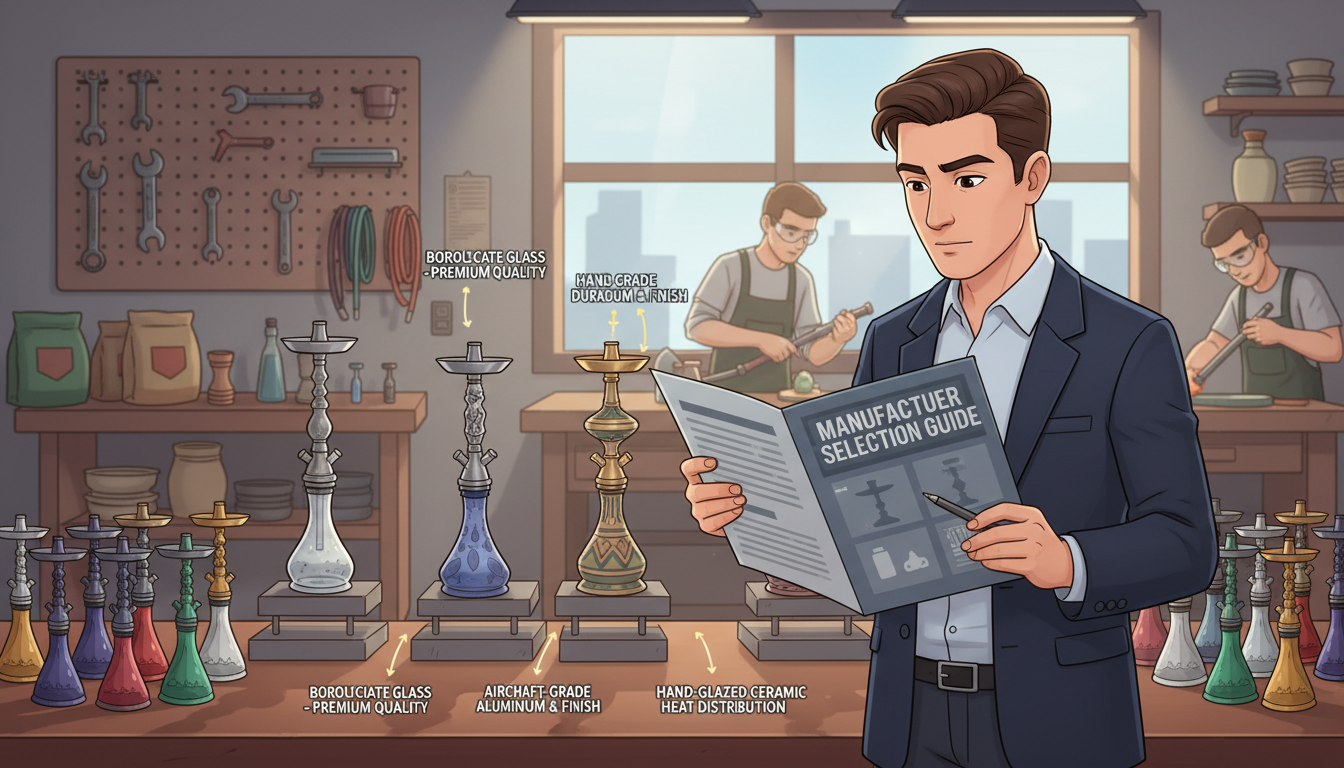
The U.S. hookah market has seen a huge jump of over 35% in recent years. This growth is a big chance for both new and old businesses. But, it also means finding good partners who can make quality products is harder than ever.
Choosing the right hookah manufacturers can be tough. Your partner’s quality, customer happiness, and profits all depend on them. Choosing poorly can cause problems with supplies, quality, and your brand’s image.
This guide will help you check out possible partners step by step. We’ll talk about checking their credentials, making sure they have good quality control, and looking at their prices. Whether you’re starting a new product or choosing your first hookah, we’ll help you make a smart choice.
By the end, you’ll know how to find profitable partnerships that grow with your business. Let’s start finding the perfect manufacturing partner for you.
Key Takeaways
- The U.S. hookah market has expanded over 35%, creating both opportunities and challenges in hookah supplier selection
- Your manufacturing partner directly affects product quality, supply chain reliability, and brand reputation
- Successful partnerships require systematic evaluation of credentials, quality control, and pricing structures
- Understanding your specific business needs is the foundation for selecting compatible hookah manufacturers
- Long-term relationships with reliable partners provide scalability and consistent product excellence
- This guide provides a proven framework for making informed manufacturing decisions with confidence
Understand Your Hookah Business Needs
Every successful partnership with hookah manufacturers starts with knowing what our business needs. This step in hookah supplier selection helps avoid costly mistakes. It ensures we find manufacturers who share our vision and capabilities.
Without clear needs, we risk wasting time with the wrong partners. We might also miss out on suppliers who are perfect for our goals. Taking the time to understand our needs saves us from months of frustration later.
The process starts with two key areas. First, we need to know who we’re selling to. Second, we must decide what products to offer them.
Know Your Customer Base
Defining our target market shapes every decision about hookah industry suppliers. Different customers have different expectations. Knowing these differences helps us choose the right manufacturers.
Consider if we’re serving traditional hookah lovers or modern social smokers. Each group wants different things from our products.
Our target audience determines what we need from manufacturers:
- Upscale hookah lounges need premium materials and looks
- Budget-conscious consumers want affordable options without sacrificing safety
- Entry-level smokers prefer simple designs
- Retail customers look for attractive packaging and consistent quality
- Online buyers value durable packaging and detailed product info
Customers have different preferences for materials. Traditional enthusiasts like brass and copper for authentic smoking experiences. Modern users might prefer glass and stainless steel for easier care.
Size preferences vary too. Personal users want small, portable designs. Lounge owners need larger, statement pieces for daily use. Our manufacturer must be able to make the sizes our market demands.
Price sensitivity also varies. High-end clients are willing to pay for premium quality. Value-focused buyers look for reliable performance at good prices. We need to partner with manufacturers who price right for our target market.
Determine Your Product Lineup
Being clear about our product range is just as important. This clarity helps us find the right manufacturing partners. Vague plans lead to mismatched partnerships and headaches.
We need to decide if we’re selling complete hookah sets or individual parts. Complete sets include everything in one package. Component sales focus on parts for custom setups.
Our product range considerations include:
- Product categories – Will we sell traditional or modern designs?
- Price tiers – Do we need entry-level, mid-range, and premium collections?
- Customization depth – Are custom colors, engravings, or designs essential to our brand?
- Private labeling – Will we need manufacturers who support our branded packaging?
- Seasonal variations – Should we plan for limited editions or holiday-themed products?
We should also consider complementary products. Accessories like cleaning brushes and carrying cases enhance customer satisfaction. Some businesses even offer related products, like wholesale hookah tobacco alongside hardware.
Component flexibility is key. Some manufacturers are great at complete sets but struggle with custom orders. Others specialize in specific parts like hand-blown glass bases or precision-machined stems.
Customization capabilities set top manufacturers apart. Can they produce unique colors that match our brand? Will they accommodate special design requests? These abilities are vital as our brand grows.
Volume requirements also shape our manufacturer selection. Starting small doesn’t mean staying small. We need suppliers who can scale production as we grow. Flexibility and growth should be key in every evaluation.
Quality consistency across our products is non-negotiable. Every item bearing our brand must meet high standards. Our manufacturing partner must show reliable quality control, no matter the product complexity.
By examining our customer base and product requirements, we create a detailed profile of our ideal manufacturing partner. This clarity turns hookah supplier selection into strategic decision-making. We’ll know exactly what questions to ask and which capabilities to prioritize during our search.
Research the Hookah Manufacturing Landscape
The global hookah industry is diverse, with both traditional craftsmen and modern factories. Understanding this helps us make smart choices. We learn about quality, prices, and innovation by looking at how and where hookahs are made.
Places like Egypt, Syria, and Turkey are known for their hookah traditions. These areas have skilled artisans who have perfected their craft over generations. They offer authentic and high-quality hookahs that customers love.
But, modern production has also spread to places like China, India, and Eastern Europe. These areas offer new skills, lower prices, and can make more hookahs. Each place has its own strengths, from precise engineering to cost savings.
Industry Leaders and Suppliers
Finding top hookah makers needs careful research. We should look at both well-known brands and new companies. Quality, international standards, and strong distribution mark the best ones.
There are many ways to find good suppliers. Trade shows let us see products and meet makers. Online sites like Alibaba and Global Sources connect us with suppliers worldwide.
Talking to professionals and industry groups can also help. Hookah lounge owners and distributors share their experiences. They tell us which makers keep their promises.
Creating a list of manufacturers is key. We should note their products, order sizes, customization, and market position. This helps us compare and choose wisely.
Innovation and Market Evolution
Keeping up with trends helps us find innovative makers. The industry is changing fast, thanks to new trends and rules. Makers who adapt are great partners for the future.
Heat management systems are a big innovation. They control temperature, making smoking smoother and longer. Top makers are adding these to their products.
More people want eco-friendly hookahs. Makers using green materials and methods attract green-conscious buyers. As rules get stricter, this trend will grow.
Hookahs that are easy to carry are popular. Travel-friendly designs open new markets. We should look for makers who offer these modern designs.
- LED lighting integration adds beauty and mood to sessions
- Digital temperature monitoring lets users control heat precisely
- Modular component systems let users customize and upgrade
- Health-conscious alternatives meet wellness trends
- Compliance-ready designs meet changing rules
Being able to customize is key. Personalized hookahs, branded items, and unique colors sell well. Makers who offer these options are worth considering.
Rules for making hookahs vary worldwide. We must check if makers know and follow these rules. This includes material rules, labels, and safety checks.
By studying the manufacturing world, we’re ready to ask smart questions. We learn to spot quality and find makers who meet market needs. This knowledge is essential as we choose our partners.
Evaluate Manufacturer Credentials
Checking manufacturer credentials is key to finding top hookah makers. It keeps our business safe from quality issues, legal troubles, and supply chain problems. We must check both official certifications and real-world experience before partnering.
Check for Certifications and Licenses
Valid certifications show if a manufacturer is legal and follows industry standards. We should ask for business registration and manufacturing licenses. These confirm they can legally produce and export hookah products.
Quality certifications are very important. ISO 9001 certification means a company has a quality management system. It shows they follow the same procedures for making, testing, and checking quality.
Importing into the U.S. makes things more complex. Manufacturers must know U.S. Consumer Product Safety Commission (CPSC) regulations and FDA rules for tobacco accessories. We can’t work with suppliers who ignore these rules.

Beyond basic rules, some manufacturers have extra certifications. These include:
- ISO 14001: Environmental management systems certification
- Social responsibility certifications: Ethical manufacturing practices verification
- Industry-specific quality marks: Tobacco accessory safety standards
- Export certifications: International trade compliance documentation
We can’t just trust certificates. Ask for copies and check them with the issuing organizations. Real certifications have registration numbers, expiration dates, and official seals.
The table below shows key certifications we should look for when evaluating manufacturers:
| Certification Type | What It Covers | Why It Matters |
|---|---|---|
| ISO 9001 | Quality management systems | Ensures consistent production standards |
| Business License | Legal operation authorization | Confirms legitimate business status |
| Export Certification | International trade compliance | Enables smooth customs clearance |
| Safety Standards | Product safety requirements | Protects end consumers and brand reputation |
Assess Experience in the Hookah Sector
Just because a manufacturer has experience doesn’t mean they know hookahs. We need to find ones who really get hookah production. They should know about airflow, heat-resistant materials, and traditional techniques.
Ask them about their hookah production history. How long have they made hookahs? What part of their business is hookah? Do they have design and technical experts?
Look at their portfolio for different styles and prices. Experienced manufacturers show a variety of work. This means they can adapt and are technically skilled.
Technical knowledge is a sign of expertise. Good hookah manufacturers can talk about production challenges. They know how to make seals and choose materials that keep smoke flavor good. They balance looks with function.
Check their client list carefully. Manufacturers who work with big brands or famous lounges are usually reliable. These partnerships show they’re consistent in quality.
References give us great insights. Ask for current and past clients’ contact info. Talk to these references about quality, communication, and problem-solving.
Be wary of manufacturers who don’t want to share their credentials and experience. Those who are open and detailed are likely professional and confident. Manufacturers who are secretive or vague might hide problems or lack experience.
Having the right certifications and experience is key for a good partnership. We protect our investment and reputation by carefully checking these before committing.
Quality Assurance and Control Practices
When we look at hookah production companies, their quality control shows their reliability and professionalism. Quality control affects our brand’s reputation, customer satisfaction, and success. We should choose manufacturers who see quality as essential, not an afterthought.
Importance of Quality Standards
Quality standards are key to safe, reliable hookah products. Poor-quality hookahs can cause minor issues or serious safety problems. These issues include leaks, fragile parts, harmful materials, and bad smoking experiences.
We need manufacturers with documented quality standards for every step of production. These standards should cover material specs, size tolerances, finish quality, testing, and packaging. Ask to see their quality manual or standard operating procedures early on.
Good partners use top materials for safety and durability. They should use food-grade stainless steel, lead-free brass, heat-resistant glass, and non-toxic coatings. Ask about their material sourcing and testing for compliance.
Quality philosophy is as important as procedures. Top manufacturers see quality as integral to their entire production process, not just a checkpoint. They should be open to questions and show a real commitment to excellence.
Inspecting Manufacturing Processes
Reputable manufacturers are open and let us visit their facilities. They should answer our questions openly. This shows they are proud of their work and have nothing to hide.
Understanding the production workflow helps us see quality control’s effectiveness. We should look at every stage from design to mass production. Look for critical process controls during facility visits:
- In-process inspections at multiple production stages
- Calibrated measurement and testing equipment
- Skilled workforce with documented training programs
- Clean, organized production facilities with proper lighting
- Clear quality control checkpoints with defined parameters
Ask about their inspection protocols. Where do inspections happen during production? What parameters are measured at each checkpoint? How do they handle defects? Their answers show their quality commitment.
Functional testing is key to separating serious manufacturers from those cutting corners. Testing should include leak tests, draw resistance checks, stability tests, and durability tests. Ask about their defect rates and quality metrics tracking.
Request samples from actual production runs instead of special samples. This shows consistent quality. Also, ask about their continuous improvement efforts and how they handle feedback and corrective actions.
Quality guarantees and warranties show manufacturer confidence in their products. Partners committed to excellence will have formal processes for addressing quality concerns. Remember, quality assurance is an ongoing relationship, not a one-time check, so we need partners who maintain consistent standards.
Compare Pricing Structures
When choosing a hookah supplier, we must look at more than just the price. We need to understand the full cost structure of each supplier. This way, we can see the real cost of working with them.
When asking for quotes, we should ask for a detailed breakdown of costs. This includes the base price, customization fees, packaging, and shipping. We also need to know about payment terms and any associated fees.
Minimum order quantities affect our pricing and cash flow. Some suppliers offer great prices but require large orders. Others may have lower MOQs but charge a bit more per unit, which might be better for our business.
Breaking Down the Numbers
To compare effectively, we need to calculate the total cost of getting products from suppliers. This includes shipping, customs, tariffs, and handling fees. It’s important to get a complete picture of the costs.
Manufacturers price their products differently, affecting our costs. Some include extra services like packaging in their base price. Others charge extra for these services, which might seem more expensive but gives us more flexibility.
We should make a detailed comparison table to track all costs from different suppliers. This helps us spot hidden costs and find the best deals. The table should include more than just numbers to give a full picture.
| Cost Component | Impact on Total Price | Questions to Ask |
|---|---|---|
| Base Unit Cost | 30-50% of total | Does pricing decrease with volume? What quality level does this reflect? |
| Customization Fees | 10-25% of total | Are design changes included? What about tooling costs for unique features? |
| Shipping & Logistics | 15-30% of total | Who arranges transport? Are there bulk shipping discounts available? |
| Payment Terms | Variable impact | What deposit is required? Are there fees for different payment methods? |
Payment terms are important because they affect our cash flow. Suppliers that require large deposits upfront can impact our finances differently than those with more flexible terms. Some offer net payment terms after delivery, which can help with planning.
Looking Beyond the Price Tag
True value goes beyond the product itself. A supplier charging more might offer better quality, design, and reliability. These benefits can justify the higher cost by reducing risks and improving our brand.
Choosing low-cost suppliers can lead to hidden costs. Poor quality can damage our reputation and customer relationships. Unreliable delivery forces us to keep more stock, tying up capital and space.
The total cost of ownership includes more than just initial orders. We should consider extra fees for rush orders or design changes. Suppliers who offer volume discounts for growing businesses show they’re ready to grow with us.
Quality consistency is key, and pricing alone can’t capture it. A supplier with high-quality products at a premium price offers better value than one with lower quality at lower prices. This saves us money and builds trust with our customers.
Good communication and responsiveness add value that’s hard to measure. Suppliers who keep us updated on production and any issues help us manage our customers’ expectations. This partnership approach reduces stress and lets us focus on growing our business.
Delivery reliability is critical for meeting customer expectations. We should ask suppliers about their on-time delivery rates and how they handle logistics challenges. A supplier with reliable delivery at moderate prices offers more value than cheaper alternatives with erratic shipping.
After-sales support and fairness in addressing issues are important. We need suppliers who stand behind their products and work with us to solve problems. This support is essential as we grow and face more complex challenges.
Using a weighted scoring system helps us make fair decisions in our hookah supplier selection process. We assign weights to different factors based on our priorities. For example, if innovation is key, we might give design capabilities a higher weight.
Price is what you pay. Value is what you get.
Many successful businesses find that mid-range priced manufacturers offer the best balance of quality and affordability. These suppliers invest in good processes without charging too much. They also provide good communication, customization options, and reliable delivery.
Premium manufacturers are worth considering if we want exceptional quality or unique designs. Working with established, high-quality producers can justify the investment. Our customers notice the difference, which strengthens our brand and supports higher prices.
Budget manufacturers might work for certain business models, like testing new markets or product lines. But we must carefully evaluate if their prices reflect value or cut corners on quality and service. In the hookah industry, quality is essential for long-term success.
Communication is Key
When we work with hookah manufacturers, talking well is more important than contracts. Good communication makes partnerships work or fail. Many business relationships end because of bad communication, not product issues.
Good talks start with clear info exchange. Talking clearly avoids mistakes and builds trust. Without good communication, even top suppliers can’t meet our needs.
Establishing Clear Channels
Having clear ways to talk from the start saves trouble later. We need to know who to talk to for what. This avoids confusion about who to ask for help.
There are different ways to talk for different needs. Email is great for formal stuff and things we need to remember later. For quick questions, instant messaging works best.

Video calls are great for detailed talks. We use them for tours, reviews, and solving problems. Phone calls are best for urgent things that can’t wait.
Writing down important decisions helps avoid future problems. We keep records of details, prices, and schedules. This makes sure everyone knows what’s agreed on.
“In business, communication is everything. When communication fails, everything else fails too, regardless of how good your product might be.”
We need to agree on how fast we expect answers. We should talk about how long it takes for regular and urgent questions. Good suppliers answer quick questions in a day and urgent ones fast.
Regular meetings keep everyone on the same page. Weekly talks are good when we’re starting out. Monthly meetings work when things are running smoothly.
Using project management tools helps everyone see what’s happening. These tools let us track orders, share files, and check quality. We can see project status without endless emails.
| Communication Method | Best Use Cases | Response Expectation |
|---|---|---|
| Formal agreements, documentation, specifications | Within 24 hours | |
| Instant Messaging | Quick questions, status updates, informal check-ins | Within 2-4 hours |
| Video Conference | Technical discussions, facility tours, problem-solving | Scheduled in advance |
| Phone Calls | Urgent issues, immediate clarifications, relationship building | Immediate to 1 hour |
Language and Cultural Considerations
Language barriers can be a big challenge when working with people from other countries. Many hookah manufacturers speak different languages. Even if sales reps speak English, their technical skills can vary.
We need to check if our contacts really understand technical details. Misunderstandings often come from language issues, not bad intentions. This helps us stay patient instead of getting frustrated.
Using simple language helps avoid confusion. We avoid idioms and complex sentences. Clear, direct language is better than trying to sound fancy.
Visual aids help overcome language barriers. Diagrams, photos, and drawings make complex details clear. Using both written and visual information reduces misunderstandings with suppliers.
Checking if our message was understood helps catch problems early. We ask manufacturers to repeat back what they heard. This shows if our message was clear.
Some manufacturers have teams that speak English well. These companies make communication easier. If language is a big problem, getting professional translators for important talks is worth it.
Cultural differences go beyond language to business practices and expectations. Some cultures value formal contracts, while others focus on building trust. Understanding these preferences helps us negotiate better.
Communication styles vary across cultures. Directly addressing problems is seen as confrontational in some cultures but not in others. We’ve learned to recognize indirect communication that reflects cultural norms.
Time perception varies across cultures too. Urgency and deadlines mean different things in different places. We make sure to discuss timing expectations clearly.
Building personal relationships strengthens partnerships. Taking the time to understand our manufacturer’s culture and communication style pays off. Meeting in person or through video calls helps us connect.
Respecting time zone differences shows we care. We schedule calls at reasonable hours for both sides. This builds goodwill, even in tough times.
Assess Production Capacity
When we look at hookah production companies, we see if they can grow with us. It’s not just about if they can handle our first order. We also check if they can scale up, keep quality high, and deliver on time over time.
This is key for hookah factory sourcing choices that affect our U.S. market position. A small manufacturer can slow us down, while a big one might not focus on us. The right partner grows with us, helping our business thrive.
We look at several important things during our assessment. These include how many units they can make each month, how busy they are, and how many lines they have. We also check their team’s size and skills, and if they can handle sudden demand increases.
Knowing these details helps us spot problems. A busy manufacturer might struggle with our orders. But a less busy one might have deeper issues.
“The best manufacturer for your business isn’t necessarily the biggest, but one whose capacity fits your needs and can grow with you.”
Evaluating Scalability for Future Growth
Scalability shows if our partner can grow with us. We ask them about their plans for growth and how they handle changes.
We ask specific questions about their ability to grow. Can they double our orders in a year without losing quality? Do they have plans to expand if demand keeps going up? Can they adjust production based on the season?
Good scalability means several things:
- Established supplier networks that can quickly increase raw material supply
- Flexible workforce strategies for handling busy times
- Capital investment plans for new equipment when needed
- Documented experience in scaling for other clients
- Production line modularity for easy capacity increases
We need to be careful with very small or very large manufacturers. Small ones might not be able to grow with us, and big ones might not focus on us when they have bigger clients.
The best partner sees our growth as a win-win. They should be excited to grow with us, not just take our orders.
We also ask about their planning for capacity. Do they check their equipment and plan for the future? This shows if they can keep up with our growing needs.
Lead Times and Delivery Reliability
How fast they deliver affects our inventory, customer happiness, and reputation. When we look at hookah factory sourcing, we need clear info on how long it takes.
We want to know about production time, shipping, and total time from order to delivery. This varies based on order size, with smaller orders shipping faster and bigger ones taking longer.
We ask about things that might make delivery slower:
- Material sourcing delays due to supplier issues or transport problems
- Production backlogs when many clients order at the same time
- Seasonal capacity constraints during busy times
- Quality control holds for extra checks before shipping
- Customs and regulatory delays for international shipments
We look at their past delivery performance. A good manufacturer delivers on time most of the time, aiming for 95% or better.
We also want to know how they handle unexpected delays or equipment failures. Do they have backup plans for supplier shortages or keep extra parts in stock?
Client references can show if a manufacturer really delivers. Late shipments can hurt our business, so we need to trust our partner.
We ask about their order priority rules. What happens when many clients need things fast? Do they charge extra for quick delivery? Knowing this helps us avoid surprises.
It’s important to know how they communicate about delays. Good manufacturers tell us early if there’s a problem. This lets us adjust our plans and keep our customers happy.
Some hookah production companies keep parts in stock for faster orders. Others make things only when they’re ordered. Knowing this helps us plan better.
We also check their shipping partners and how they handle logistics. Do they work with reliable freight forwarders? Can they track shipments and help with customs? These details affect how we receive our orders and keep inventory.
A manufacturer with strong capacity, scalability, and reliability is a big advantage for our hookah business. This partnership lets us promise our customers, grow, and build a strong reputation in the U.S. market.
Customer Reviews and Testimonials
Choosing the right hookah suppliers is more than just looking at pretty pictures and sales pitches. Real feedback from customers gives us the real story of how suppliers perform every day. This feedback is key to making smart choices when picking a hookah supplier.
Every supplier will highlight their best points in their marketing. But it’s the customer reviews that show what really happens after you sign a deal. They reveal things like quality, communication, and problem-solving skills that websites can’t show.
There’s often a big difference between what suppliers promise and what they actually deliver. Reviews help us see this gap before we commit to a partnership.
Why Customer Feedback Matters
Customer feedback tells us stories that sales pitches can’t. It shows us patterns of behavior over time. These patterns help us understand the true nature of hookah industry suppliers we’re considering.
A supplier might make great products but struggle with communication. Another might be great with big clients but ignore smaller ones. Customer reviews help us spot these important differences early on.
We should look for specific feedback areas when reviewing customer experiences:
- Quality consistency across multiple orders and product lines
- Communication responsiveness during normal operations and crisis situations
- Flexibility in handling custom requests or order modifications
- Problem resolution when defects or issues arise
- Delivery reliability and accuracy of promised lead times
- Pricing transparency without hidden fees or unexpected charges
- Overall satisfaction and willingness to recommend the supplier
It’s important to see how suppliers handle challenges. Their response to problems says a lot about their integrity. We want partners who take responsibility and solve issues quickly.
Reviews should be specific, not just vague praise. For example, “great quality” means more if it’s backed up by specific examples. Detailed feedback is more valuable because it shows real experience.
Locating Trustworthy Review Sources
Testimonials on a supplier’s website only show their best side. We need to look beyond that for a balanced view during hookah supplier selection. Getting feedback from multiple sources gives us a complete picture of what working with a supplier is like.
Start by asking suppliers for references. Any good company will provide contact info for current clients. When talking to these references, ask open-ended questions to get detailed answers.
Instead of asking if they’re satisfied, ask about quality consistency or how they handled problems. These questions help us get honest, specific feedback.
Independent review platforms offer more perspectives than just what suppliers say:
| Review Source | Type of Information | Reliability Level |
|---|---|---|
| Industry Trade Forums | Peer discussions and supplier experiences | High – verified business owners |
| B2B Platforms (Alibaba, ThomasNet) | Ratings, reviews, transaction history | Medium to High – verified purchases |
| Trade Show Feedback | Direct experiences from other attendees | High – face-to-face conversations |
| Industry Associations | Supplier directories with member feedback | High – vetted membership |
| Social Media Groups | Real-time discussions and experiences | Medium – verify member credentials |
When looking at reviews, consider their number and how recent they are. A supplier with many recent positive reviews shows consistent quality. Old reviews might indicate declining standards or reduced activity.
Be cautious of reviews that seem too good or too bad. Extremely positive reviews might be exaggerated, and very negative ones might be rare issues. Look for patterns in reviews to get a true picture.
Trust reviews from established businesses in the hookah industry more than anonymous comments. Feedback from similar businesses is most relevant to our situation.
Watch for red flags in reviews. If many reviews mention the same problems, like quality issues or communication problems, it’s a sign of a bigger issue. These patterns show the supplier’s usual behavior, not just one-off problems.
By carefully researching customer reviews from reliable sources, we can avoid partnering with hookah industry suppliers who promise but don’t deliver. This careful research protects our reputation and helps us find reliable partners for growth.
Visit the Production Facility
When looking at hookah factory sourcing, seeing the facility in person is key. Digital talks give info, but nothing beats seeing it all yourself. It’s worth the time and travel for big or lasting deals.
Visiting lets us check if claims are true. We meet the team, see how they work, and build strong business bonds. It shows we’re serious about working together.
Preparing for Your Factory Tour
Good visits start with good prep and clear talks. Book your visit weeks ahead to let the factory get ready. Rushing in doesn’t give you the insights you need.
Before you go, know what you want to see. This could be the production areas, quality checks, or how they customize. Knowing this helps the factory show you what’s important.
For trips abroad, think about getting local help. They make talking easier and help you understand local ways. They also know the business scene better.
Plan to spend enough time at the factory. A quick visit misses the point. You might need a day or more to really see what they can do.
Write down questions before you go. Ask about how they make things, check quality, and what they can do. Bring examples of what you want to make.
Key Observations During Your Visit
Looking at hookah production companies means watching closely. Start with the facility itself. A clean, organized place shows they care about quality.
The table below shows what to look for during your visit:
| Evaluation Area | What to Observe | Quality Indicators | Red Flags |
|---|---|---|---|
| Facility Conditions | Cleanliness, organization, safety equipment, lighting and ventilation | Well-maintained equipment, logical workflow layout, proper safety protocols | Disorganized spaces, poor lighting, inadequate safety measures |
| Production Process | Worker skill level, automation versus manual processes, quality checkpoints | Skilled workers, consistent procedures, systematic inspections | Rushed work, inconsistent methods, minimal quality checks |
| Quality Control | Testing equipment, inspection procedures, defect handling, documentation | Modern testing tools, detailed records, clear defect protocols | Outdated equipment, minimal testing, poor documentation |
| Materials Management | Raw material storage, handling procedures, supplier quality, inventory organization | Proper storage conditions, quality materials, organized inventory | Poor storage, questionable material quality, chaotic inventory |
Watch the whole process from start to finish. Look for quality checks at every step, not just at the end. Ask to see products at different stages, not just the final ones.
Notice how workers do their jobs. Skilled, trained staff make better products than those who rush or are new. See if they follow set procedures or do things their own way.
The quality control area is key. Look at the testing tools, how they check quality, and how they handle problems. Ask to see records and systems that track quality over time.
Talking to key people gives you more than just what you see. Managers share about what they can do. Quality teams explain how they test. Design teams show their creativity.
Also, look at the company culture and how happy the workers are. Happy workers mean good management and steady operations. See how managers treat staff and if the place feels professional yet friendly.
Check if the company is open and honest. Good companies answer questions clearly and don’t make promises they can’t keep. This shows they’re reliable for the long term.
Take photos and videos with permission. These help you compare different places after you get back. They also serve as proof if you need to talk about what you saw with others.
Seeing how they pack products is important too. Bad packaging can ruin quality during shipping. Make sure they pack well for the product’s value and how it’s shipped.
After visiting, you’ll know if the manufacturer fits your needs. You’ll see if their quality meets your standards and if you can trust them. These feelings are hard to get from just talking online.
Build a Strong Partnership
Creating strong bonds with hookah suppliers takes effort and smart planning. Once we pick a manufacturer, we focus on growing the relationship. A transactional relationship may meet immediate needs, but a true partnership brings lasting value to both sides.
Over time, the difference between a vendor and a partner becomes clear. Partners care about our success because they know their growth depends on ours. This mindset changes how manufacturers handle our orders and long-term goals.
Importance of Trust and Collaboration
Trust is the base of any successful business relationship. Without it, we doubt every communication and verify every detail. This cautious approach drains energy and limits our growth.
We build trust through actions, not just words. Paying bills on time shows we’re financially reliable. Giving clear details about what we need shows we respect their time. Being open about our challenges helps them adjust better.
Manufacturers earn trust by being reliable. Delivering quality products on time shows they can handle the job. Being honest about challenges shows integrity. When problems come up, good manufacturers face them head-on.
Our relationship with manufacturers should be more than just buying and selling. It’s a strategic alliance where both sides succeed together. This mindset changes how we interact with them.
Sharing our business plans and growth goals openly is helpful. When manufacturers know our future, they can prepare better. This proactive approach helps avoid bottlenecks that could slow us down.
Getting manufacturers involved in product design is also beneficial. Their expertise can lead to improvements we might miss. A small change to a hookah part can save time and money, benefiting both of us.
- Share long-term business goals and forecasts
- Involve manufacturers in product design discussions
- Listen actively to their suggestions and expertise
- Acknowledge their constraints and work within realistic parameters
- Celebrate successes and milestones together
Regular Communication and Feedback
Strong partnerships need ongoing talks, not just about orders or problems. We should set up regular chats to keep everyone informed and on the same page. Regular contact builds trust and prevents small issues from becoming big problems.
Plan regular business reviews, like every quarter or half a year. These talks help us discuss how things are going objectively. We can talk about quality, delivery times, and any concerns.
These reviews also let us plan for the future. Maybe we’re launching a new product or our sales have changed. Sharing this info helps our partners adjust their plans.
Feedback should flow both ways in a healthy partnership. When suppliers do a great job, we should thank them. This shows we value their work and strengthens our bond.
Give feedback that’s specific and respectful. Instead of just saying something is bad, give examples and context. For example, say “We’ve noticed it takes 3-4 days to get a response to our inquiries. Could we aim for 24 hours?”
This way, we focus on actions and results, not personal attacks. We also offer specific ways to improve, making it easier for them to fix the issue.
Ask for feedback too. How can we make things easier for them? This two-way conversation helps us both get better.
| Communication Element | Frequency | Purpose | Key Topics |
|---|---|---|---|
| Order Updates | Weekly | Track progress and address immediate issues | Production status, timeline adjustments, urgent concerns |
| Business Reviews | Quarterly | Evaluate overall performance and alignment | Quality metrics, delivery performance, future plans |
| Strategic Planning | Semi-Annually | Align on long-term goals and capabilities | Growth projections, capacity planning, new initiatives |
| Facility Visits | Annually | Strengthen personal connection and verify operations | Process improvements, relationship building, quality inspection |
Visit the manufacturing facility regularly, not just during the first meeting. These visits show we’re committed to the partnership. They also let us see how they work, what they’re investing in, and how it affects our products.
As relationships grow, we might look into deeper collaborations. Exclusive deals can secure our supply chain and help manufacturers. Working together on new products can give us a unique edge in the market.
Strong partnerships with hookah manufacturers give us a competitive edge. The reliability, quality, and quick response we get help our business grow. They make us stand out in the market and help us stay strong when things get tough.
Building these partnerships takes time, consistency, and a real commitment to success together. The effort pays off with smoother operations, better products, and a stronger supply chain. We turn suppliers into strategic allies who share our vision and support our journey in the hookah industry.
Finalizing Your Choice
We’ve reached a key moment. All our research and visits have led to this. The choice we make will impact our business and product quality for years.
Choosing the best hookah manufacturer is a big decision. We must think about every factor we’ve looked at.
Weighing All Factors
Let’s review our findings carefully. Make a comparison chart with each manufacturer and important factors like quality and pricing. This chart helps us see patterns and make fair comparisons.
Trust your gut during this time. If something doesn’t feel right, even if the credentials look good, listen to your intuition. It often catches things we might miss.
Essential Questions Before Commitment
Before signing, ask about contract flexibility and quality guarantees. Knowing how they handle problems protects our business.
Also, ask about protecting our intellectual property, like custom designs. We need to be sure our products are unique to our brand.
Start with small orders to check quality before buying in bulk. This step confirms what we’ve learned about choosing the right manufacturer. The partnership we form today will help our business grow and keep customers happy.
FAQ
What are the most important factors when selecting a hookah manufacturer?
Key factors include quality control, production capacity, and delivery reliability. Also, manufacturer credentials, communication, pricing, and experience in the hookah industry matter. Create a weighted evaluation matrix to prioritize these based on your business needs.
How can we verify a hookah manufacturer’s quality standards?
Check quality standards by looking for ISO 9001 certifications and reviewing quality control procedures. Visit the facility to observe production and meet key personnel. Request samples and speak with current clients about quality consistency.
Should we choose domestic or international hookah manufacturers?
The choice depends on your business priorities. International manufacturers offer competitive pricing and specialized expertise. Domestic manufacturers provide easier communication and shorter shipping times. Evaluate both based on your priorities.
What certifications should reputable hookah manufacturers have?
Reputable manufacturers should have business and manufacturing licenses, export certifications, and ISO 9001 certification. For the U.S. market, compliance with Consumer Product Safety Commission and FDA regulations is essential. Additional certifications like ISO 14001 and social responsibility certifications are valuable.
How do we assess if a manufacturer can scale with our business growth?
Assess scalability by asking about current capacity, production lines, workforce, and plans for expansion. Discuss specific growth scenarios and look for manufacturers with flexible workforce strategies and genuine interest in growing with your business.
What are typical lead times for hookah manufacturing?
Lead times vary based on order complexity, customization, and manufacturer capacity. Standard orders typically require 30-60 days for production, with additional shipping time. Custom designs may take longer. Request specific lead time commitments for your order types.
How important is visiting the manufacturing facility before committing?
Facility visits are highly valuable, but not always practical. They allow you to observe production quality and meet key personnel. If visits aren’t feasible, virtual tours can provide insights, though they don’t fully replace in-person observations.
What should we look for in manufacturer references and reviews?
Look for feedback on quality consistency, communication, and problem-solving. Seek specific reviews mentioning actual products and situations. Contact references directly with specific questions and research independent sources like industry forums and trade show feedback.
How do we handle language and cultural differences with international manufacturers?
Handle language differences by communicating clearly and confirming understanding. Use visual aids and provide written specifications. For significant language barriers, consider manufacturers with dedicated international sales teams or hire translators. Understand the manufacturer’s business practices and negotiation styles.
What are common red flags when evaluating hookah manufacturers?
Common red flags include reluctance to provide certifications or references, unwillingness to allow facility visits, inconsistent communication, unrealistically low pricing, vague answers, and lack of experience in hookah manufacturing. If multiple red flags appear, continue your search.
How can we protect our custom designs and intellectual property?
Protect IP by including confidentiality agreements and non-disclosure agreements. Incorporate non-compete clauses and clearly document design ownership. Consider trademark or design patent registration for unique products. Choose manufacturers with strong IP protection policies.
What payment terms are standard in hookah manufacturing?
Standard payment terms include 30-50% deposit upon order confirmation with the balance due before shipment. Letters of credit are used for larger international orders. Net 30-60 day terms are common for established relationships. Negotiate terms that balance financial security with your cash flow needs.
How do we handle quality issues or defective products from manufacturers?
Address quality issues by documenting problems and communicating them promptly to the manufacturer. Request their proposed resolution and clarify their defect handling procedures. Treat manufacturers as collaborative partners and recognize their success supports your business objectives.
Can we start with small trial orders before committing to large volumes?
Yes, starting with trial orders is a prudent approach. Many manufacturers accommodate smaller initial orders to establish relationships. Use trial production to validate your manufacturer choice before scaling to larger volumes.
What are the advantages of working with established hookah manufacturers versus emerging ones?
Established manufacturers offer proven track records and reliability. They have refined production processes and established supply chains. Emerging manufacturers provide competitive pricing and flexibility. Evaluate both based on your specific needs.
How do we compare hookah manufacturers effectively?
Compare manufacturers by creating an evaluation matrix. Include quality standards, production capacity, pricing, lead times, communication, customization, and references. Weight each criterion based on your business priorities and score each manufacturer objectively.
What ongoing communication practices support strong manufacturer relationships?
Support strong relationships through regular check-ins and scheduled business reviews. Provide timely and constructive feedback and celebrate shared successes. Treat manufacturers as collaborative partners and recognize their success supports your business objectives.
Should we work with multiple hookah manufacturers or establish exclusive relationships?
This decision depends on your business strategy and risk tolerance. Working with multiple manufacturers reduces risk and provides pricing leverage. Exclusive relationships offer preferential pricing and deeper collaboration. Many businesses find a middle approach effective.
What contract terms should we negotiate with hookah manufacturers?
Negotiate contract terms covering product specifications, pricing, payment, minimum order quantities, lead times, quality guarantees, intellectual property rights, liability, and dispute resolution mechanisms. Have legal counsel review contracts, and ensure they are clear and cover all aspects of your business relationship.
How do we stay informed about emerging trends in hookah manufacturing?
Stay informed by attending trade shows, joining industry associations, following publications, and networking. Maintain dialogue with manufacturers about emerging technologies and trends. Assess their awareness of developments like heat management innovations and sustainable materials during your evaluation process.