Turning leftover wood into a powerful, clean-burning fuel is a smart way to manage resources. A significant amount of raw material is often lost as fine dust during transport and handling.
This waste, representing 10% to 20% of total weight, is a prime candidate for recovery. The production method we explore transforms this material into a high-value energy source.
The briquetting process compresses these fines into dense, efficient charcoal briquettes. This creates a superior carbon-based fuel for cooking and heating needs worldwide.
Our guide details every stage of this conversion. You will learn how to optimize operations, from sourcing to final packaging, for both small and large-scale facilities.
This approach provides a sustainable fuel solution that reduces environmental impact. It also taps into growing global demand for reliable, clean energy.
Key Takeaways
- Converts wood waste and charcoal fines into a valuable, clean-burning fuel.
- Offers a sustainable method to reduce biomass waste and environmental impact.
- Provides a complete, step-by-step overview of the charcoal briquette creation process.
- Ensures the final compressed blocks meet modern standards for efficiency and quality.
- Applicable for both domestic use and larger industrial energy applications.
- Optimizes material use, ensuring no valuable carbon is lost during making.
Understanding the Charcoal Briquette Manufacturing Process
The creation of compact fuel blocks from carbon fines hinges on two fundamental principles: material quality and precise formulation.
This foundation determines the performance and reliability of the final product.
Importance of Quality Raw Materials and Moisture Content
High-grade inputs, like screened wood powder, are non-negotiable. They ensure steady heat and low ash.
Fines must be cleaned of sand and clay using a 2-4 mm screen. This step is vital for a clean burn.
Managing moisture content is equally critical. Too much water can cause blocks to crack or even pose a safety risk during drying.
Role of Binders and Additives in Briquetting
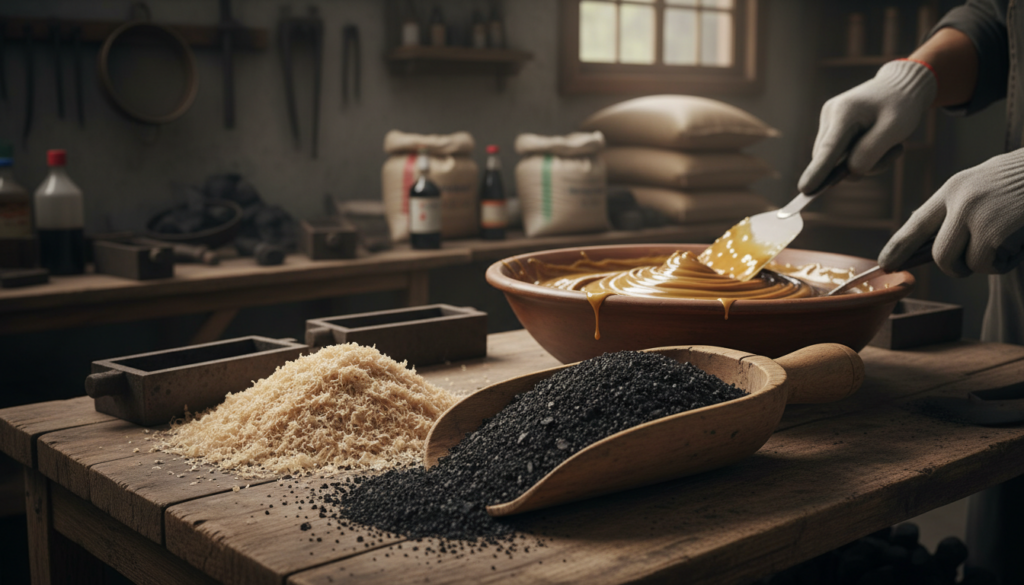
Carbon powder lacks natural stickiness. This is where binders become essential.
Starch, used at 4-8%, is the most effective agent for holding a charcoal briquette together as it burns.
Additives like sawdust can speed up ignition. They boost the overall efficiency of the fuel.
This careful balancing act defines successful briquette making. It’s why the industry thrives in places like Kenya and India, where demand for clean-burning energy is high.
Essential Equipment and Techniques for Briquette Production
Transforming fine carbon powder into a solid fuel block requires specialized tools and precise methods. The right equipment ensures consistency, safety, and high output in any fuel production line.
Screening, Crushing, and Mixing Methods
All raw materials must be prepared correctly. Hammer mills crush fragments to below 5mm for uniform density.
Screening removes impurities. This step is vital for a clean, efficient burn.
Mixing the powder with binders needs specialized tools. A homogeneous blend is key for the block’s strength.
Briquetting Machines, Drying Ovens, and Safety Measures
A professional briquetting machine uses friction and force. It compresses the mix into a stable, dense fuel block.
Drying ovens then remove moisture. Precise temperatures prevent cracking and ensure a long burning time.
Safety is critical. Monitor machine temperature to prevent overheating. Regular maintenance keeps the entire production plant running smoothly.
Optimizing the Step-by-Step Briquetting Process
Operational excellence in compact fuel production is built on optimizing three core stages: pre-treatment, formation, and final conditioning. Each phase must be fine-tuned for maximum output and consistent quality.
Carbonization and Pre-Treatment of Raw Materials
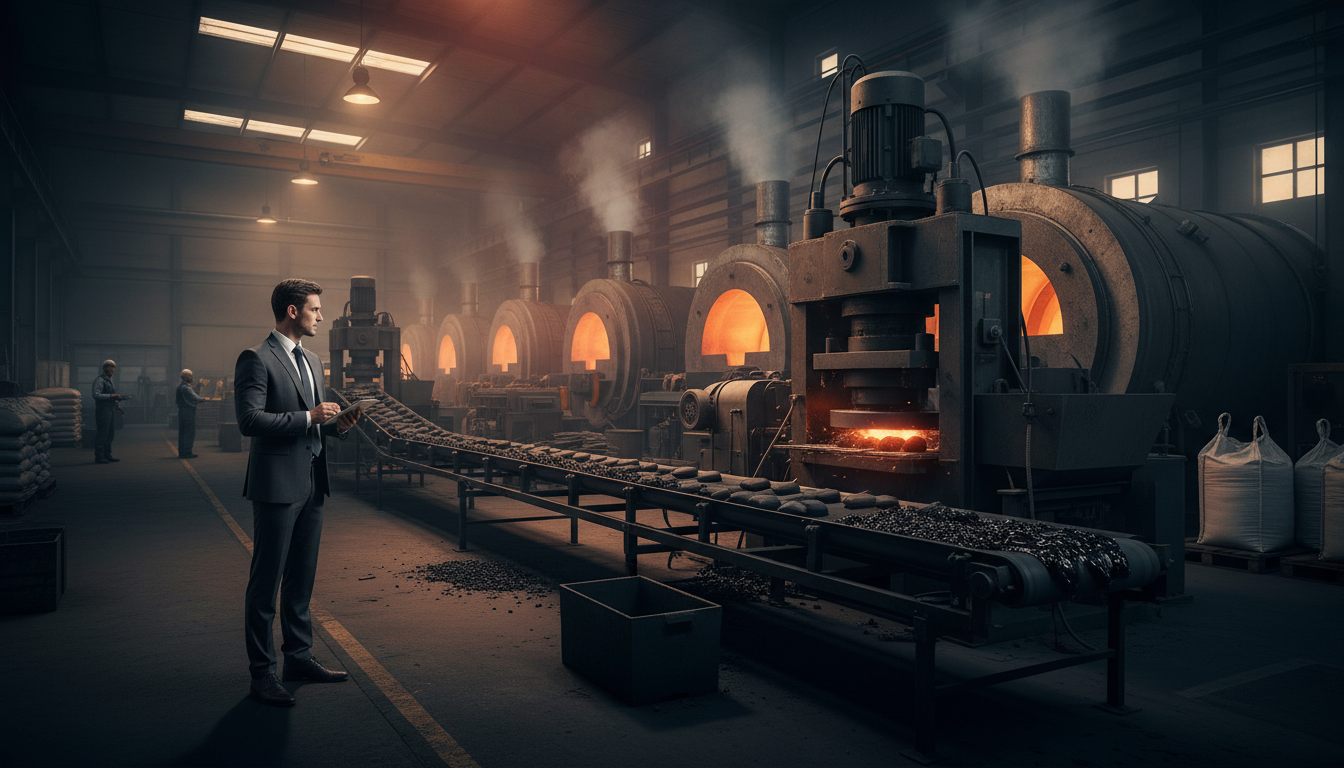
The foundation is high-carbon charcoal. This is made by heating wood in a rotary kiln. Temperatures range from 840°F to 950°F for about one week.
This carbonization step is critical. It converts the wood into a pure, high-energy material. Proper pre-treatment ensures the powder is ready for the next stage.
Briquette Formation and Final Drying Procedures
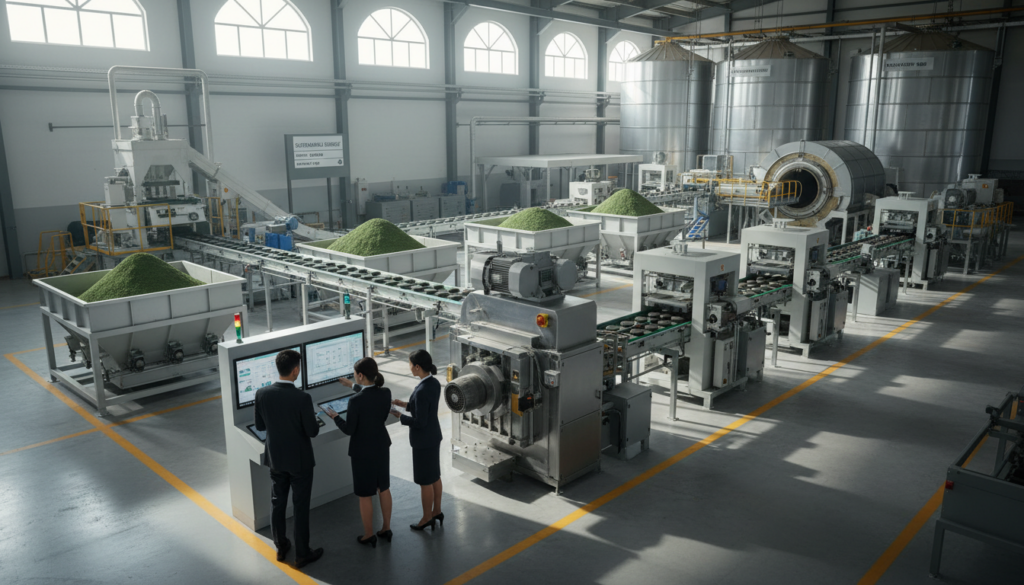
The treated powder is fed into a briquetting machine. High pressure forms it into a solid, uniform block.
Next, drying removes excess water. The goal is to achieve a moisture content near 5%. This makes the product stable and ready for packaging.
Large-scale fuel production lines, like a 20 t/h plant in Kenya, use advanced mixers and dryers. This allows for high-volume output.
Quality Control Measures and Temperature Management
Consistency is key. Every batch must meet strict standards for moisture and density.
Monitoring temperature during drying prevents cracks. It also ensures a long, clean burn. Good control systems boost the overall production volume without sacrificing quality.
This careful process turns raw material into reliable charcoal briquettes. It delivers high fuel value to the market.
Innovations and Global Trends in Charcoal Briquette Production
Forward-thinking producers are now looking beyond traditional wood to unlock new performance and sustainability benefits. The industry is witnessing significant shifts driven by material innovation and a stronger environmental focus.
Use of Alternative Materials such as Coconut Shells
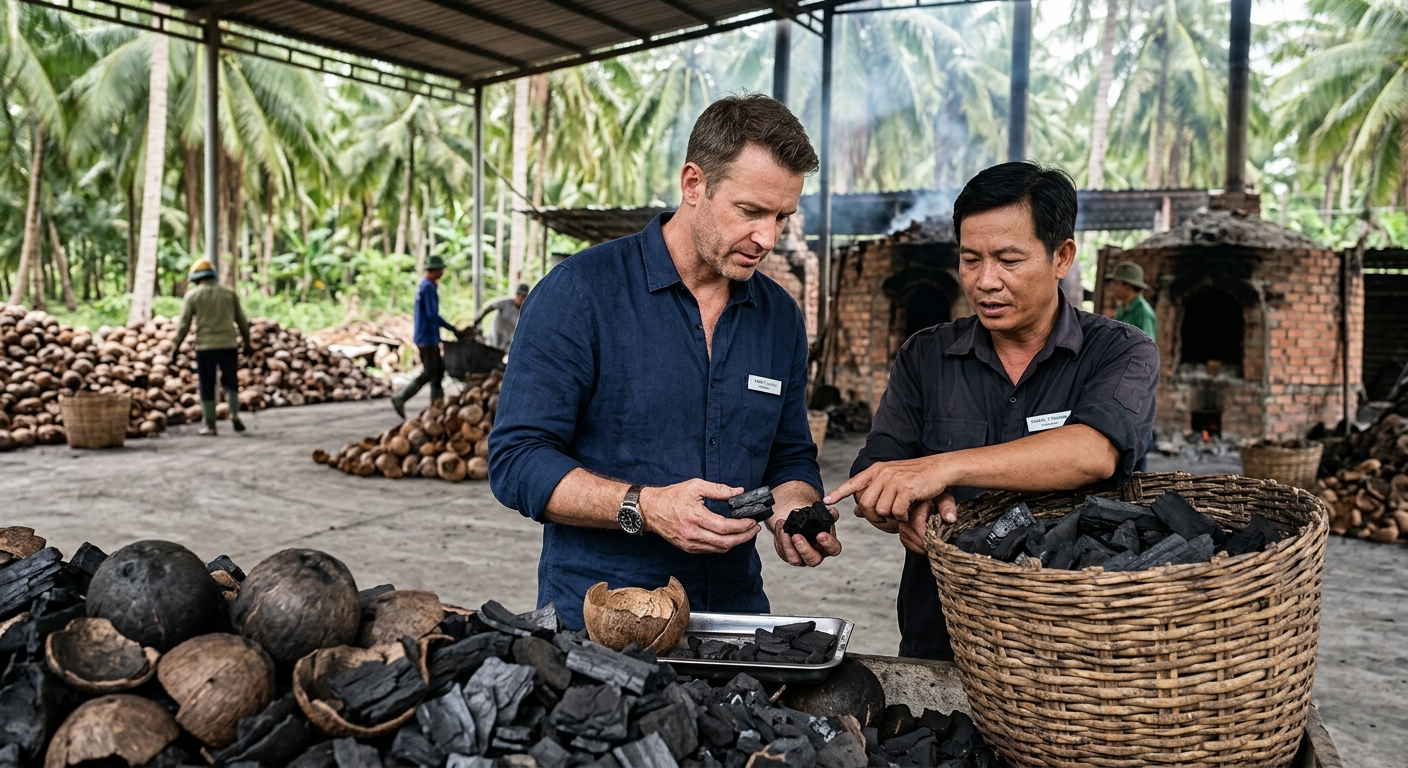
Coconut shells are a standout alternative. Their high density and clean-burning traits make them ideal for premium charcoal briquettes.
The carbonization of shells requires careful attention to temperature. This step ensures the resulting charcoal is free from excess moisture.
This fuel is gaining popularity in the food industry. It provides consistent heat without the smoky flavor of conventional charcoal.
Environmental Benefits and Economic Impacts in the U.S. Market
In the United States, production often utilizes sawdust and bark. This use of waste material minimizes disposal issues.
It also generates useful energy. Advanced plants integrate rotary multiple hearth furnaces. These systems convert wood waste into electricity and high-quality fuel.
This process significantly reduces the environmental footprint. It creates economic value for local communities by turning a problem into a resource.
Modern briquetting machines enable efficient processing of diverse inputs. This ensures the briquette remains a versatile, sustainable energy solution.
As demand for clean-burning heat grows, the industry invests in new drying tech to boost output. The trend is clear: high-quality briquettes are the future for both home and industrial use.
Conclusion
The systematic transformation of organic waste into premium fuel is a cornerstone of the circular economy. This vital sector turns wood scrap into a high-performance heat source for global markets.
Success hinges on mastering carbonization, mixing, and drying. This ensures the final block meets top standards for clean burning. Partners like Essar Engineers supply the essential tools for reliable, cost-effective operations.
Demand for efficient, clean energy keeps rising. Investing in advanced briquetting technology maximizes raw material value and cuts environmental waste. For more on sustainable fuel solutions, explore our resources. This guide provides key insights into this dynamic field.
FAQ
Why is the moisture level in raw material so critical?
The water content in your starting material is vital for a strong final product. If it’s too high, the briquette won’t form properly in the machine and will be weak. If it’s too low, the particles won’t bind together effectively. Proper drying before processing ensures better compaction and a higher heat value.
What is the purpose of a binder in this production?
A binder acts like a glue. It helps the fine carbonized powder particles stick together under high pressure in the briquetting machine. Common natural binders include starch. This step is essential for creating a solid, slow-burning fuel log that holds its shape.
What are the main pieces of equipment needed?
A complete setup typically includes a crusher or hammer mill to reduce size, a mixer to combine powder with binder, a briquetting machine or press to form the shape, and a drying oven. Proper screening equipment is also needed to remove impurities before processing begins.
What happens during the carbonization step?
Carbonization is the controlled burning of wood or biomass in a low-oxygen environment. This process drives off volatile compounds and moisture, leaving behind a material rich in fixed carbon. This “char” is the primary ingredient that gives the finished product its high energy content and clean burn.
Are there eco-friendly trends in this industry?
Yes. A major trend is using agricultural waste like coconut shells, rice husks, or sawdust as the raw material. This gives new life to waste products and reduces deforestation pressure. In markets like the U.S., this creates a sustainable, high-value fuel from materials that would otherwise be discarded.