The market for grilling fuel in the United States is both large and active. Recent data shows the country produced about 852,000 tons of wood charcoal in 2024. Domestic use of this fuel reached an even higher 983,000 tons during the same year.
This strong demand, valued at $928 million, highlights a consistent need for high-quality products. For anyone buying this fuel, finding a dependable source is crucial. The landscape includes both domestic manufacturers and international importers.
Our guide is designed to cut through the complexity. We focus on connecting you with the most reliable industry producers. This includes trusted names like Oxicharcoal, known for their rigorous quality standards.
Using the latest market information from 2024, we help you evaluate your options. The goal is to ensure your next purchase delivers the performance you expect, whether for a backyard cookout or a commercial kitchen.
Key Takeaways
- The U.S. charcoal sector is substantial, with 2024 production exceeding 850,000 tons.
- Consumer and business demand remains strong, with consumption near 1 million tons.
- The total market value for this fuel approached one billion dollars last year.
- Identifying trustworthy manufacturers requires understanding current production and import trends.
- Recent data is a vital tool for making informed purchasing decisions.
- A reliable guide simplifies the search for high-performance grilling fuel.
- Quality and consistency are the hallmarks of the best charcoal sources.
US Charcoal Market Overview: Production, Consumption & Export Trends
Understanding the current charcoal market requires examining three key flows: production, domestic use, and foreign trade. These dynamics directly influence availability and choice.
Production and Consumption Statistics
In 2024, the United States produced a robust 852,000 tons of charcoal. This output, while strong, sits below the industry’s peak production seen in 2015.
Domestic consumption tells another story. Fuel use reached 983,000 tons in the same year. This gap between output and demand highlights a reliance on imported material.
Export and Import Dynamics
On the trade side, exports totaled 17,000 tons of charcoal valued at $18 million in 2024. Canada was the primary destination, receiving 69% of these shipments.
Imports filled the domestic shortfall. Volumes hit 148,000 tons, worth $107 million. Mexico was the source for 61% of this incoming supply.
For buyers, these trade patterns matter. They affect the carbon content and various types of fuel available at any given time.
Evolution of Charcoal Briquettes in the US Market
Industry records show a clear turning point nearly a decade ago. The sector’s journey since then highlights how manufacturing adapts to new demands.
Historical Production Peaks and Market Shifts
US output of this fuel hit its highest point in 2015. Manufacturers produced 982,000 tons of wood charcoal that year.
This level has not been reached again. Current production settled at 852,000 tons by 2024.
A lot of the change stems from shifting consumer tastes. Modern grillers seek consistent performance and cleaner burns.
“The post-2015 adjustment period forced a reevaluation of quality over sheer volume,” noted a sector analyst.
Every product available now reflects these historical pressures. Strong supply chain logistics became just as important as volume.
| Year | Production Volume (Tons) | Primary Market Phase |
|---|---|---|
| 2015 | 982,000 | Peak Output Period |
| 2024 | 852,000 | Stabilized Production Era |
| Trend | -130,000 | Focus on Quality & Standards |
Understanding this evolution helps buyers. It explains why some brands thrive while others faded.
Understanding Charcoal Briquettes: Lump vs. Briquettes
Grilling enthusiasts often face a fundamental choice between two primary fuel types: lump and briquettes. Their core composition differs greatly.
One is made from compressed sawdust. The other consists of cooked chunks of wood. This structural difference shapes everything from heat to flavor.
Differences in Burn Time and Heat Output
The burn time and heat profile vary significantly. The compressed form offers a longer, steadier release of energy.
Natural wood chunks ignite faster and burn hotter. They are perfect for quick searing. The manufactured type provides consistent warmth for slow cooking.
| Attribute | Lump Charcoal | Briquettes |
|---|---|---|
| Composition | Cooked wood chunks | Compressed sawdust & binders |
| Burn Duration | Shorter, high heat | Longer, steady heat |
| Heat Output | High, can vary | Consistent, controlled |
| Ash Production | Less residue | More ash |
| Best For | Flavorful searing | Even, long cooks |
Impact on Grilling Flavor and Performance
Flavor is a major differentiator. The natural wood product imparts a robust, smoky aroma. The uniform shape of briquettes gives a milder taste.
Performance ties directly to your goals. Seek intense flavor and high heat? Choose lump. Need predictable results for a long barbecue? Briquettes excel.
Managing ash is easier with pure wood. For premium fuel options that balance these traits, explore Oxicharcoal.
Top Charcoal Briquette Suppliers
Several manufacturers stand out for their commitment to specialized production methods and quality control. Their distinct approaches cater to different segments, from hookah lounges to large-scale foodservice.

Supplier Profiles and Unique Selling Points
Kore20 LLC has carved a niche with high-density, low-ash briquettes. These are engineered specifically for the Shisha market, where clean, long-lasting heat is non-negotiable.
Vision 2050 FBR Timber provides eco-friendly solutions. Their briquettes are a favorite in foodservice for consistent order accuracy and operational efficiency.
Green Tree Trading Company LLC excels with hardwood charcoal boasting high carbon content. This makes their product ideal for demanding industrial applications.
Gerardjoseph LLC maintains a reputation for reliability. They focus on premium hardwood charcoal with excellent moisture control and sustainable harvesting practices.
These firms demonstrate how focused techniques yield superior performance. For those seeking a range of premium fuel options, Oxicharcoal is a trusted resource.
Evaluating Supplier Credibility: Certifications & Buyer Feedback
Smart sourcing goes beyond price, requiring a deep dive into certifications and real-user feedback. This process separates reliable partners from the rest.
It ensures your fuel performs as expected every time. A verified supply chain is your best defense against poor quality.
Verifying Certifications and Quality Standards
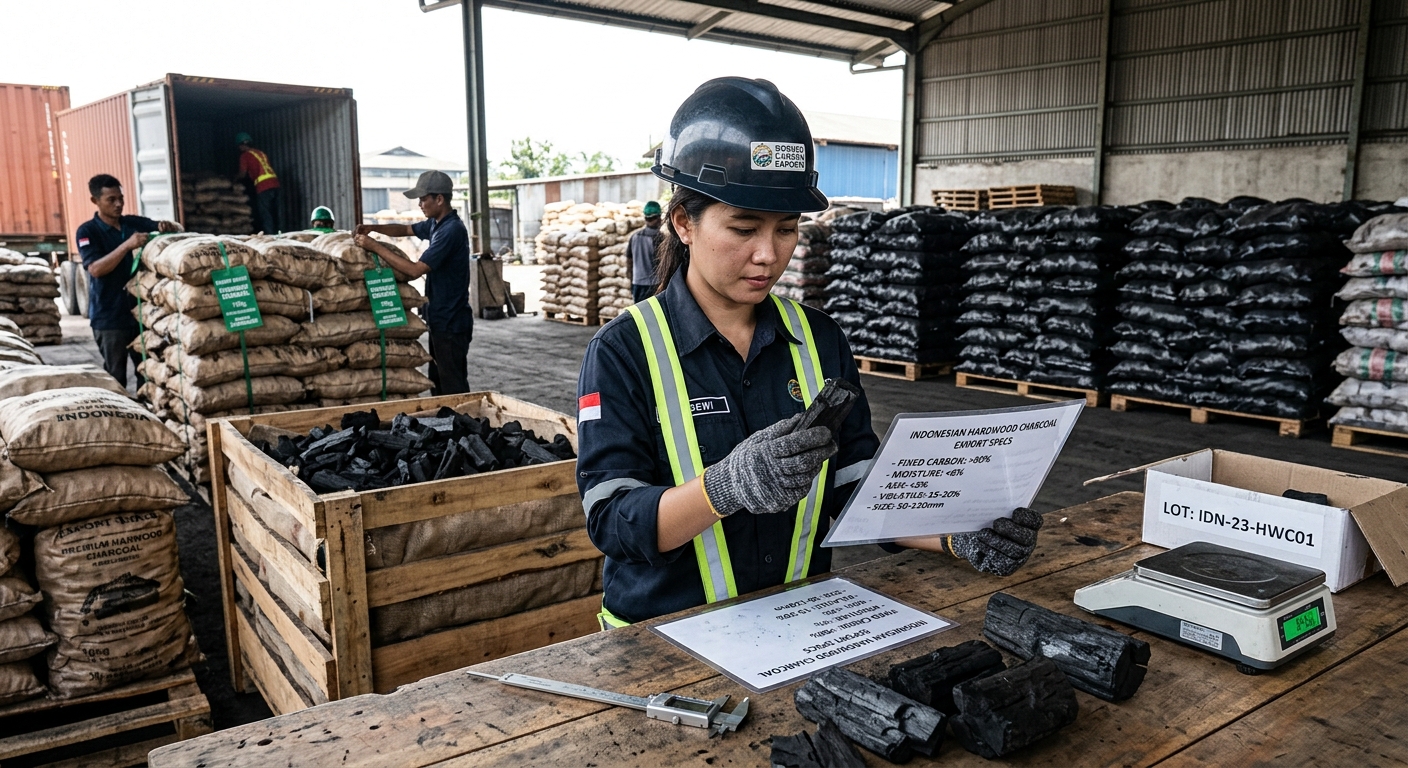
Look for essential seals like FSC or ISO. These prove responsible wood sourcing and consistent production methods.
They are non-negotiable for any serious manufacturer. Such standards guarantee a better product with controlled ash and carbon content.
Trusted sources, like Oxicharcoal, adhere to these rigorous benchmarks. This commitment translates to reliable performance for your grilling or BBQ needs.
Insights from Freshdi RFQ Trends
Platforms like Freshdi offer real-time tracking of buyer requests. This data reveals sudden market shifts.
For example, a recent spike was seen in demand for Shisha briquettes. Understanding these patterns helps you align with suppliers who can meet specific volume needs.
Transparent buyer feedback loops are equally crucial. They provide honest insights into a company’s responsiveness and the consistency of their material.
Monitoring these metrics is a strategic advantage. It builds a resilient and high-quality supply chain for your business.
Product Roundup Highlights: Royal Oak, Kingsford and More
For those seeking reliable heat and flavor, a few prominent names consistently rise to the top. This roundup examines the standout features of leading fuels favored by grill masters.
Standout Features of Leading Charcoal Products
Royal Oak Hardwood Lump Charcoal is celebrated for its sweet, smoky flavor. Its assortment of natural wood chunk sizes makes it a versatile pick for casual cooks.
Kingsford Original Charcoal Briquettes offer widespread availability and affordability. They provide a consistent, long-burning performance that many trust for weekend grilling.
For serious BBQ enthusiasts, Weber 17950 Briquettes stand out. Their large size contributes to an extended burn time, perfect for lengthy smoking sessions.
Jealous Devil All Natural Hardwood Lump Charcoal delivers intense heat with very little residue. This minimal ash production greatly simplifies post-cook cleanup.
Those wanting a pure, chemical-free experience often choose Duraflame Cowboy Natural Hardwood Briquettes. They appeal to grillers seeking authentic, natural flavors in their food.
| Product | Type | Key Feature | Best For |
|---|---|---|---|
| Royal Oak | Hardwood Lump | Sweet, smoky flavor | Versatile casual grilling |
| Kingsford Original | Briquettes | Affordable & consistent | Reliable weekend BBQ |
| Weber 17950 | Briquettes | Large size, long burn | Serious smoking |
| Jealous Devil | Hardwood Lump | High heat, low ash | Easy cleanup |
| Duraflame Cowboy | Hardwood Briquettes | Chemical-free | Authentic natural flavor |
Your ideal choice balances the desired flavor profile with practical performance and overall value.
Detailed Product Testing: Methodology and Insights
To determine the real-world performance of various grilling fuels, our team conducted a series of controlled tests under challenging outdoor conditions. Senior lab manager Jonathan Chan led the process using Weber Original Kettle Grills.
This setup ensured every brand was judged on a level playing field. The goal was to measure heat consistency and practical efficiency for the end user.
Testing Parameters and Procedures
Tests occurred in ambient temperatures from 42°F to 56°F. Wind speeds reached 22 miles per hour, simulating a tough backyard environment.
The methodology focused on how evenly each fuel type heated the fire grate. We tracked the time needed for quarter-pound beef burgers to reach a safe 130°F internal temperature.
Performance Metrics and User Experience
This burger test provided a clear indicator of heat output and efficiency. After each session, we measured total ash production to evaluate cleanliness.
Less residue means easier cleanup and often signals higher carbon content. These metrics translate directly to user satisfaction during charcoal grilling.
For those seeking fuels that perform well in such tests, exploring the selection at Oxicharcoal is a smart move.
| Test Parameter | Condition / Metric | Impact on Results |
|---|---|---|
| Grill Model | Weber Original Kettle | Standardized heating surface |
| Ambient Temperature | 42°F – 56°F | Simulated real-world variability |
| Wind Speed | Up to 22 mph | Tested fuel stability |
| Primary Metric | Time to 130°F (burgers) | Measured heat efficiency |
| Ash Measurement | Post-cook residue weight | Indicated product quality |
Market Trends Impacting Pricing and Burn Efficiency
Savvy buyers know that timing their purchases can lead to significant cost savings. The overall market is projected for steady growth, with a 0.8% volume CAGR through 2035.
This slow but stable expansion means prices are influenced more by short-term cycles than long-term scarcity. Understanding these patterns is key to securing better value.
Seasonal Pricing Variations
Costs for this fuel typically spike from April to August. This aligns with peak backyard cooking demand across the country.
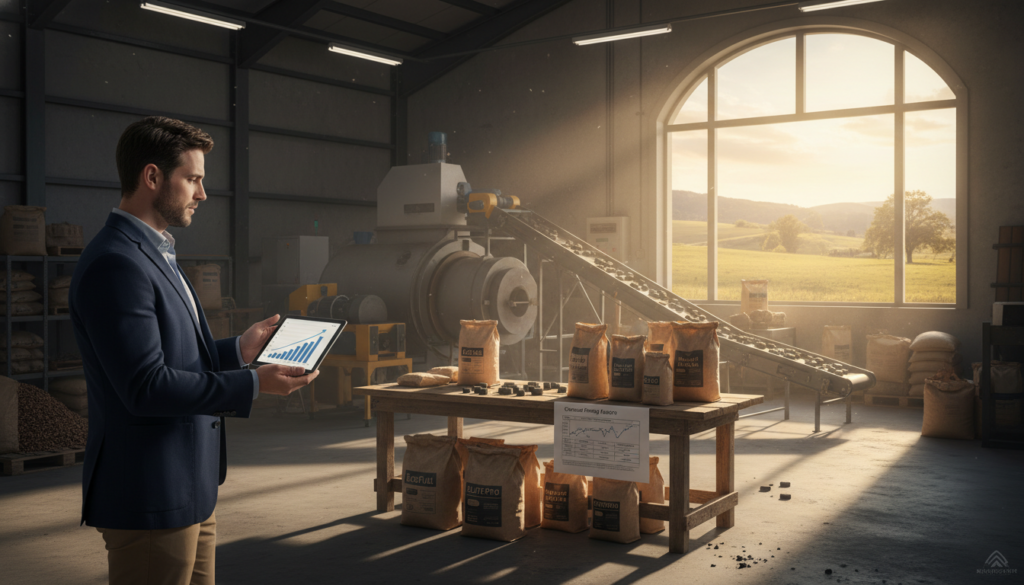
Higher summer demand puts pressure on inventory and logistics. Purchasing outside this window often yields better deals.
Optimal Purchase Timing for Better Value
Planning your procurement for fall or winter months is a smart strategy. You can avoid the premium attached to peak grilling season.
Burn efficiency is also tied to the quality of the hardwood used. Sourcing high-carbon material during off-peak times ensures consistent performance.
For consistent material that performs well year-round, explore options from Oxicharcoal. This approach builds a more profitable and reliable supply chain.
Packaging, Ash Residue, and Environmental Considerations
Savvy grillers now evaluate their fuel on three new fronts: packaging, residue, and sourcing ethics. These factors are strong indicators of a modern, high-quality product.
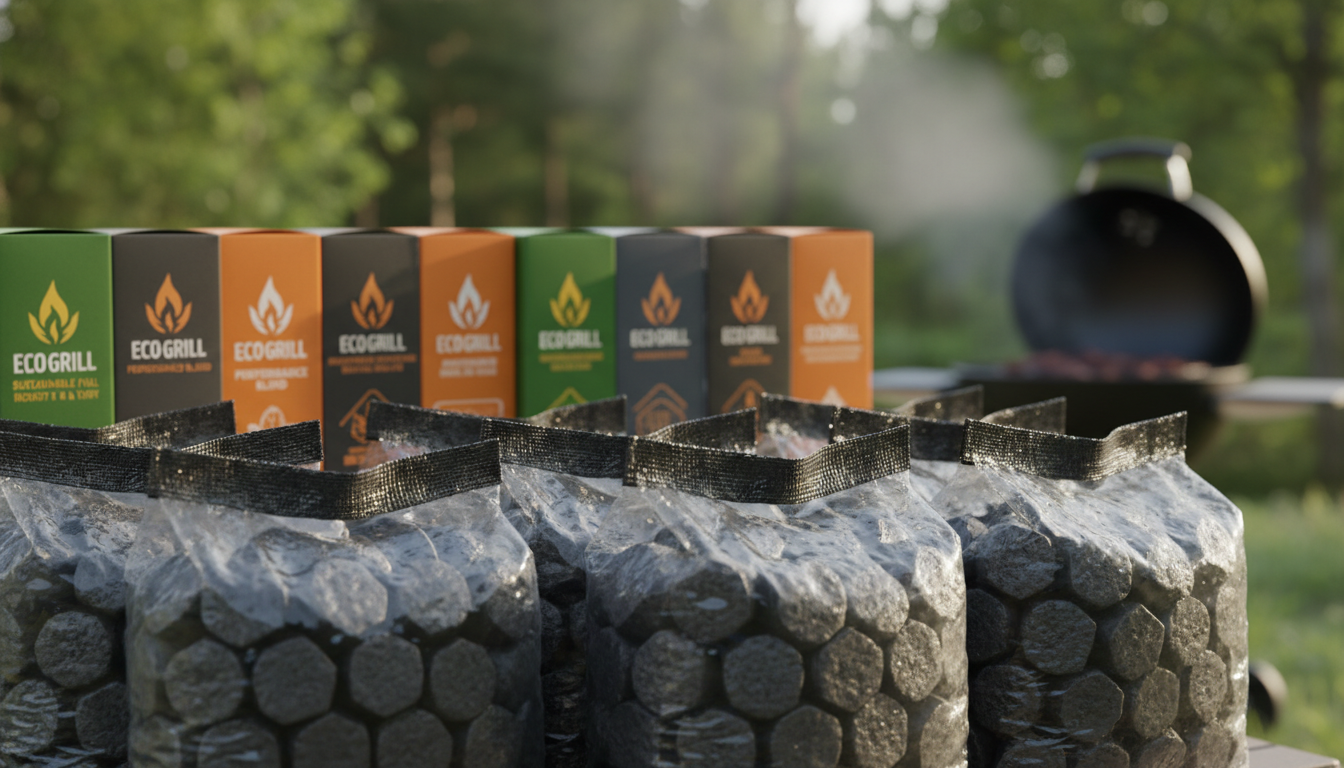
Sustainable packaging is a key differentiator. Waterproof, recyclable bags protect the contents from moisture. This ensures the fuel remains durable during storage in a garage or shed.
Minimal ash residue is a critical performance metric. Excessive fillers like sawdust create more mess and signal poorer quality. Less ash means easier cleanup and a cleaner burn.
Environmentally conscious choices are vital. Consumers seek natural hardwood from sustainably managed forests. This reduces the overall carbon footprint of grilling. Choosing brands that prioritize these clean-burning processes makes your BBQ greener. For fuel that meets these standards, consider options from Oxicharcoal.
Analyzing Value: Price, Quality and Performance Comparison
A smart purchase decision looks beyond the sticker price to consider how a product performs over its entire use. True value in grilling fuel blends initial cost with heat output, flavor impact, and cleanup effort.
Comparative Analysis of Leading Brands
Looking at popular names reveals key trade-offs. For instance, Royal Oak lump is praised for its smoky flavor, while Kingsford briquettes are known for affordability and consistency.
Weber 17950 Briquettes offer a strong middle ground. Their chemical-free composition and extended burn time provide excellent value for longer cooks.
| Brand | Price Point | Key Value Proposition | Best For |
|---|---|---|---|
| Royal Oak Lump | Mid to High | Authentic wood flavor | Flavor-focused grilling |
| Kingsford Briquettes | Low | Budget-friendly reliability | Frequent weekend BBQ |
| Weber 17950 | Premium | Long burn, clean composition | Serious smoking sessions |
High-quality hardwood lump may cost more upfront. Its superior heat and minimal ash often justify the investment for enthusiasts.
Analyzing these factors helps you find the best balance. For a range of premium fuel options that meet these value criteria, explore Oxicharcoal.
How Freshdi Empowers Charcoal Buyers
Digital platforms have revolutionized how businesses source essential materials. They bring transparency to markets that were once hard to navigate.
Freshdi acts as a central hub for this modern approach. It connects buyers with a network of verified industry partners efficiently.
Real-Time RFQ Tracking and Supplier Ratings
The platform’s real-time RFQ tracking simplifies finding reliable vendors. You can see live demand signals and act quickly on new opportunities.
This tool helps you plan your sourcing based on current market data. It turns guesswork into a strategic advantage for your operations.
Supplier ratings are built from actual performance metrics. These scores give you confidence that a partner will deliver on their promises.
A direct buyer feedback loop ensures accountability for all participants. This transparency is key for maintaining high quality standards across the supply chain.
By using these tools, businesses can secure the best fuel products for their specific needs. They stay ahead of market shifts and build a more resilient procurement process.
Conclusion
Navigating the US market for grilling fuel successfully hinges on applying strategic insights to your sourcing decisions. The right choice balances price, performance, and quality in terms you can trust.
Partnering with verified industry leaders and using data on seasonal trends turns procurement into an advantage. Modern platforms provide the tools for this smart approach.
The result is a superior grilling experience every time. You get consistent heat, authentic flavor from hardwood lump, and minimal ash. For fuel that delivers on these promises, explore the premium material options available.
In the end, an informed selection ensures great value and outstanding results for all your cooking needs.
FAQ
What is the main difference between natural hardwood lump and briquettes?
The core difference lies in composition and burn time. Hardwood lump charcoal is made from pure, charred wood, lighting faster and burning hotter with less ash. Charcoal briquettes combine coal dust with binders, offering a more consistent, longer, and steadier heat ideal for extended grilling sessions.
How can I verify a supplier’s quality before making a large purchase?
Always check for relevant certifications that confirm sustainable sourcing and material purity. Beyond that, analyze recent buyer feedback and RFQ trends on platforms like Freshdi. This real-world data reveals a company’s reliability, communication speed, and consistency in delivering the product as promised.
What was the key finding from recent product testing of major brands?
Independent tests highlight a significant variance in performance metrics. Brands like Royal Oak and Jealous Devil excelled in maintaining high heat with minimal ash residue. The testing underscored that price doesn’t always predict quality; some value-focused options delivered excellent grilling results.
When is the best time to buy for better value?
Due to seasonal pricing variations, the optimal purchase timing is typically during late fall and winter, outside peak grilling season. Retailers often discount inventory, allowing you to secure premium hardwood charcoal or your favorite briquettes at a much lower cost for future use.
Why is ash residue an important consideration?
Low ash content directly improves your grilling experience. Excessive residue can smother the fire, requiring more frequent cleaning and disrupting temperature control. Products that burn cleaner, like many natural hardwood lumps, provide easier maintenance and more consistent cooking results.