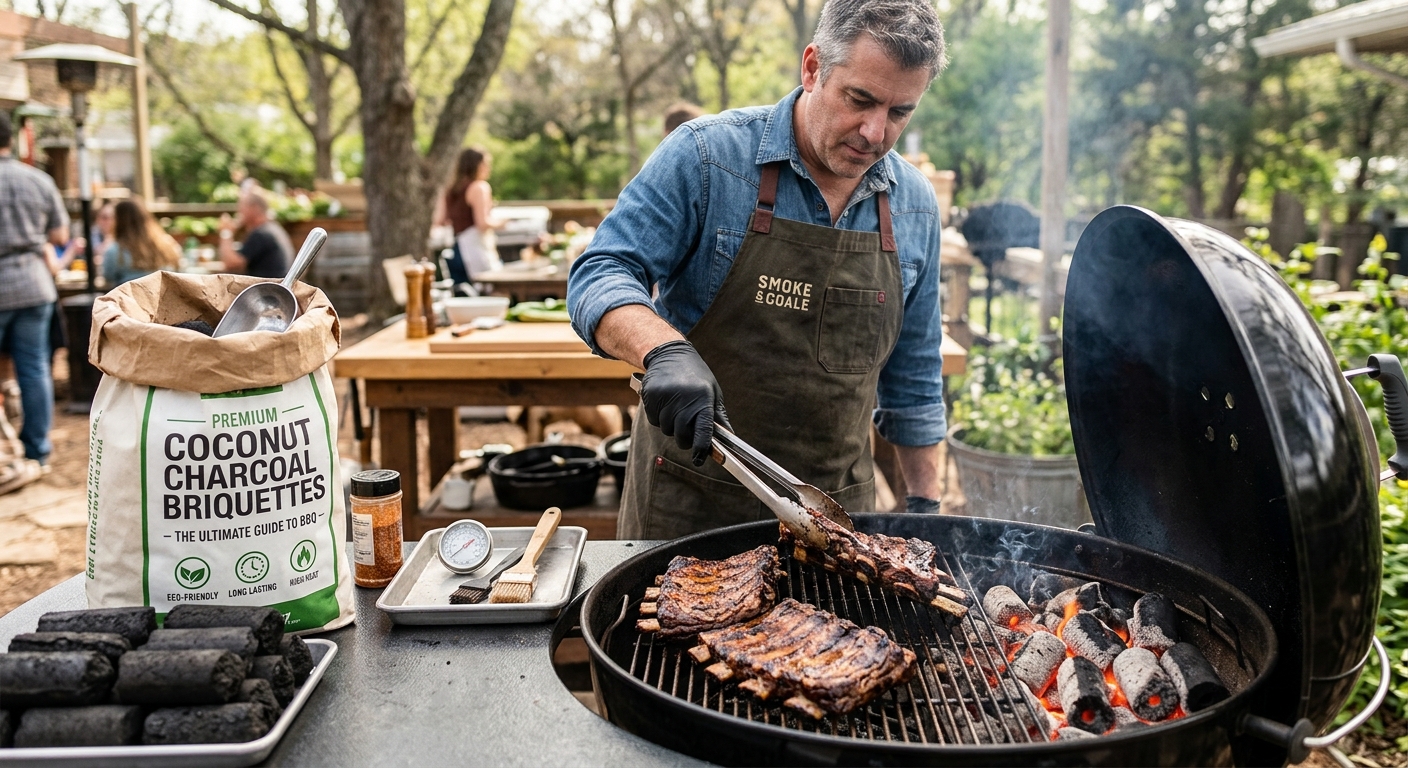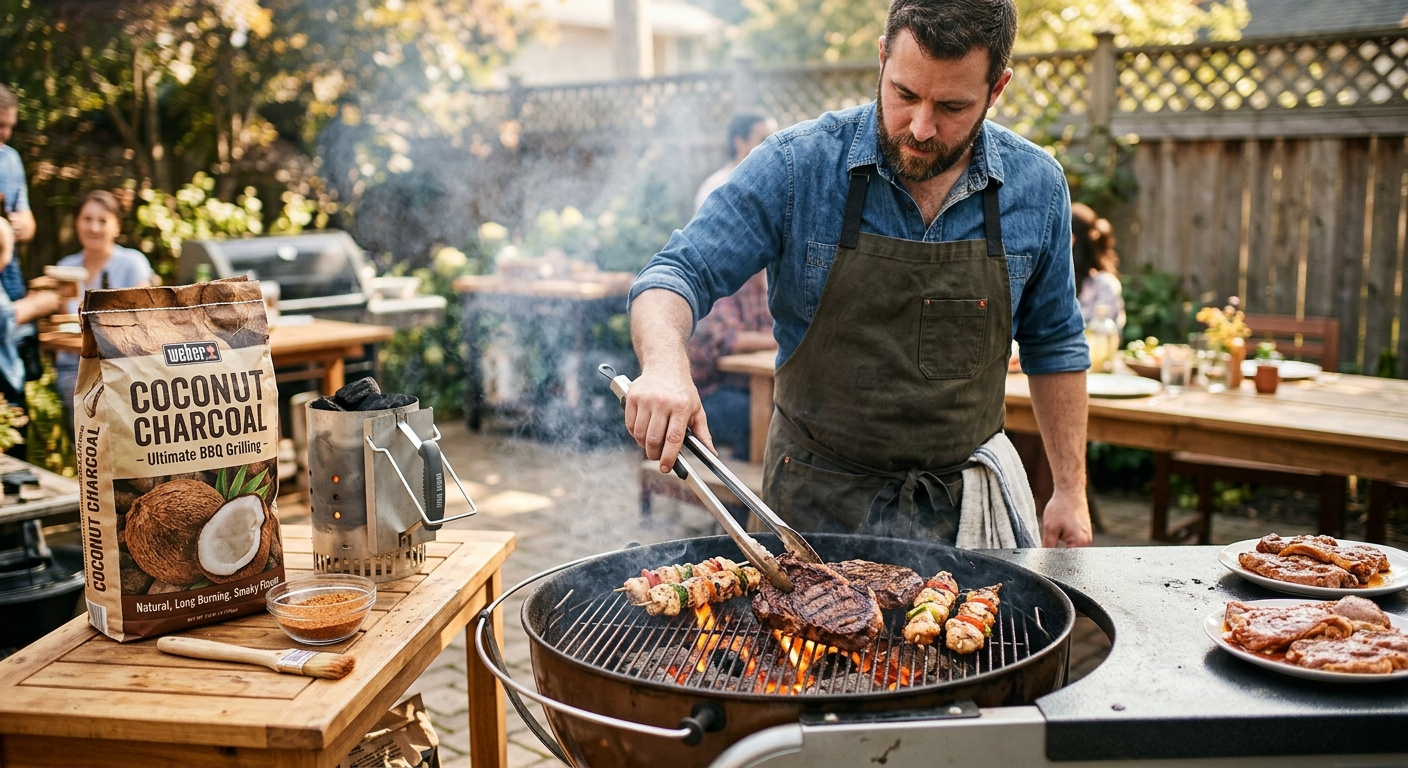
The global sector for compressed fuel is experiencing remarkable growth. Recent analysis estimates its size at $14.38 billion for 2024. This momentum is set to continue, with projections showing a rise from $15.2 billion in 2025 to an impressive $26.49 billion by 2035.
This expansion is fueled by a significant shift in consumer priorities and manufacturing methods. Environmental awareness is a primary driver, pushing the entire landscape toward more sustainable manufacturing practices. Producers are adapting to meet new demands for cleaner-burning options.
In the United States, these compressed fuels are gaining popularity for two main uses. They are a preferred choice for residential heating solutions. They also dominate recreational outdoor cooking applications, from backyard barbecues to camping trips.
This comprehensive analysis examines the forces reshaping this dynamic sector. It provides stakeholders with a clear view of current developments and future pathways. The goal is to offer a strategic overview of expected growth trajectories for the coming decade.
Key Takeaways
- The global market for this fuel type is valued at $14.38 billion and is on a strong growth path.
- Environmental concerns are a major force changing how products are made and consumed.
- Demand in the U.S. is rising for both home heating and outdoor cooking purposes.
- The sector is transforming through the adoption of sustainable production methods worldwide.
- This report provides deep insights to help businesses and consumers understand the shifting landscape.
- Strategic planning is essential to navigate the growth expected through 2035.
US Market Landscape and Consumer Demand
Accounting for 45% of global share, the North American region sets the pace for product development and consumer preferences. The United States is the primary engine behind this substantial market size. Canada also contributes with a growing appetite for premium offerings.
Overview of Regional Demand and Market Size
Purchasing decisions in the U.S. are heavily shaped by lifestyle. The enduring popularity of backyard grilling creates steady demand. Many households also seek efficient solutions for residential heating.
This dual need fuels continuous expansion. More families are investing in outdoor kitchens and advanced grilling equipment. These investments directly support the growth of the regional market.
Comparative Analysis with Global Trends
When placed next to worldwide patterns, North American consumers show distinct priorities. They consistently choose high-quality, reliable-burning charcoal briquette products. Consistency and performance often outweigh lower cost.
This focus guides manufacturers in the U.S. and Canada. They tailor their charcoal briquette lines to meet expectations for sustainability and burn time. Understanding this local preference is key for success in the dominant North America sector.
Global and Regional Insights into Briquette Production
A deep dive into global manufacturing reveals stark contrasts between regions. Each area contributes uniquely to the worldwide supply of compressed fuel.
Understanding these geographic differences is key for anyone in the sector.
North America and US Focus
This region prioritizes advanced technology in its factories. The goal is to create highly efficient and consistent charcoal briquette products.
This focus helps maintain a strong position in the international market. Companies invest heavily in research to improve their output.
Highlights from Europe, Asia-Pacific, and Africa
Europe commands a significant portion of global sales. Germany and France are leaders in adopting greener methods.
Meanwhile, Africa is the powerhouse for raw material output. It provided about 65% of the world’s wood charcoal in 2024.
The Asia-Pacific area is growing fast. Urban expansion fuels new demand. South Africa is a notable hub aligning local output with global environmental rules.
| Region | Production Role | Notable Trend |
|---|---|---|
| Africa | Primary global source | 65% of wood charcoal output |
| Europe | 30% market share | Leading in sustainable methods |
| North America | Technology leader | Focus on advanced manufacturing |
| Asia-Pacific | Fast-growing market | Using agricultural waste for fuel |
| South Africa | Key African player | Adopting international standards |
This table shows how each region supports the overall market. For more on modern production techniques, explore our resources.
Exploring charcoal briquette industry trends
Innovation in raw materials and product features defines the current era for solid fuels. A major shift sees manufacturers replacing wood with renewable resources. Coconut shells are a prime example, offering a cleaner-burning alternative.
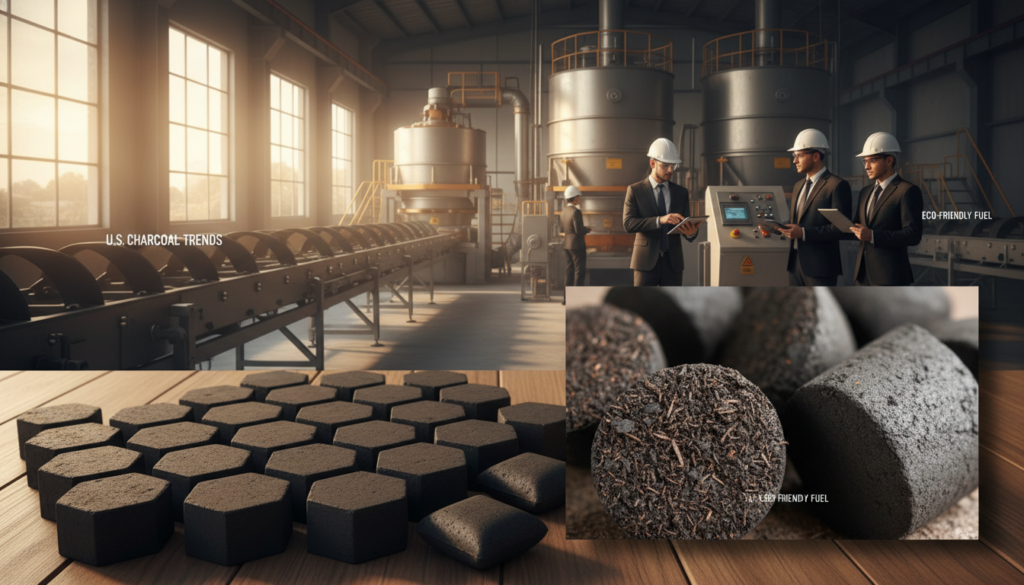
This move aligns with market trends favoring eco-conscious production. Consumers now expect their purchases to support greener practices. Producers are responding by refining their entire manufacturing chain.
Another exciting development is the addition of aromatic agents. These infuse the grilling experience with pleasant, subtle scents. It transforms routine cooking into a more engaging culinary event.
Performance is also a top priority. Companies are creating high-density charcoal briquette products for superior results. These units provide longer, more consistent heat for every barbecue session.
These changes are reshaping the retail market. Shelves are increasingly stocked with premium, value-added options. For insights into modern sustainable production methods, explore our dedicated resources. The evolution is clear, focusing on quality and environmental care.
Production and Technological Innovations in Briquette Manufacturing
Modern manufacturing is undergoing a quiet revolution, driven by smarter machines and greener inputs. This shift focuses on making the entire process more efficient and eco-friendly. The goal is to create superior fuel blocks while cutting costs and waste.
New methods are transforming how these essential items are made. The focus is on improving every step for better results.
Advancements in Production Techniques
Advanced carbonization is a game-changer. It heats raw materials in a controlled setting. This step greatly improves the final product‘s quality and consistency.
New machinery also boosts the density of the briquettes. Denser units provide a steady, reliable heat source. They burn longer and more evenly for the user.
Refined extrusion methods shape the mixture precisely. This leads to cleaner combustion and less leftover ash. The entire production line becomes more cost-effective.
Innovative Use of Renewable Materials
Factories are moving beyond traditional wood. They now use renewable resources like coconut shells. This major change reduces the carbon footprint of production.
Agricultural waste, such as rice husks, is also being converted. These residues become high-value fuel products. It turns waste into a useful resource for homes.
This table highlights key renewable materials and their benefits:
| Renewable Material | Key Benefit | Production Impact |
|---|---|---|
| Coconut Shells | Cleaner burn, high heat | Lowers emissions, uses waste |
| Agricultural Residues | Cost-effective, abundant | Efficient use of by-products |
| Bamboo | Fast-growing, sustainable | Ensures steady raw material supply |
These innovations allow companies to offer charcoal briquette options that are better for the planet. For a deeper look at modern sustainable production methods, explore our resources. The future of briquettes is built on smart tech and responsible materials.
Key Market Drivers and Challenges
A compound annual growth rate of 5.71% signals strong momentum through 2035. This expansion is driven by rising demand for clean energy and popular outdoor activities.
Producers must still tackle significant hurdles to fully capitalize on this opportunity.
Environmental Concerns and Sustainability Initiatives
Pressure to reduce carbon emissions is a major force. Manufacturers are adopting stricter sustainability initiatives to meet global standards.
Rules to curb deforestation add complexity. Companies now invest in traceability systems for their raw materials.
This shift toward eco-conscious production aligns with modern consumer expectations.
Infrastructure and Manufacturing Hurdles
Scaling operations faces practical barriers. A lack of specialized machinery is a persistent challenge for many producers.
Upgrading equipment requires significant capital. This can slow the growth of individual companies within the broader market.
Despite these hurdles, strong consumer demand supports the long-term outlook. The key market drivers remain powerful.
Insights on Product Segmentation and Application Areas
From backyard cookouts to industrial furnaces, the uses for these energy-dense products are remarkably diverse. This variety splits consumer and commercial demand into several clear segments.
Each application area has unique requirements for performance, quality, and cost. Understanding these differences is crucial for navigating the market.
Comparing Metallurgical, BBQ, and Residential Uses
The grilling application remains the dominant force. Traeger, Inc. reported an 8.5% year-over-year revenue increase in grill sales, reaching $324.7 million in March 2025. This shows robust demand for dedicated outdoor cooking equipment.
Residential use for everyday cooking is also expanding. Many consumers seek the authentic flavor profile that only high-quality solid fuel can provide.
In contrast, the metallurgical segment relies on these products as a vital fuel source. They provide the consistent, high-temperature heat required for specialized industrial processes.
Price reflects this segmentation. Premium coconut shell charcoal commands $1,200 to $1,400 per ton. Standard sawdust briquettes trade between $650 and $800 per ton.
| Application Segment | Primary Demand Driver | Key Product Attribute | Price Range (Per Ton) |
|---|---|---|---|
| BBQ & Grilling | Recreational cooking, flavor | Consistent burn, low ash | $650 – $1,400+ |
| Residential Cooking | Authentic home-cooked flavor | Ease of use, reliable ignition | $650 – $800 |
| Metallurgical Industrial | High-temperature process heat | High density, extreme heat output | Market-specific contracts |
The diverse use of these compressed fuels highlights their versatility in modern energy markets. For products that meet high standards across all applications, explore sustainable production methods.
Competitive Landscape and Leading Industry Players
Financial performance and strategic innovation are defining the hierarchy among top fuel block manufacturers. This sector is characterized by a mix of long-established giants and agile, specialized firms.
Each entity competes fiercely for consumer preference and retail shelf space. Their strategies shape the overall direction of the market.
Analysis of Prominent Companies and Market Share
The Clorox Company, owner of the Kingsford brand, showcases remarkable resilience. It reported over 200 basis points of gross margin expansion in FY25.
This financial strength allows for continued investment in product development and market presence. Other major players include Royal Oak Enterprises, LLC and Duraflame, Inc.
These companies actively work to expand their share through constant innovation. They introduce new, efficient formulas to meet rising demand for eco-friendly options.
Our analysis shows that market share is not solely the domain of large corporations. Smaller, specialized enterprises are gaining ground by focusing on niche, sustainable charcoal briquette lines.
This competition benefits consumers by driving quality higher across the board. Leading players leverage extensive distribution networks to ensure wide availability.
Their products reach consumers through various retail and online channels. For a deeper look at how top companies implement sustainable production methods, explore our resources. The landscape remains dynamic, with revenue and share constantly in flux.
Sustainability and Eco-Friendly Production Trends
A significant investment in Chad highlights the global push for greener fuel production methods. The Raikina Association for Socioeconomic Development committed 200 million CFA francs to a green charcoal initiative in June 2025.
This project aims to combat desertification. It shows a real-world commitment to environmental care.
Manufacturers are shifting their focus. They now use agricultural residues like coconut shells instead of traditional wood.
This change is a core part of new sustainability goals. It helps lower carbon emissions from production.
Companies align their practices with international climate mandates. Using eco-friendly materials transforms the supply landscape.
These charcoal briquette options become more attractive for green energy sectors. The entire market benefits from this shift.
Consumers are increasingly conscious of their environmental impact. By prioritizing sustainability, producers meet these expectations.
This focus makes coconut-based and other renewable briquettes a smart choice. For more on modern sustainable production methods, explore our resources. The future of the market is built on responsible innovation.
Innovations in Distribution Channels and Market Growth Strategies
The path from factory to backyard is becoming faster and more efficient thanks to new distribution models. Companies are no longer relying solely on traditional retail shelves. They are embracing digital platforms to drive strategic growth and connect with consumers directly.
Expansion through Retail and E-Commerce Platforms
Online sales for grill fuel have surged by over 30% recently. This shift allows players to reach a wider customer base. Retailers are enhancing their digital storefronts to offer a broader variety of products.
Home delivery options make these items more accessible than ever. This expansion is a key part of capturing market share in a competitive landscape.

Impact of Technological Adoption in Logistics
Smart technology is optimizing supply chains for efficiency. Data-driven insights help manufacturers predict demand more accurately. They can adjust inventory and distribution routes in real time.
This ensures high-quality goods reach the market reliably. As this report highlights, leveraging digital channels is now a major differentiator for industry leaders.
For companies focused on sustainable production methods, efficient logistics further support their environmental goals.
Market Forecast and Future Outlook
Looking ahead, the solid fuel landscape is set for significant transformation. This change is driven by evolving consumer values and steady technological progress.
2025-2035 Forecast Metrics and Growth Projections
Quantitative analysis provides a clear roadmap. The global sector is projected to expand from $2.82 billion in 2025 to $4.69 billion by 2031.
This represents a robust compound annual growth rate of 8.85%. The forecast signals a period of sustained value creation for the entire market.
Emerging Opportunities and Potential Market Shifts
New demand will come from innovative products. Flavor-infused fuel types are gaining interest among culinary enthusiasts.
The material shift toward coconut shell and wood-based sources will be a defining trend. Consumers increasingly prioritize these sustainable alternatives for cooking and heating.
Companies that invest in high-quality output and responsible sourcing are poised to capture greater market share. The future belongs to producers embracing advanced sustainable production methods.
Conclusion
Moving forward, the sector’s trajectory is firmly anchored in sustainable innovation and strategic market adaptation. The drive for cleaner fuel alternatives meets rising consumer demand for high-performance products.
Leading companies are investing in advanced technologies and eco-friendly raw materials. This allows them to meet regulatory standards and appeal to environmentally conscious consumers.
Strategic expansion into digital and retail channels is crucial for capturing market share. The long-term outlook points to robust growth, supported by a commitment to sustainable production methods and quality.
FAQ
What is the current size of the charcoal briquette market in the United States?
The U.S. holds a significant portion of the North American market, which is a major global segment. Demand is primarily driven by residential grilling and BBQ activities. Consistent consumer interest in outdoor cooking supports steady revenue and market size growth nationally.
How are sustainability concerns affecting product development?
Environmental pressures are pushing companies to innovate. Many are now creating products from renewable sources like coconut shell or bamboo to reduce carbon emissions. This shift towards eco-friendly materials is a key trend attracting modern consumers.
What are the main materials used in manufacturing today?
While traditional wood charcoal remains common, manufacturers are increasingly using alternative materials. These include coconut husks, sawdust, and agricultural waste. These sources help create a more sustainable fuel while maintaining good quality for cooking.
Which companies are leaders in this sector?
Prominent players include Kingsford, Royal Oak, and Fogo Charcoal. These brands have substantial market share due to strong distribution and brand recognition. Their analysis of consumer preferences helps them lead in both product offerings and growth strategies.
What is the forecast for this market in the coming decade?
Reports suggest stable growth from 2025 to 2035. Demand is expected to rise, fueled by innovation in eco-friendly products and expanding e-commerce sales channels. Emerging opportunities lie in high-quality, specialty briquettes for discerning users.