
Did you know that 73% of hookah lounge owners struggle with finding reliable suppliers? This shows a big problem in the industry that hurts businesses all over the U.S.
Finding quality partners in this growing market is tough. The wrong choice can cause bad products, late deliveries, and unhappy customers. Choosing the right supplier is key to your success and good name.
Our guide helps you find reputable hookah manufacturers and build strong partnerships. We cover how to research the market, check product quality, and negotiate well for American businesses.
Whether you own a lounge, are starting a new business, or want to add more items to your store, we’ve got you covered. We talk about important things like following the law and being green. These things help your business grow and keep your customers happy.
Key Takeaways
- Supplier reliability is a big problem for 73% of hookah business owners in the U.S. market
- Checking product quality and doing your homework before partnering is key
- Knowing the law and following it keeps your business safe from fines and penalties
- Good negotiation skills get you better deals without sacrificing quality
- Working with trusted suppliers brings stability and consistency to your business
- Being green is important for American customers and keeping them loyal to your brand
Understanding the Hookah Market Landscape
To grasp today’s hookah market, we must look at how consumer habits and new products shape the industry. Knowing the latest trends and quality standards is key before choosing partners. This knowledge helps us find suppliers that match our business goals and what our customers want.
The hookah market has grown a lot in recent years. What was once a small cultural practice has become a popular social activity in the U.S. Now, different kinds of people are getting into hookah, opening up big opportunities for businesses that team up with the right makers.
Current Market Dynamics and Growth Patterns
The hookah industry is booming in cities all over. Today’s consumers want premium experiences that go beyond just smoking. They look for products that are not only good but also look great and make social events more interesting.
Hookah lounges are popping up everywhere, driving the need for top-notch equipment. These places need durable, eye-catching items that can handle being used a lot. The rise of lounges has also made it important to find reliable suppliers who can meet demand without sacrificing quality.
Social media has changed how people find and talk about hookah products. Pictures on social media show off new designs, making people want them right away. Companies that get this visual side of things have a big advantage.
Research shows the North American hookah market is growing fast. Experts think it will keep growing as more people start to enjoy it. Younger adults are now more into hookah as a social thing, moving it beyond its traditional roots.
Several new trends are changing what manufacturers offer:
- Devices that control heat better, giving better flavor and a smoother smoke
- Electronic hookahs for people who like new tech and modern experiences
- Premium glass designs with cool artwork and LED lights
- Modular systems for customizing and upgrading
- Portable hookahs for those who like to be on the move
These changes show how consumer tastes are shifting. Suppliers who invest in research and development usually have better products. Their focus on new ideas shows they’re in it for the long haul.
| Market Trend | Impact on Manufacturing | Business Opportunity | Consumer Demand Level |
|---|---|---|---|
| Premium Glass Designs | Requires advanced glassblowing techniques and artistic collaboration | Higher profit margins with luxury positioning | High and increasing |
| Heat Management Systems | Engineering precision and quality materials essential | Repeat accessory sales and customer loyalty | Rapidly growing |
| Portable Hookah Units | Focus on durability and compact engineering | Expanding customer base beyond lounge settings | Moderate but steady |
| Smart/Electronic Options | Technology integration and battery management | Premium pricing and tech-forward branding | Emerging niche market |
Why Product Excellence Matters
Working with quality hookah brands and premium hookah distributors is key to success. The quality of your products affects how happy your customers are, how often they come back, and your brand’s reputation. This is very important in a competitive market.
Good craftsmanship makes a big difference in the smoking experience. Well-made hookahs give smoother draws, better flavor, and consistent performance. These benefits make customers happy and spread the word about your brand.
Durability is another important quality. Commercial-grade equipment needs to last through lots of use without getting worse. Makers who use top materials like stainless steel, brass, and high-grade glass make products that stay good over time.
The difference between mass-produced and handmade hookahs affects how you position your brand. Mass production is cheaper and always available. Handmade items offer uniqueness and a premium feel that can justify higher prices.
Businesses that focus on quality attract loyal customers. These customers become brand supporters who tell their friends about your products. This kind of word-of-mouth marketing is very valuable for growing your business.
Quality also plays a role in how you set prices. Premium products can make more money and build your brand’s value. But, cheaper options might sell more but can lead to price wars that hurt your profits.
Bad products can hurt your business a lot:
- Poorly made items or harmful materials can lead to legal problems
- Bad reviews online can spread fast on social media
- Product failures can hurt customer trust, which is hard to get back
- Breaking rules can lead to fines, recalls, and even closing your business
Health and safety rules are getting stricter everywhere. Manufacturers must follow these rules about materials, how they make things, and testing. It’s a good idea to check if your partners have the right certifications and documents.
Quality hookah brands know their reputation depends on always being the best. They have strict quality control at every step of making their products. This commitment helps them and their partners.
Keeping customers happy is linked to product quality. Happy customers come back for more and might even try more expensive items. This shows that focusing on quality is better for your business in the long run.
Finding the right manufacturer is more than just looking at prices. You need to find partners who share your commitment to quality and customer happiness. Working together for a long time is easier when you both want the same things.
Criteria for Evaluating Hookah Manufacturers
Knowing what makes a manufacturer stand out is key. We look for specific criteria to find the best hookah producers. This helps us avoid mistakes and ensures we’re happy with our suppliers.
Quality hookah brands differ from others in several ways. We can’t just look at photos and marketing. We need to check the materials, how they’re made, and the manufacturer’s capabilities.
Material Quality and Construction Standards
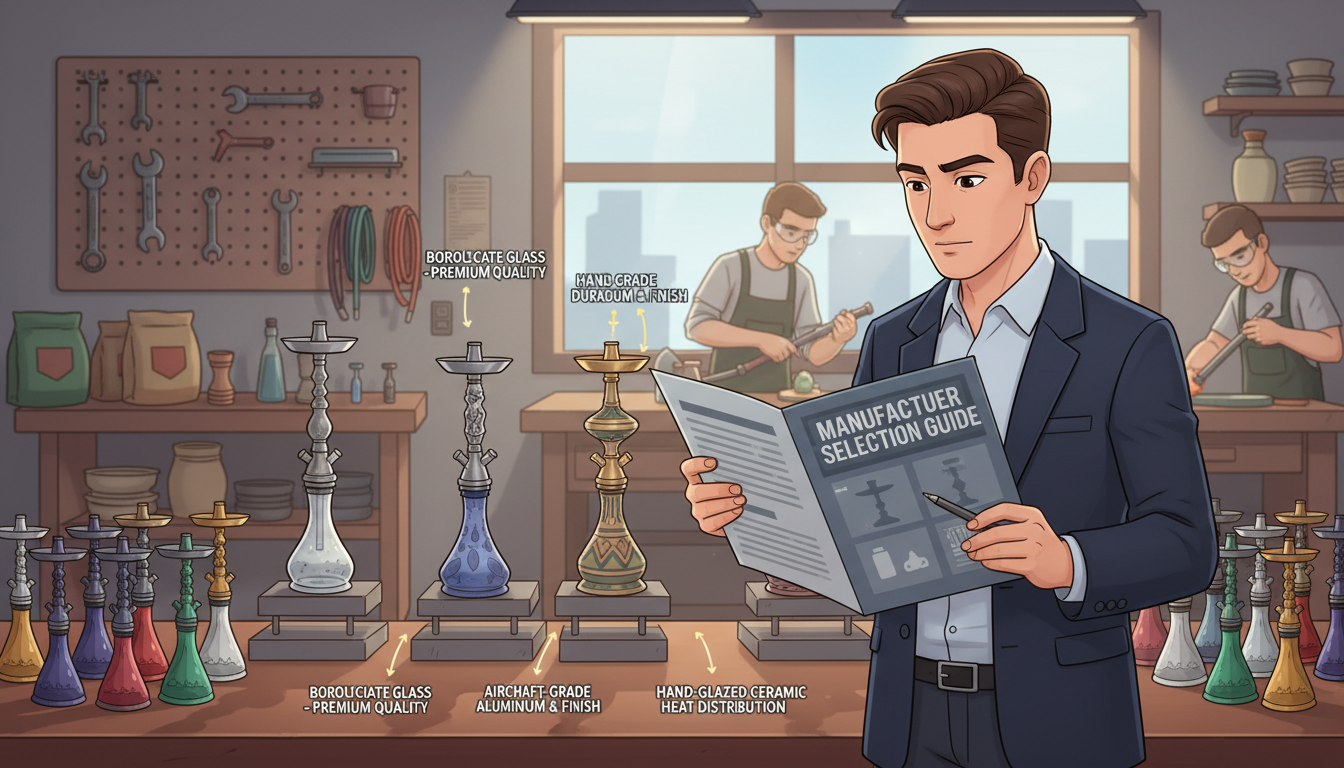
The quality of a hookah starts with its materials. We seek out premium-grade materials for durability and safety. Top manufacturers use stainless steel, brass, copper, and high-quality glass.
Stainless steel is great for its corrosion resistance and long life. Brass ensures tight connections. Copper is excellent for heat distribution.
When it comes to glass, we look for borosilicate. It’s better at handling temperature changes. Quality brands use this material for its durability, even if it’s more expensive.
It’s also important that materials are safe for smoke and water. We check for certifications to ensure safety. Asking for these documents helps us confirm quality standards.
A good quality checklist includes:
- Material grade certifications for all metal components
- Welding quality and consistency across joints and seams
- Threading precision on stems and connection points
- Finishing techniques and coating durability
- Base stability and weight distribution
- Hose quality, including material safety and airflow design
- Rubber grommet quality and fit tolerances
Testing samples is important. We check for air-tightness by covering the bowl port and drawing through the hose. Any leaks show poor quality or design issues.
Common defects include:
- Uneven or poorly applied protective coatings that chip easily
- Rough welds with visible gaps or inconsistent bead patterns
- Substandard rubber grommets that harden or crack quickly
- Loose threading that wobbles or cross-threads during assembly
- Thin-gauge materials that dent or bend under normal use
Production Methods and Quality Systems
Understanding how a manufacturer works helps us set expectations. Hand-crafting creates unique pieces, while modern methods offer consistency and cost savings.
Some makers focus on authentic traditional designs using old methods. Others use new materials and techniques. The best choice depends on our market and product goals.
Production capacity is key for meeting demand. We ask about current volumes, equipment, and staff. A small facility can’t handle big orders without long delays.
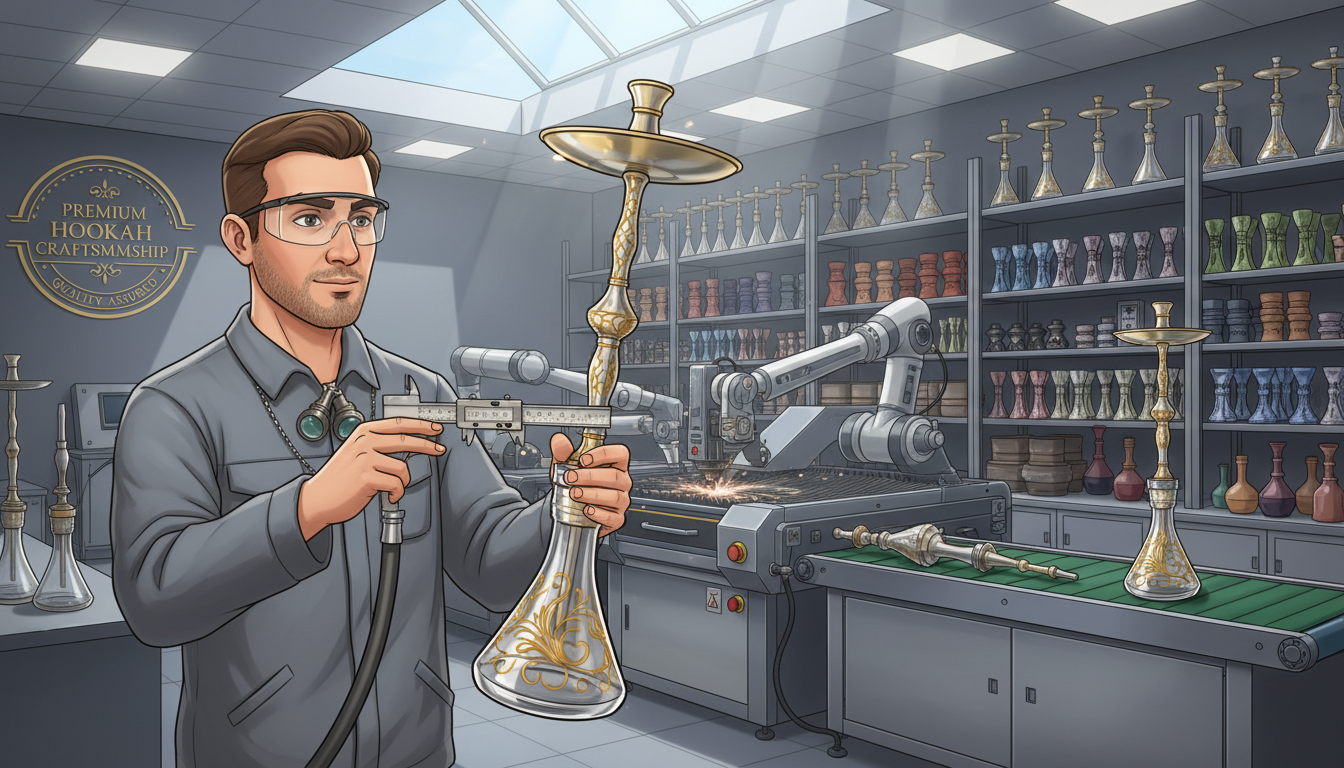
Quality control is what sets professionals apart from others. We ask about inspection steps during production. The best makers check at every stage, not just at the end.
| Manufacturing Aspect | Traditional Craftsmanship | Modern Production |
|---|---|---|
| Production Speed | Lower output, longer timelines | Higher volume, faster turnaround |
| Customization Flexibility | Highly adaptable, unique designs | Limited to existing molds and tooling |
| Unit Cost | Higher due to labor intensity | Lower with economies of scale |
| Consistency | Natural variations between pieces | Standardized specifications |
Manufacturing methods affect prices and minimum orders. Hand-crafted items need smaller orders but cost more. Automated production requires bigger orders but is cheaper for bulk.
Production times vary based on complexity and current orders. We need to know standard lead times and rush order options. This helps us plan and manage customer expectations.
Asking the right questions shows we’re serious about working together. We should ask for factory tours or detailed process documents. This shows how quality brands maintain their standards.
Researching Potencial Manufacturers
Research is key to finding good hookah manufacturers for your business. It’s about using the internet and talking to people to learn more. We look at different sources to make sure the information is right.
Good research saves time and reduces risks. It helps us make smart choices for long-term partnerships.
Utilizing Online Resources for Manufacturer Search
The internet is full of tools to find hookah manufacturers worldwide. B2B platforms like Alibaba, Global Sources, and Made-in-China are great places to start. They let you filter by things like certification and production capacity.
Look for supplier badges and scores on these sites. They show if a supplier is verified. But, they don’t always mean the products are good, so we use them as a starting point.
Warning signs include vague descriptions and fake photos. Good manufacturers show their facilities and quality control clearly.
LinkedIn is also great for finding manufacturers. It lets us see company backgrounds and connect with people. This helps us find out more about suppliers.
Manufacturer websites are full of useful information. We look for things like detailed product lists, certifications, and photos of their facilities.
- Comprehensive product catalogs with technical specifications and material details
- Certifications displayed with verification numbers we can cross-check
- Production facility photos showing actual manufacturing equipment
- Company history and ownership information
- Contact information including physical addresses and multiple communication channels
Industry forums and Reddit communities offer real insights. They talk about supplier experiences and quality. We join groups like r/hookah to get tips from other retailers.
Reading online reviews carefully is important. We look for specific experiences, not just praise. Reviews that mention both good and bad points are usually more trustworthy.
Google search strategies help find manufacturer info. We use special search operators to find specific information.
- Site-specific searches to find mentions of manufacturers on industry publication websites
- Quote searches for exact product model numbers to trace original suppliers
- Date-restricted searches to find recent news or updates about manufacturers
- Image searches to verify if product photos appear across multiple suspicious websites
Industry Trade Shows and Expos
Trade shows offer a chance to see products and meet people in person. They let us check quality and build connections for future business.
Major trade shows like the Tobacco Plus Expo in Las Vegas are key. They bring together manufacturers, distributors, and retailers. This makes it easy to compare different options.
At trade shows, we look at more than just products. We check how knowledgeable the people at the booths are. Asking technical questions helps us see if they know their stuff.
Getting to touch products at trade shows is a big plus. We check things like welding quality and material thickness. Having a checklist helps us compare each manufacturer fairly.
Getting organized at trade shows is important. We collect business cards and take photos of products. We also ask for catalogs and schedule follow-up meetings.
Networking at trade shows is not just about manufacturers. We also meet other retailers and distributors. They share their experiences, which can be very helpful.
Going to trade shows costs time and money, but it’s worth it. We usually find 3 to 5 good prospects at one show. This speeds up our research a lot.
Evaluating Manufacturer Reputation
A manufacturer’s reputation tells us more than any marketing can. Before we partner with anyone, we must do our homework. This ensures we’re working with reliable manufacturers who deliver quality and follow professional standards.
Looking beyond first impressions is key. We dive into a manufacturer’s past, customer feedback, and industry standing. This thorough check helps us find trusted suppliers who support our business goals.
Verifying Supplier Credibility Through Reviews
Reviews and testimonials give us real insights into a manufacturer’s performance. We start by checking specialized hookah industry publications. These sources offer detailed assessments based on real business interactions.
Business verification platforms are also vital for our research. The Better Business Bureau (BBB) tracks customer complaints and how they’re resolved. We look for patterns in how manufacturers handle disputes and customer concerns.

Hookah retailer forums and online communities offer authentic feedback. Retailers share their experiences with product quality, shipping, and communication. These grassroots reviews often reveal more than formal testimonials.
We use critical evaluation techniques to spot genuine testimonials. Real testimonials include specific details about orders, delivery, and problem-solving. Vague praise without examples is a red flag.
Getting direct references from current clients is our best verification method. We ask manufacturers for at least three to five existing customers’ contact information. We then ask specific questions to understand their operations.
- How consistent is the product quality across multiple orders?
- What is the typical delivery timeline, and how often do delays occur?
- How quickly does the manufacturer respond to questions or concerns?
- How effectively does the company handle defects or quality issues?
- Would you recommend this manufacturer to other businesses in the industry?
We also look into the manufacturer’s business history and longevity. Companies with a long history show stability and market acceptance. We check for any significant changes in ownership or management.
The manufacturer’s experience with American businesses is important. We look for evidence of successful long-term relationships with U.S. retailers. This shows they understand American business expectations and regulations.
Social media presence gives us insight into a manufacturer’s operations. Active, professional accounts with regular updates and customer engagement are good signs. We check how they handle public questions and complaints to see their commitment to customer service.
Essential Quality and Safety Certifications
Hookah factory certifications show a manufacturer’s commitment to quality and safety. These certifications are not just paperwork. They prove that independent third parties have audited and approved the manufacturer’s operations. Knowing which certifications matter helps us find professional suppliers.
ISO 9001 certification is the international standard for quality management systems. It confirms that a manufacturer follows documented processes for maintaining consistent product quality. ISO 9001-certified facilities implement systematic quality controls and customer satisfaction monitoring.
When verifying ISO 9001 certification, we check the scope and validity dates. Some manufacturers may have outdated or limited certifications. We confirm certification directly with the issuing body when possible.
Product safety certifications relevant to the U.S. market require careful attention. The Consumer Product Safety Commission (CPSC) sets safety standards for consumer products sold in America. Manufacturers should demonstrate compliance with CPSC requirements, including materials, construction safety, and age-appropriate warnings.
Material certifications assure us about product safety. Components that contact consumables must use FDA-approved food-grade materials. We verify that manufacturers can provide documentation proving their materials meet these standards. This certification protects our customers and business from health-related liability issues.
| Certification Type | Purpose | Verification Method | Importance Level |
|---|---|---|---|
| ISO 9001 | Quality management system standards | Check with ISO registrar database | Essential |
| CPSC Compliance | U.S. consumer product safety requirements | Request compliance documentation | Critical |
| FDA Food-Grade Materials | Safe materials for consumable contact | Verify material testing certificates | Essential |
| Environmental Certifications | Sustainable manufacturing practices | Review third-party environmental audits | Increasingly Important |
Environmental certifications appeal to businesses and consumers who care about sustainability. Certifications like ISO 14001 for environmental management or specific eco-labels show manufacturers consider their environmental impact. While not mandatory, these credentials are increasingly important in the American market.
We never accept certification claims without verification. We contact the issuing organizations directly or use their online verification systems. Many certification bodies have public databases where we can confirm a manufacturer’s current certification status, scope, and expiration dates.
The absence of relevant certifications raises serious concerns about a manufacturer’s professionalism and commitment to quality. While certifications involve costs and effort, legitimate manufacturers view them as essential investments in their credibility and market competitiveness.
Documentation transparency is another positive sign. Professional manufacturers readily provide copies of their certifications, testing reports, and compliance documentation. Hesitation or unwillingness to share these materials suggests possible issues with their claimed credentials or manufacturing standards.
Building Relationships with Manufacturers
Successful hookah businesses go beyond just buying products. They build strong relationships with suppliers. This approach gives them a big advantage over others.
Our manufacturers are like part of our team. They know what we need and help us succeed. This makes our supply chain better for everyone.
Effective Communication Strategies
Good communication is key to strong partnerships with reliable shisha manufacturers. We face challenges like language barriers and time zone differences. But, we have strategies to overcome these.
We need to be clear about what we want from the start. Vague requests can lead to problems. So, we give detailed specs and pictures whenever we can.
We use different ways to talk to our suppliers. Email is for important documents and quotes. For quick chats, we use WhatsApp or WeChat.
Video calls are great for detailed talks and showing products. They help us connect personally and build trust. We always follow up with written notes to make sure we agree.
“The quality of your relationship with your manufacturer directly impacts the quality of products your customers receive. Communication isn’t just about placing orders—it’s about building trust.”
Cultural differences are important when working with trusted hookah suppliers from other countries. We’ve learned to be patient and respectful. This helps more than being pushy.
We set clear rules for talking to avoid misunderstandings. We agree on how fast to respond and who to contact. This makes our business look professional.
When talking about product quality, we compare it to other industries. For example, we look for premium coconut charcoal for consistent quality. We expect the same from our hookah suppliers.
Importance of Long-Term Partnerships
We see our relationships with suppliers as partnerships, not just deals. This changes how we work together and the results we get.
Working with the same reliable shisha manufacturers for a long time has many benefits. We get better prices and priority service during busy times. New customers often face delays.
These partnerships offer flexibility that short-term deals can’t. When we need changes or fast delivery, our suppliers help. They know our success is important to them too.
Manufacturers invest more in long-term partners. They focus on quality and are open to custom products. This helps us stand out in the market.
We show our appreciation by giving feedback and paying on time. This builds trust and shows we’re reliable.
Sharing our plans with trusted hookah suppliers helps them prepare. This trust ensures they can meet our growing needs. It also helps avoid supply problems.
Stable partnerships with manufacturers improve our business in many ways. We get consistent quality, happy customers, and reliable delivery. This makes our business stronger.
Manufacturers who see us as partners share important information with us. This gives us an edge in planning and choosing products.
Building these relationships takes time and effort. But, the benefits are worth it. Our best partnerships have lasted years and keep helping us grow.
Understanding Pricing Structures
Smart business owners know that finding the lowest cost isn’t everything. It’s about finding true value. The hookah industry has pricing structures that balance quality, volume, and market positioning. We need to carefully examine these financial frameworks to make informed decisions that support long-term profitability.
Pricing in this industry involves multiple layers, from factory floor to retail counter. Each level adds value and costs that affect your final margins. By understanding these layers, we can identify opportunities to optimize our purchasing strategy and build sustainable business models.
Breaking Down Wholesale and Retail Price Differences
The distinction between wholesale and retail pricing is key to profitability in the hookah business. Hookah wholesale manufacturers price their products based on raw materials, labor costs, production volume, and shipping logistics. Buying directly from the source gives us the most competitive pricing.
Wholesale pricing has tiered structures that reward larger commitments. Minimum order quantities significantly influence unit costs—the more pieces we order, the lower our per-unit expense becomes. This volume-based pricing reflects the manufacturer’s economies of scale and their ability to optimize production runs.
Calculating true acquisition costs requires considering more than just the product price. We must factor in what’s called landed cost, which includes the product price, international shipping, customs duties, and any import fees. This calculation reveals our actual investment per unit.
The choice between working directly with hookah wholesale manufacturers and purchasing through premium hookah distributors involves important trade-offs. Direct manufacturer relationships provide the best unit pricing but require larger order commitments and longer lead times. Distributors offer convenience with lower minimum orders and domestic inventory, but these benefits come at higher unit costs.
Here’s how these two sourcing options typically compare:
| Factor | Direct Manufacturer | Premium Distributor |
|---|---|---|
| Unit Price | Lowest available pricing | 15-30% higher than direct |
| Minimum Order | High (typically 500+ units) | Low (sometimes 50-100 units) |
| Lead Time | 6-12 weeks | 1-2 weeks from domestic stock |
| Inventory Risk | Higher due to volume | Lower with smaller orders |
| Customization Options | Extensive flexibility | Limited to existing inventory |
Calculating appropriate retail markup requires understanding our operating costs, desired market positioning, and competitive landscape. We need to consider rent, staff salaries, marketing expenses, and inventory carrying costs when determining our final retail price. Industry benchmarks suggest retail markups typically range from 100% to 300% depending on the product category and market segment.
Assessing whether quoted prices are reasonable involves comparing multiple sources and understanding market rates. Premium hookah distributors often provide transparent pricing that helps establish baseline expectations. We can use these reference points to evaluate direct manufacturer quotes and ensure we’re receiving competitive terms.
Mastering Manufacturer Negotiations
Effective negotiation with manufacturers requires understanding what elements are flexible and which remain fixed. Price, payment terms, minimum order quantities, and shipping methods typically offer room for discussion. Certain material specifications and safety standards remain non-negotiable for legitimate manufacturers committed to quality.
Leveraging competitive quotes ethically strengthens our negotiating position without damaging relationships. We can mention that we’re evaluating multiple suppliers, which demonstrates due diligence. The key is presenting this information professionally.
Several negotiation tactics prove effective in the hookah industry:
- Volume commitments for better pricing—offering to increase order size in exchange for reduced unit costs
- Payment term flexibility—discussing options like partial deposits or extended payment schedules that benefit both parties
- Value-added services—negotiating for custom packaging, third-party quality inspection, or warehousing support
- Long-term agreements—securing pricing stability through multi-order contracts that guarantee the manufacturer consistent business
The most successful negotiations focus on problem-solving. We approach these conversations as opportunities to build mutually beneficial arrangements. When manufacturers see us as reliable, professional partners, they often provide better terms voluntarily.
Payment terms deserve special attention during negotiations because they affect cash flow for both parties. Manufacturers often prefer larger deposits to fund production, while we benefit from paying after receiving and inspecting goods. Finding middle ground—perhaps a 30% deposit with balance due upon shipment—creates workable arrangements.
Win-win outcomes establish foundations for partnerships that extend beyond single transactions. When we negotiate fairly and honor our commitments, manufacturers become invested in our success. They may offer priority production scheduling, first access to new products, or preferential pricing on future orders. These relationship benefits often exceed the value gained from aggressive price negotiations.
Legal and Regulatory Considerations
Before you start, knowing the law is key to avoid big mistakes. The rules for bringing hookah products into the U.S. involve many agencies and rules. We must follow these carefully to avoid delays and fines.
Many people don’t realize how hard it is to bring tobacco items into the U.S. Not following the rules can lead to big problems. It’s better to learn these rules early to save trouble later.
Import Regulations for Hookah Products
U.S. Customs and Border Protection checks all items coming into the country, including hookahs. We need to have the right documents for every shipment. This means being very careful and accurate with our information.
The key documents for importing hookahs are commercial invoices, packing lists, and bills of lading. Each one has a special role in getting through customs. Commercial invoices must list the products, how many, and their value.
Knowing the Harmonized Tariff Schedule code for our products helps us figure out the duty rates. Hookahs and parts have specific codes that affect how much we pay. Getting this wrong can lead to extra costs and penalties.
We must choose between formal and informal entry procedures based on the shipment’s value. Here’s how they differ:
| Entry Type | Shipment Value | Documentation Required | Processing Time |
|---|---|---|---|
| Informal Entry | Under $2,500 | Basic customs forms | 1-2 days |
| Formal Entry | Over $2,500 | Complete commercial documentation | 3-5 days |
| Formal Entry with Exam | Any value (selected for inspection) | Full documentation plus samples | 7-14 days |
Working with experienced customs brokers makes importing easier. They know the rules and can handle the process for us. Their help prevents mistakes that can slow down shipments.
State-level regulations add more complexity to importing hookahs. Some states have extra rules for tobacco products. We need to check these rules in the states where we plan to sell.
Accurate product declarations and proper valuation aren’t just rules—they’re legal musts that protect your business.
Safety Standards and Certification Requirements
The Consumer Product Safety Commission sets safety standards for products sold in America. Hookah parts must meet certain requirements, like those that touch water or smoke. Working with authentic hookah producers who know these standards is key.
Product safety is more than just meeting the minimum. We should check if manufacturers test their materials and parts properly. Choosing authentic hookah producers means we get the right documents and test results.
Material safety tests check for harmful substances or health risks. Different materials need different tests. These tests make sure products are safe to use.
Getting the right hookah factory certifications shows a manufacturer’s commitment to quality and following the law. These certifications prove products meet U.S. safety standards. We should ask for these certifications before ordering a lot.
Common certifications we should look for include:
- ISO 9001 quality management certification showing systematic quality control
- Material safety certificates for glass, metals, and food-grade components
- Third-party testing reports from recognized U.S. laboratories
- Factory audit reports demonstrating compliance with manufacturing standards
Labeling rules require specific information on hookah products and packaging. Products must clearly show where they were made. Some places need warning labels about tobacco or product dangers.
Knowing about liability is important for safety compliance. Claims can hurt a business financially and its reputation. Having hookah factory certifications and doing thorough safety tests can protect against these claims.
We can’t skip safety compliance, even if it seems expensive. The risks to our business are too great. Building strong relationships with certified, compliant manufacturers is essential for success in the hookah market.
Assessing Customer Service and Support
Good customer service is key to finding reliable shisha manufacturers. It helps solve problems and keeps your business running smoothly. We need to check how well manufacturers communicate and support their products after sale.
Companies with strong customer service show they believe in their products. They are ready to help you succeed. Customer service excellence often correlates with overall manufacturing quality and business professionalism.
Evaluating Communication Responsiveness
How a manufacturer talks to you at first shows how they will be later. We should know how long they take to answer. This shows if they value your time and questions.
How fast they answer depends on the question. Simple questions should get answers quickly. But, complex ones might take a few days.
Good manufacturers keep you updated without needing to ask. They are open about any problems or delays. This shows they care about your business.
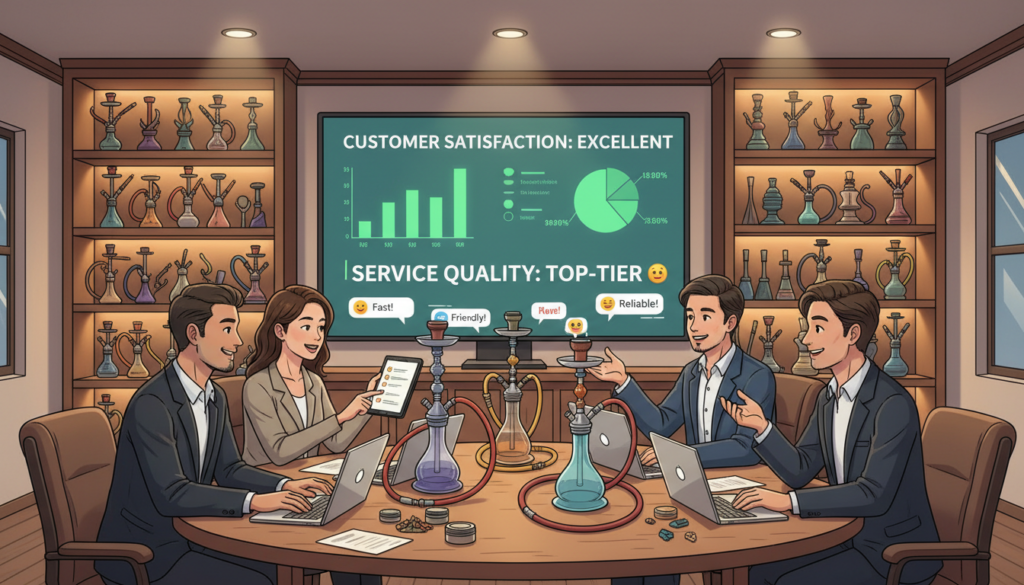
Having many ways to contact a manufacturer shows they are easy to reach. Good ones offer email, phone, and messaging. Being able to talk to the right person quickly is important.
Warning signs of poor communication include:
- Vague answers to specific technical or pricing questions
- Inconsistent information from different company representatives
- Unexplained delays in providing requested documentation or samples
- Difficulty reaching the same contact person consistently
- Defensive responses to legitimate quality or delivery concerns
Testing communication quality is easy. Ask detailed questions and see how they respond. Look for quick, complete answers.
Good communication avoids problems and builds trust. It helps solve issues together. Companies that talk well work better in all areas.
Understanding After-Sales Support Infrastructure
How a manufacturer supports you after buying shows their commitment. Warranty policies are a key indicator. Good warranties for hookahs last 30 to 90 days.
Knowing what warranties cover is important. Warranties should cover structural defects, material failures, and manufacturing errors. But, they usually don’t cover normal wear or misuse.
Before ordering a lot, understand how to handle defects. Find out if they replace, repair, or refund. Know who pays for shipping.
| Warranty Aspect | Excellent Support | Adequate Support | Poor Support |
|---|---|---|---|
| Coverage Period | 60-90 days from delivery | 30-60 days from delivery | Less than 30 days or unclear terms |
| Claim Response Time | Within 24-48 hours | Within 3-5 business days | Over one week or no response |
| Replacement Process | Ships replacements immediately upon verification | Requires return before sending replacement | Disputes most claims or offers credits only |
| Shipping Responsibility | Covers both return and replacement shipping | Covers replacement shipping only | Customer pays all shipping costs |
Support goes beyond warranties. Help with setup or fixing issues is important. Having parts available keeps products working well.
Good manufacturers fix problems even outside the warranty. They use feedback to improve. This shows they really care about quality.
Manufacturers who stand behind their products signal confidence in quality and dedication to customer satisfaction. They see warranty claims as a chance to show their service is top-notch. This builds strong partnerships.
Ask for written policies on warranties and support before choosing a manufacturer. Make sure you understand their promises. This avoids misunderstandings and ensures you have options if things go wrong.
Good communication and support are key to finding trusted suppliers. These qualities are more important as your business grows and your relationship with the manufacturer deepens.
Finding Niche Manufacturers
Finding the right niche manufacturer can change your business for the better. The hookah industry now includes specialized producers. They focus on specific market segments, not just mass production.
These manufacturers bring deep expertise and innovative designs. They offer unique products that let retailers target specific customer groups. This helps businesses stand out from the competition.
We see growing demand for unique hookah products. Working with specialty manufacturers gives access to exclusive items. These items can command premium prices and build brand loyalty.
It’s important to find premium hookah distributors who specialize in niche markets. This is key for businesses looking for a competitive edge.
Innovative Products and Market Specialization
The specialty hookah market has several distinct categories. Portable hookahs are perfect for those who value convenience. They are compact and great for travel or outdoor use.
Luxury hookahs are another thriving niche. They feature premium materials like crystal, brass, or stainless steel. Some high-end manufacturers even use precious metals or hand-blown glass.
Modern minimalist designs appeal to those who love clean lines. These products often target younger demographics or design-conscious consumers. Finding quality hookah brands in this category requires looking at both looks and function.
Electronic hookahs and advanced heat-management systems show the industry’s tech innovation. These products eliminate traditional charcoal or offer precise temperature control. Specialty manufacturers often hold patents or proprietary designs.
Material innovations set specialty manufacturers apart. Medical-grade silicone hoses offer superior hygiene and durability compared to traditional materials. LED lighting adds visual appeal and serves functional purposes like session timing indicators.
Improved purge valve systems show how niche manufacturers refine specific components. These innovations enhance user experience through better airflow control or easier maintenance. Specialty producers invest heavily in research and development within their chosen focus areas.
Specialty products allow retailers to target specific customer segments effectively. These products often have higher profit margins because they serve defined needs with limited competition. This differentiation helps businesses establish unique brand identities in crowded marketplaces.
Deciding if specialty products align with your target market requires careful analysis. Consider customer demographics, price sensitivity, and purchasing patterns before committing to niche inventory. Some specialty items may have seasonal demand fluctuations or require customer education about their benefits.
The benefits and challenges of niche products need balanced consideration. Specialty items offer differentiation, premium pricing, and reduced direct competition. They typically involve higher minimum order quantities and may appeal to smaller customer bases than mainstream products.
Customization and Private Label Solutions
Custom design opportunities allow businesses to create proprietary products. This strengthens brand identity. Working with manufacturers on custom or private-label hookahs requires understanding the development process from concept through production.
The custom design process starts with initial concept discussions. You share design ideas and functional requirements. Manufacturers then create technical drawings or 3D renderings for approval.
Prototype development follows, allowing you to test and refine the design. Customization options vary by manufacturer capabilities but commonly include several key areas. Proprietary shapes create distinctive visual profiles that become associated with your brand.
Exclusive color schemes differentiate your products on retail shelves or in online catalogs. Custom engraving or branding adds personalized touches that reinforce brand recognition. Many manufacturers offer laser engraving, embossing, or logo application on hookah components.
Unique packaging further distinguishes your products and enhances perceived value. This creates memorable unboxing experiences. Minimum order quantities for custom products typically exceed those for standard items. Manufacturers require larger commitments to justify custom tooling, molds, or production setup costs.
Additional costs involved in custom development include tooling fees, design consultation, and prototype production. These upfront investments can range from several hundred to several thousand dollars. These costs diminish per unit as order volumes increase, making custom products more economical at scale.
Intellectual property considerations deserve careful attention when developing custom products. Clarify who owns design rights in your manufacturing agreement. Some manufacturers retain design ownership, while others transfer rights upon payment or after specific order volumes.
Protecting proprietary designs may involve trademark registration, design patents, or non-disclosure agreements. We recommend consulting intellectual property attorneys before sharing detailed design concepts. Clear contractual language prevents disputes and protects your investment in custom development.
Custom products create powerful brand differentiation that builds customer loyalty. Exclusive designs become synonymous with your business, making it difficult for competitors to replicate your offerings. This uniqueness often justifies premium pricing and reduces price-based competition.
Questions to ask manufacturers about custom capabilities help assess their suitability for your project. Inquire about their design support services and whether they provide in-house design assistance or require complete specifications. Understanding their prototype process, including costs and timelines, sets realistic expectations.
Timeline expectations for custom projects vary significantly based on complexity and manufacturer schedules. Simple customizations like color changes may require 4-6 weeks, while completely new designs can take 3-6 months. Build adequate lead time into your product launch planning to accommodate development phases.
Successful custom projects require clear communication throughout the development process. Provide detailed specifications including dimensions, materials, color codes, and functional requirements. Visual references like sketches or competitor product examples help manufacturers understand your vision.
Realistic expectations about costs and timelines prevent disappointment and budget overruns. Custom development always involves trade-offs between design complexity, production costs, and time to market. We find that maintaining flexibility while protecting core design elements leads to the best outcomes.
Working with premium hookah distributors who offer custom capabilities opens doors to unique market positioning. These partnerships allow you to offer products that reflect your brand values and meet specific customer needs. The investment in custom development pays dividends through enhanced brand recognition and customer retention.
Global vs. Local Manufacturers
The place where you make your products affects your business a lot. It changes how fast you can sell, how much money you make, and how easy it is to get your products. Choosing between making things in your own country or somewhere else is not just about money.
Knowing the pros and cons of making things locally or internationally helps you make smart choices. Whether you want to get your products to market fast, save money, make sure they’re real, or be flexible with how you make them, where you make them matters a lot. We’ll look at both local and international options to help you decide what’s best for you.
Domestic Manufacturing Advantages and Limitations
Making things in the U.S. has many good points for your business. You can get your products faster and save on shipping costs. Most orders from the U.S. arrive in days, not weeks. This helps you keep your inventory low and respond quickly to what customers want.
Talking to your U.S. partners is easier because you don’t have to deal with language or time zone issues. You can have phone calls, video chats, or even meet in person. This makes solving problems easier.
There are also big advantages in logistics. You don’t have to worry about customs, paperwork, or delays. Quality standards are usually what U.S. customers expect, and you can easily check the factory in person.
Using products made in the U.S. can also help your marketing. The “Made in USA” label can attract customers who prefer to buy American. This can make your brand stand out and even let you charge more for your products.
U.S. makers are also more flexible with how many products you order. You can order smaller amounts, which is great for trying new things or serving small markets. This flexibility is very helpful for new businesses or those trying new products.
But, making things in the U.S. can be more expensive. Labor and overhead costs are higher, which can make your products more expensive. This can affect how much money you make or how much you can charge for your products.
Another challenge is finding products made entirely in the U.S. Most U.S. operations focus on putting together imported parts. It’s hard to find the traditional craftsmanship found in countries where hookahs are made.
Domestic manufacturing is a good choice for some businesses. If you need to restock quickly, the U.S. is a great place to find partners. Businesses that order small amounts often find the flexibility useful. Companies that value American-made products might be willing to pay more for it.
Many U.S. companies use a mix of domestic and international production. They import parts and assemble them in the U.S. This way, they balance cost, quality, and marketing benefits, finding a middle ground that works for them.
International Market Sourcing Benefits
Working with manufacturers from countries known for making hookahs gives you access to their expertise and authentic craftsmanship. Countries like Egypt, Syria, Turkey, India, and China have been making hookahs for generations. They have deep knowledge of traditional designs and construction methods.
One big advantage of international sourcing is the cost. You can save a lot of money, which means you can make more money or sell your products for less. Savings can be up to 70% compared to making things in the U.S., which is a big financial advantage for businesses that make a lot of products.
International sourcing also means you have access to thousands of styles, materials, and designs that you can’t find in the U.S. Traditional craftsmanship in brass, copper, and special decorative techniques is mainly found in countries with a long history of making hookahs.
Each country specializes in different things. Egyptian makers are known for traditional brass and copper hookahs with classic designs and hand-hammered details. Turkish makers create ornate pieces with detailed engravings and premium finishes. Chinese makers are leaders in modern innovations, cost-effective production, and quick prototyping.
The established manufacturing in these countries ensures consistent quality at a large scale. Specialized suppliers, skilled craftspeople, and refined production processes make it hard to find better efficiency elsewhere. This expertise means you get better products and more reliable partnerships.
| Sourcing Factor | Domestic Manufacturing | International Markets | Business Impact |
|---|---|---|---|
| Cost Per Unit | $45-$120 | $15-$50 | 100-300% price difference affects margins significantly |
| Lead Time | 3-7 days | 4-8 weeks | Inventory planning and cash flow implications |
| Minimum Order | 25-100 units | 200-500 units | Capital requirements and storage needs vary greatly |
| Product Selection | Limited (200-500 options) | Extensive (2,000+ options) | Market differentiation and niche serving capability |
| Quality Control | Easy verification | Requires third-party inspection | Quality consistency and return rate management |
International sourcing has its own challenges that need careful handling. Shipping times are longer, taking 4-8 weeks, which means you need to plan your inventory better and have more money set aside. Your cash is tied up in inventory for a long time.
Ordering more products at once is common, but it can be expensive. Orders of 200-500 units per style are typical, making it hard to try new products or serve small markets. This limits your ability to experiment or cater to smaller groups.
Dealing with international partners can be tricky because of language, cultural, and time zone differences. You need clear instructions, visual aids, and patience. Professional translators and freight forwarders help overcome these hurdles.
Checking the quality of products made far away is harder. You can’t just visit the factory or oversee production yourself. You need strong quality control systems and trusted partners to verify the quality.
Importing products adds complexity. You have to deal with customs, paperwork, duty calculations, and arranging freight. Making mistakes can cause delays and extra costs.
To manage risks, consider using escrow services to protect your money until you’re sure about the products. Factory audits and pre-shipment inspections can also help ensure quality. Starting with small orders can help you test manufacturers before committing to larger orders.
Many successful businesses use a mix of local and international sources. They might get traditional brass hookahs from Egypt, modern designs from China, and decorative pieces from Turkey. This approach leverages each region’s strengths and spreads out the risk.
Diversifying your supply chain can also make your business more resilient. Relying on just one country or supplier can be risky. Having partners in different places helps keep your business running even when there are problems with one supplier.
Your best sourcing strategy depends on your business model, target market, and what you can handle. If you make a lot of products, international sourcing might be cheaper. But if you need to restock quickly or serve small markets, the U.S. might be better. Understanding these differences helps you make choices that fit your business goals and competitive edge.
Sustainability in Hookah Manufacturing
Hookah manufacturing is changing, thanks to growing eco-awareness. Now, being green is a must, not just a nice thing to do. Companies must cut their environmental impact while keeping quality and prices good.
This change touches every part of the supply chain. From getting raw materials to shipping, being green matters a lot. Knowing this helps us choose the right partners for making products.
Eco-Friendly Materials and Practices
Finding reliable shisha manufacturers who care about the planet is key. They use new ways to make products that are both good for the environment and high quality.
There are many eco-friendly materials available now. Companies that focus on being green use:
- Recycled metals: Aluminum and stainless steel made from recycled stuff
- Sustainably sourced wood: Wood from forests that are managed well
- Biodegradable packaging: Stuff that can easily break down and not harm the earth
- Non-toxic finishes: Safe coatings that don’t harm people or the planet
- Natural alternatives: Stuff like bamboo and coconut shell for parts
How products are made also affects the environment. Good factories have plans to use less resources and manage waste better.
They use water recycling, energy-saving tech, and try to make less waste. They also make sure waste is handled safely.
Certifications show a company’s green efforts. The ISO 14001 standard is a big deal. It shows a company is serious about being green.
We need to check if companies really are green. Look for factory visits, third-party checks, and clear reports on their green efforts. These reports should show how they’re doing on things like energy use and waste.
Being green might cost more at first. But, it can also make your brand stronger and more loyal customers. Plus, it fits with being a responsible company.
Being green is not just about the planet. It’s also about treating workers right and fairly. We should look at how companies treat people and the planet together.
Addressing Consumer Demand for Sustainability
More and more people want to buy things that are good for the planet. This is true for younger people, like Millennials and Gen Z. This change is both a challenge and an opportunity for those selling hookah.
Working with quality hookah brands that really care about the planet can help you stand out. It attracts green-conscious buyers, makes your brand look better, and helps avoid future rules.
| Sustainability Factor | Consumer Priority Level | Business Impact | Implementation Complexity |
|---|---|---|---|
| Recycled Materials | High | Moderate brand enhancement | Medium difficulty |
| Eco-Friendly Packaging | Very High | Strong differentiation | Low difficulty |
| Carbon-Neutral Shipping | Moderate | Premium positioning | Medium difficulty |
| Ethical Labor Practices | High | Trust building | High difficulty |
Telling people about your green efforts needs to be honest and clear. Don’t make false claims about being green. It’s better to talk about real achievements.
Good green stories include details about who you work with, where materials come from, and what you’re doing to help the planet. People like honesty about what you’re working on to get better.
Choosing green doesn’t mean you have to give up quality or cost. You can weigh how green a company is with other important things like quality and price. This way, you find quality hookah brands that are good in many ways.
Companies that do well in the future will see being green as a way to innovate. They will keep getting better at being green while keeping their products great.
Final Steps in Selecting a Manufacturer
We’ve looked at many ways to find good hookah makers. Now, it’s time to check everything before you sign anything.
Conducting Factory Visits
Seeing the factory in person is key. It shows things you can’t see online. Look at the equipment, how clean it is, and how safe the workers are.
Ask about how much they can make, how long it takes, and how they handle mistakes. If you can’t go in person, ask for videos or use inspection services.
Finalizing Contracts and Agreements
Good contracts keep everyone safe and avoid problems later. They should cover what the product is, how much it costs, when you pay, and how much you need to buy.
Get a lawyer who knows about international business to check the contracts. Start with small orders to see if they’re reliable. Clear agreements help solve problems and protect everyone.
Finding the right hookah makers takes time and effort. But, choosing the right partners means better products, on-time delivery, and strong business ties in the hookah world.
FAQ
What are the most important factors to consider when evaluating hookah manufacturers?
When we look at hookah manufacturers, we focus on a few key things. First, we check the quality of their products. This includes the materials they use, like stainless steel and glass, and how well they’re made. We also look at how they’re put together.
Second, we make sure they have the right certifications. This shows they follow quality and safety standards. Third, we look at their reputation by reading reviews and talking to clients.
Fourth, we see how they communicate and support their products after we buy them. Lastly, we check if their prices and production fit our needs. We also look at their manufacturing process to see if it matches our product style.
How can we verify that a hookah manufacturer is legitimate and trustworthy?
To check if a manufacturer is trustworthy, we use several methods. First, we check if they’re registered and how long they’ve been in business. This helps us see if they’re real.
Then, we look for certifications like ISO 9001. We also ask for references and check their online presence. We look for reviews and check if they have any badges or history on B2B sites.
If possible, we visit their factory or hire someone to check for us. We also pay attention to how they communicate with us. Good suppliers are clear and open.
What’s the difference between working directly with manufacturers versus going through distributors?
Working directly with manufacturers can save us money. We get better prices and more control over our products. But, we need to order more and wait longer for our products.
On the other hand, distributors offer smaller orders and faster delivery. They also handle the logistics for us. It’s good for testing new products or when we’re new to importing.
Many businesses use both methods. They buy standard products directly and use distributors for specialty items. The choice depends on our needs and goals.
What certifications should reputable hookah manufacturers have?
Good manufacturers have several certifications. ISO 9001 shows they manage quality well. They also need safety certifications for the U.S. market.
Look for certifications for materials that touch smoke or water. This ensures they’re safe. For eco-friendly options, look for ISO 14001. Material-specific certifications are also important.
Some manufacturers get extra certifications from labs. We check these certifications are real by contacting the issuing organizations. Manufacturers who show their certifications are trustworthy.
How do we handle communication challenges with international hookah manufacturers?
To overcome communication challenges, we plan carefully. We set clear communication rules from the start. This includes how we talk and how long they should respond.
We also consider time zones and language barriers. We use simple language and pictures to explain things. We confirm our understanding in writing.
If language is a big problem, we might hire a translator. We also learn about cultural differences in communication. This helps avoid misunderstandings.
We keep in touch even when we’re not ordering. This builds a strong relationship. We approach communication challenges with patience and respect.
What are the typical minimum order quantities when working with hookah manufacturers?
Minimum order quantities vary a lot. For standard products, it’s usually 50 to 500 units. High-quality traditional hookahs might need 100-200 units.
Modern designs might require 300-500 units. Custom products often need 500-1,000 units. Specialty items might have their own minimums.
Some manufacturers let us mix different products to meet minimums. Distributors usually have lower minimums, sometimes as low as 6-12 pieces. We start with small orders to test quality before ordering more.
How long does it typically take to receive hookah orders from manufacturers?
Lead times depend on several factors. For U.S. manufacturers, it’s usually 1-3 weeks for in-stock items. Custom orders take 4-6 weeks.
International orders take longer, 2-4 weeks for production, plus shipping time. Shipping can take 1-2 weeks by air or 4-6 weeks by sea. Customs clearance adds 3-7 days.
We plan for 6-10 weeks for international orders. Peak seasons can add 2-4 weeks. We keep buffer inventory and order early to avoid delays.
What should we look for during a factory visit to a hookah manufacturer?
During a factory visit, we assess everything carefully. We check the equipment and how clean and organized the facility is. We also look at their quality control processes.
We see how they handle materials and check worker conditions. We examine finished products and ask about their production process. We also ask about their capacity and lead times.
We verify certifications and check if they’re current. We assess management’s professionalism and their willingness to answer questions. If visits aren’t possible, we use video tours or third-party inspections.
How do we negotiate better pricing with hookah manufacturers?
We negotiate prices by doing our research first. We get quotes from several manufacturers to understand the market. We then discuss our volume projections and long-term plans.
We look for ways to combine orders for better pricing. We also ask about payment terms and value-added services. We approach negotiations as problem-solving, aiming for mutual benefits.
What are the key legal considerations when importing hookahs into the United States?
Importing hookahs involves several legal steps. We classify products correctly to determine duty rates. We work with customs brokers to meet U.S. regulations.
We prepare the necessary documents and ensure compliance with safety standards. We check for proper country of origin marking and warning labels. We also research state regulations.
We keep detailed records of imports and certifications. This shows we’re following the law. We also consider intellectual property and product liability.
Should we prioritize traditional hookah designs or modern innovations?
The choice depends on our target market. Traditional designs appeal to those valuing cultural authenticity. Modern designs attract those who prefer functionality and contemporary looks.
Many businesses offer both. We position traditional hookahs as premium products and modern designs as everyday options. We let customer feedback guide our product mix.
How important are sustainability practices when selecting a hookah manufacturer?
Sustainability is key in our selection process. It appeals to environmentally conscious customers. We look for manufacturers using recycled materials and sustainable practices.
We verify their claims through certifications and audits. Sustainability also means fair labor practices and safe working conditions. It’s important for our brand reputation and corporate values.
We balance sustainability with cost and quality. Many manufacturers are making eco-friendly investments without raising prices. We communicate our sustainability efforts to customers, building loyalty.
What red flags should we watch for when evaluating a hookah manufacturer?
We watch for several warning signs. Unwillingness to provide references or certifications is a red flag. So is inconsistent or vague communication.
Prices that seem too good to be true are also a warning. We’re cautious of manufacturers who pressure us to make quick decisions. We also check if they’re registered and have a physical address.
Manufacturers unfamiliar with U.S. regulations are a concern. Unclear contract terms are also a red flag. We trust our instincts and do more research if something feels off.
How can we build strong long-term relationships with our hookah manufacturers?
We build strong relationships through consistent practices. We communicate regularly, even when we’re not ordering. This keeps the relationship alive.
We pay our invoices on time, which builds trust. We give feedback, both positive and constructive. This helps them improve and shows we’re engaged.
We honor our commitments and share market insights. We approach challenges together, not against each other. We visit their facilities when we can and negotiate fairly.
We start with small orders and gradually increase them. This shows our confidence in them. We plan ahead and give them enough time for orders.
What’s the best way to test product quality before placing large orders?
We test product quality by starting small. We request samples and pay for them. This lets us check the materials and how well they’re made.
We test the product’s functionality and look for defects. If the samples are good, we order a small batch. We check these orders carefully and use them to gather feedback.
We document any issues and share them with the manufacturer. This helps them improve. We only commit to large orders after we’re sure of the quality.

One thought on “Finding Reputable Hookah Manufacturers Guide”