Introduction to Charcoal Briquette Production in Indonesia
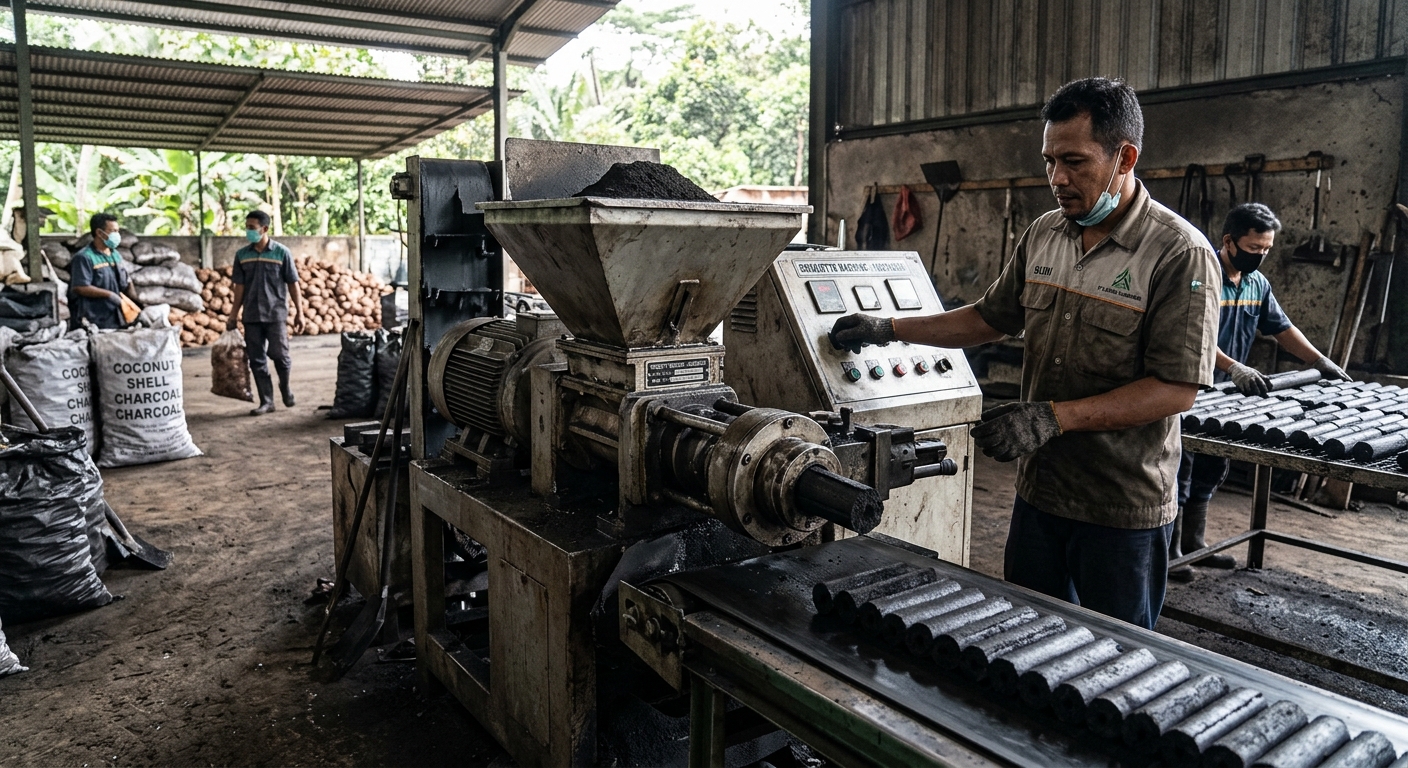
Indonesia has emerged as a global powerhouse in the production of high-quality charcoal briquettes, particularly those made from coconut shells. The archipelago’s vast agricultural resources provide an abundant supply of raw materials, making it an ideal location for manufacturing premium briquettes. Central to this booming industry is the charcoal briquette machine, a vital piece of equipment that transforms raw biomass into compact, efficient, and clean-burning fuel.
As international demand for sustainable and smokeless charcoal rises, especially for shisha and BBQ applications, understanding the machinery used in Indonesia becomes crucial for investors, manufacturers, and buyers. Whether you are looking into A Complete Guide to Bulk Hookah Charcoal Suppliers or starting your own production line, the technology behind the briquette machine is the foundation of quality.
How a Charcoal Briquette Machine Works
The charcoal briquette machine operates through a systematic process that involves several stages, from raw material preparation to the final extrusion or pressing of the briquettes. The primary stages include crushing, drying, mixing with a binder, and pressing.
1. Crushing and Carbonization
Before entering the briquette machine, the raw material (such as coconut shells, sawdust, or agricultural waste) must be carbonized. Once converted into charcoal, it is crushed into a fine powder. The consistency of this powder is critical, as it determines the density and smoothness of the final briquette.
2. Mixing with Binders
Pure charcoal powder lacks the necessary adhesiveness to hold its shape under pressure. Therefore, it is mixed with a natural binder, commonly tapioca starch or cassava flour in Indonesia. This mixture is blended thoroughly in a specialized mixer with a controlled amount of water to achieve the perfect moisture content.
3. Pressing and Extrusion
The blended mixture is fed into the charcoal briquette machine. Depending on the desired shape and application, different types of machines are used. For instance, shisha charcoal often requires a hydraulic press to achieve perfect cubes, while BBQ charcoal might use a roller press or an extruder machine to create hexagonal or cylindrical logs.
Types of Charcoal Briquette Machines Used in Indonesia
There are several types of briquette machines utilized across Indonesian factories, each tailored to specific production needs and market demands.
Extruder Briquette Machines
Extruders are highly popular for producing long, cylindrical, or hexagonal charcoal logs with a hollow center. This design allows for better airflow and a more consistent burn. These machines use a screw propeller to push the charcoal mixture through a forming mold under high pressure and temperature.
Hydraulic Briquette Presses
Hydraulic presses are the industry standard for producing premium shisha or hookah charcoal. They apply immense pressure to form dense, perfectly shaped cubes or flats. The high density achieved by hydraulic presses ensures a long burning time and minimal ash production, which is essential for a pleasant smoking experience. If you are learning about Hookah Etiquette for Beginners: A Complete Guide to Shisha Culture, you will appreciate how a well-pressed briquette enhances the session.
Roller Press Machines
Roller presses are typically used for high-volume BBQ charcoal production. They consist of two counter-rotating rollers with matching indentations. As the charcoal mixture passes between the rollers, it is compacted into pillow-shaped or oval briquettes. This method is highly efficient and ideal for mass production.
Comparing Briquette Machine Types
The following table compares the three main types of charcoal briquette machines used in Indonesia based on their typical application, output shape, and production capacity.
| Machine Type | Typical Application | Output Shape | Production Capacity |
|---|---|---|---|
| Hydraulic Press | Shisha/Hookah | Cubes, Flats | Medium (200-500 kg/hr) |
| Screw Extruder | BBQ / Industrial | Hexagonal Logs | High (500-1000 kg/hr) |
| Roller Press | BBQ / Grilling | Pillow/Oval | Very High (1000+ kg/hr) |
Why Indonesia is a Hub for Charcoal Briquette Production
Indonesia’s dominance in the charcoal briquette market is not solely due to advanced machinery. The country possesses several unique advantages that make it an ideal manufacturing hub.
Abundant Raw Materials
Indonesia is one of the world’s largest producers of coconuts. The shells, a byproduct of the copra and coconut oil industries, are widely available and inexpensive. Coconut shell charcoal is highly sought after because it burns hotter, longer, and cleaner than traditional wood charcoal.
Skilled Workforce and Established Infrastructure
Over the years, Indonesia has developed a robust infrastructure to support the charcoal industry. From localized collection networks for raw shells to skilled technicians capable of operating and maintaining complex briquette machines, the ecosystem is well-established. Additionally, major ports like Tanjung Priok in Jakarta and Tanjung Perak in Surabaya facilitate efficient global exportation.
Favorable Government Policies
The Indonesian government supports the export of value-added agricultural products. By processing raw coconut shells into high-value charcoal briquettes, manufacturers benefit from favorable export policies and support for sustainable business practices.
Maintaining and Optimizing Briquette Machines
To ensure consistent quality and production efficiency, proper maintenance of charcoal briquette machines is essential. Indonesian manufacturers implement strict maintenance schedules to prevent downtime and defects.
- Regular Cleaning: Machines must be cleaned daily to prevent residual charcoal mixture from hardening and clogging the molds or extrusion screws.
- Lubrication: Moving parts, especially in hydraulic and roller presses, require regular lubrication to reduce friction and wear.
- Mold Replacement: Molds endure immense pressure and friction. Inspecting them regularly and replacing worn molds ensures that the briquettes maintain their exact shape and sharp edges.
- Moisture Control: The mixing phase must be carefully monitored. If the mixture is too dry, the briquettes will crumble; if too wet, they will not press correctly and will require excessive drying time.
Conclusion
The charcoal briquette machine is the beating heart of Indonesia’s thriving charcoal industry. By combining advanced mechanical pressing technology with the country’s abundant, high-quality coconut shells, Indonesian manufacturers can produce some of the best charcoal briquettes in the world. Whether utilizing hydraulic presses for premium shisha cubes or extruders for long-lasting BBQ logs, understanding the machinery provides valuable insight into the quality and sustainability of the final product. As global demand continues to grow, the innovation and efficiency of charcoal briquette machines in Indonesia will remain crucial to meeting international standards.
Frequently Asked Questions (FAQ)
What is the best raw material for charcoal briquettes in Indonesia?
Coconut shells are considered the best raw material in Indonesia due to their high carbon content, which results in briquettes that burn hotter, longer, and with minimal ash and smoke compared to wood or agricultural waste.
Why are hydraulic presses preferred for shisha charcoal?
Hydraulic presses can apply massive, controlled pressure, resulting in extremely dense briquettes. This density is required for shisha charcoal to ensure a long burning time and to prevent the briquette from breaking apart and dropping ash into the hookah bowl.
Can one briquette machine make different shapes?
Yes, many briquette machines, particularly hydraulic presses and roller presses, feature interchangeable molds. By swapping out the mold, a manufacturer can switch from producing cubes to flats, or from pillow shapes to oval shapes, though it requires halting production to make the change.
How long does the production process take?
While the actual crushing, mixing, and pressing can happen continuously and relatively quickly, the drying phase takes the most time. After pressing, briquettes must be dried in large industrial ovens for 18 to 24 hours to reduce their moisture content to an optimal level before packaging.

One thought on “The Ultimate Guide to the Charcoal Briquette Machine in Indonesia”