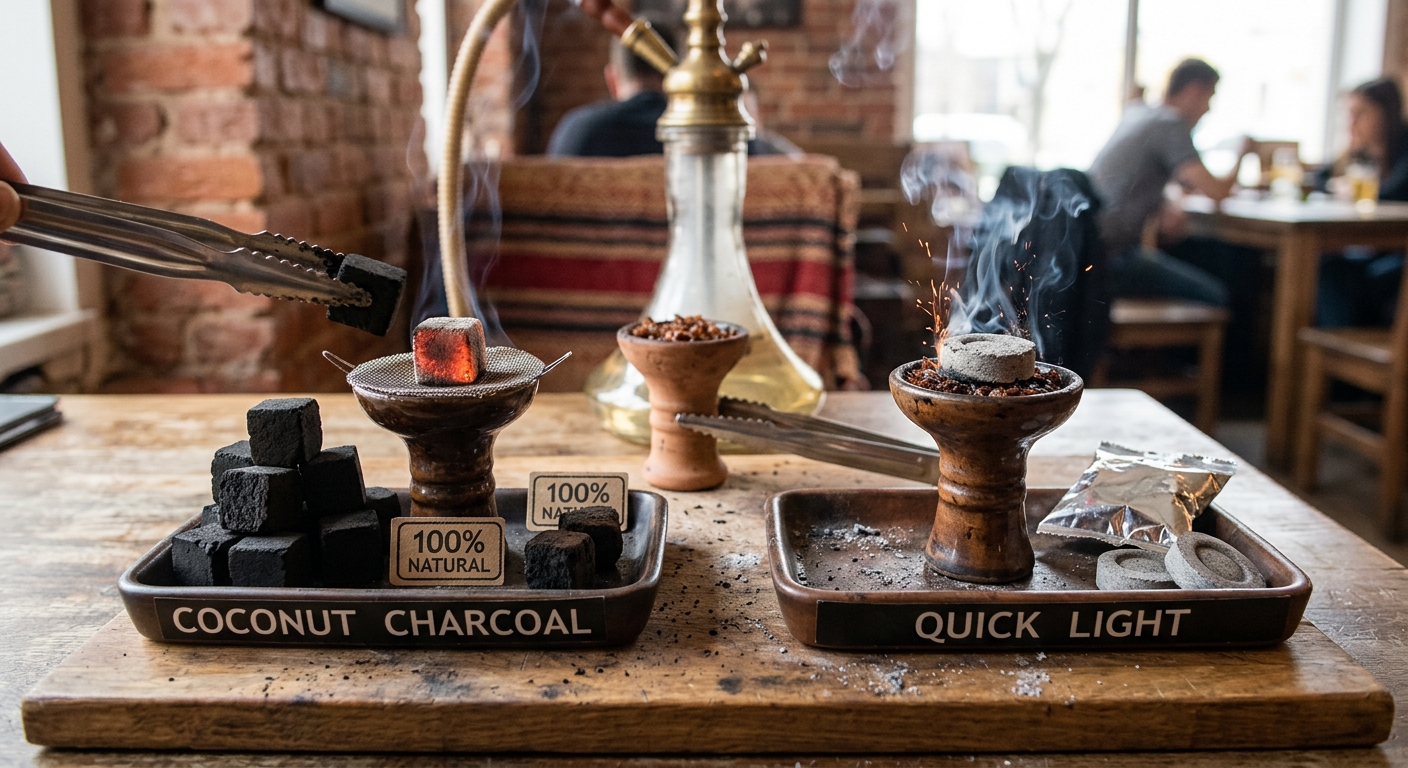
Introduction to Shisha Coals: Coconut Charcoal vs Quick Light
When it comes to enjoying a perfect hookah session, the type of charcoal you use is just as important as the shisha flavor or the pipe itself. The ongoing debate of coconut charcoal vs quick light coals has divided the hookah community for years. Both options serve the same fundamental purpose—heating your shisha to produce flavorful smoke—but they go about it in vastly different ways.
As a hookah enthusiast or lounge owner, understanding the nuances between natural coconut coals and chemically treated quick lights is essential. Your choice of charcoal impacts everything from heat management and session duration to flavor purity and health considerations. In this comprehensive guide, we will explore the characteristics, pros, and cons of both coconut charcoal and quick light coals to help you make an informed decision for your next smoke session.
Understanding Quick Light Charcoal
Quick light coals, as the name suggests, are designed for convenience and speed. These coals are typically made from compressed coal dust or wood ash and are heavily coated with a chemical accelerant, such as sulfur or saltpeter. This coating allows the coals to ignite rapidly when exposed to an open flame, such as a standard lighter or match.
The Pros of Quick Light Coals
- Speed: Quick lights ignite in a matter of seconds and are fully lit within a minute or two.
- Convenience: You do not need a dedicated charcoal burner or stove to light them; a simple lighter is sufficient.
- Portability: Perfect for outdoor sessions, camping, or situations where electricity is unavailable.
The Cons of Quick Light Coals
- Chemical Taste: The accelerants used to make them light quickly often leave a noticeable, harsh chemical taste that interferes with the flavor of your shisha.
- Short Burn Time: Quick lights burn out much faster than natural coals, typically lasting only 30 to 45 minutes.
- Ash Production: They tend to produce a significant amount of fine ash, which can easily blow into your bowl and ruin the session.
- Lower Heat Output: They generally do not burn as hot as natural coals, making heat management tricky for certain types of shisha.
- Health Concerns: The inhalation of fumes from the chemical accelerants during lighting and smoking is a concern for many users.
Understanding Natural Coconut Charcoal
Coconut charcoal has become the gold standard in the hookah industry. Unlike quick lights, coconut coals are 100% natural, made from compressed coconut shells. They contain no chemical accelerants, sulfur, or unnatural fillers. Because they lack these chemicals, they require a dedicated heat source, such as an electric coil burner or a gas stove, to ignite.
The Pros of Coconut Charcoal
- Clean Flavor: Since they contain no chemical accelerants, coconut coals do not emit foul odors or alter the taste of your shisha, allowing you to experience the pure flavor of your tobacco.
- Long Burn Time: A high-quality coconut coal can burn consistently for 1 to 2 hours, significantly reducing the need to constantly ash and replace coals during a session.
- High Heat Output: Coconut coals burn much hotter than quick lights, providing excellent and consistent heat management.
- Low Ash Production: They produce significantly less ash, keeping your session cleaner.
- Eco-Friendly: Made from repurposed coconut shells, these coals are a sustainable and environmentally friendly byproduct.
The Cons of Coconut Charcoal
- Preparation Time: It takes approximately 10 to 15 minutes to fully light coconut coals using an electric burner.
- Requires Equipment: You cannot light them with a standard lighter; a dedicated burner or stove is mandatory.
- Less Portable: Due to the need for a burner, they are less ideal for spontaneous outdoor sessions away from electricity.
Detailed Comparison: Coconut Charcoal vs Quick Light
To provide a clearer picture, let us compare these two types of charcoal across several crucial categories.
1. Heat Management and Burn Time
Heat management is a critical skill for any hookah smoker. Coconut coals provide a steady, high heat that lasts significantly longer. For instance, if you consult a Comprehensive Guide to Coconut Charcoal Briquettes Specification for Shisha, you will see that premium coconut briquettes are engineered for optimal density, ensuring a slow, even burn that can easily surpass an hour. Quick lights, conversely, flare up quickly but lose their heat rapidly, requiring frequent replacement and making consistent heat management difficult.
2. Flavor Purity
The primary reason aficionados prefer coconut coals is flavor preservation. Quick lights release sulfur and carbon monoxide, especially during the lighting process, which taints the smoke. Coconut coals burn exceptionally clean. If you are learning the nuances of packing, such as through a Phunnel Bowl Packing Guide for Beginners: The Ultimate Tutorial, using clean-burning coconut coals is essential to truly appreciate the flavor profile of your pack.
3. Shape and Size
Quick lights are almost universally disc-shaped, often with an indentation to fit over the bowl’s spire. Coconut coals come in various shapes, including flats, cubes, and cubettes. The 26mm cube is highly popular among advanced smokers for its massive heat output and longevity. Wholesalers and lounge owners often refer to resources like a Comprehensive Guide to Coconut Charcoal Cube 26mm Wholesale to ensure they are stocking the most efficient sizes for their clientele.
4. Cost and Sourcing
While a single roll of quick lights might seem cheaper initially, the rapid burn rate means you use more of them per session. Coconut coals, bought in bulk, often prove more cost-effective over time. For businesses, understanding bulk pricing is vital, and reviewing a Premium Hookah Charcoal Factory Price: A Guide for Wholesalers can illuminate the long-term financial benefits of investing in high-quality natural coals.
Comparison Table
| Feature | Coconut Charcoal | Quick Light Charcoal |
|---|---|---|
| Composition | 100% natural coconut shells | Coal dust/wood ash with chemical accelerants |
| Lighting Time | 10 – 15 minutes | 30 – 60 seconds |
| Burn Time | 60 – 120 minutes | 30 – 45 minutes |
| Flavor Impact | None (Odorless and tasteless) | Noticeable chemical taste/smell |
| Heat Output | High and consistent | Medium and fluctuating |
| Ash Production | Low (Usually under 3%) | High |
| Required Tool | Electric coil burner or gas stove | Standard lighter or match |
Making the Switch: How to Light Coconut Coals Properly
If you are transitioning from quick lights to coconut coals, proper lighting technique is crucial to avoid a harsh session.
- Place the coconut coals directly onto the coils of an electric burner.
- Turn the burner to high.
- Wait approximately 5-7 minutes until the bottom half of the coals turns glowing red.
- Use metal hookah tongs to flip the coals over.
- Wait another 5-7 minutes until the coals are fully covered in a thin layer of gray ash and glowing red entirely. There should be no black spots remaining.
- Carefully transfer the fully lit coals to your hookah bowl or heat management device (HMD).
Conclusion
In the battle of coconut charcoal vs quick light, the winner largely depends on your priorities. If you are camping or need a smoke in a pinch without access to a burner, quick lights offer undeniable convenience. However, for the vast majority of hookah smokers who prioritize flavor, session length, and overall quality, natural coconut charcoal is the undisputed champion. By eliminating chemical interference, providing stable, long-lasting heat, and producing minimal ash, coconut coals elevate the shisha experience from merely smoking to truly savoring. While they require a bit more patience and specialized equipment to light, the reward of a pure, flavorful, and extended hookah session makes the effort entirely worthwhile.
Frequently Asked Questions (FAQ)
Can I light coconut charcoal with a regular lighter?
No, standard lighters do not produce enough sustained heat to ignite coconut coals. Because they lack chemical accelerants, coconut coals require a dedicated heat source, such as an electric coil burner or a gas stove, to reach the necessary temperature for ignition.
Are quick light coals bad for you?
Quick light coals contain chemical accelerants like sulfur to help them ignite rapidly. Inhaling the fumes from these chemicals, especially before the coal is fully ashed over, can cause headaches and expose you to higher levels of carbon monoxide compared to natural coals. It is always recommended to let quick lights burn completely until they are covered in gray ash before smoking.
Why do my coconut coals keep going out?
If your coconut coals are going out, it is usually because they were not fully lit before being placed on the bowl. Ensure the coals are glowing red on all sides with no black spots remaining before transferring them. Additionally, ensure your hookah foil has enough holes for proper airflow, as charcoal needs oxygen to stay lit.
How many coconut coals should I use on my bowl?
The number of coals depends on your bowl size, the type of shisha tobacco, and whether you are using foil or a Heat Management Device (HMD). Generally, 2 to 3 coconut cubes or flats are standard for most bowls. It is better to start with two coals to avoid burning the shisha and add a third if more heat is needed.


One thought on “Coconut Charcoal vs Quick Light: The Ultimate Shisha Coals Comparison”