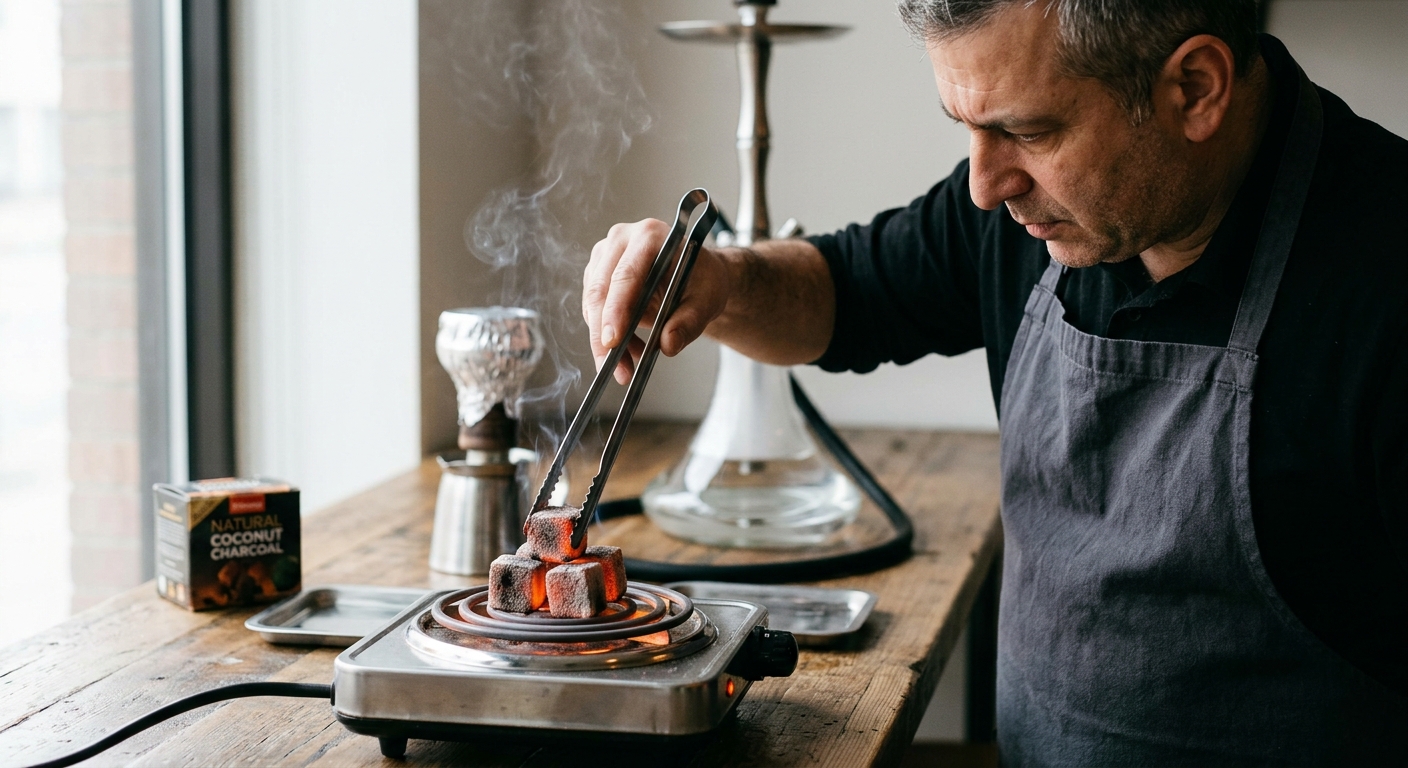
Introduction to Lighting Hookah Charcoal
Properly lighting your hookah charcoal is a fundamental step in ensuring an enjoyable, flavorful, and smooth smoking session. If your charcoal is under-lit, you may experience harsh smoke, a charcoal taste, and an uneven burn. Conversely, understanding the best methods for igniting your coals can elevate your entire hookah experience.
In this guide, we will explore the different types of hookah charcoal, the tools you need, and step-by-step instructions on how to light them safely and efficiently. Whether you are a beginner or a seasoned enthusiast, mastering this skill is essential. Once you have your coals ready, you might also want to check out The Ultimate Guide on How to Setup a Hookah Like a Pro to perfect the rest of your preparation.
Types of Hookah Charcoal
Before diving into the lighting process, it is important to understand the two main categories of hookah charcoal: Quick-Light (or instant) charcoal and Natural charcoal. Each type requires a different lighting method and offers distinct advantages.
Quick-Light Charcoal
Quick-light coals are typically shaped like discs and are coated with a chemical accelerant (like sulfur). This allows them to ignite rapidly using just a standard lighter or match. While they are convenient and portable, some users find that they can impart a slight chemical flavor to the shisha smoke and tend to burn faster than natural alternatives.
Natural Charcoal
Natural coals are most often made from compressed coconut shells or bamboo. They do not contain chemical accelerants, which means they provide a cleaner, odorless burn that preserves the true flavor of your shisha. However, lighting natural charcoal requires a consistent, high-heat source such as an electric coil burner. Interestingly, the properties that make coconut coals excellent for hookah also make them versatile for other uses; for instance, you can read The Ultimate Guide to Coconut Charcoal for Barbecue Grilling to see how they perform in a culinary setting.
The table below compares the key attributes of Quick-Light and Natural hookah charcoals to help you choose the best option for your session.
| Charcoal Type | Primary Material | Lighting Method | Average Burn Time |
|---|---|---|---|
| Quick-Light | Wood with chemical accelerant | Standard Lighter / Match | 30 – 45 minutes |
| Natural (Coconut) | Compressed coconut shells | Electric Coil Burner | 60 – 90 minutes |
How to Light Quick-Light Charcoal
Lighting quick-light coals is straightforward and ideal for outdoor sessions where access to electricity is limited. Follow these steps for the best results:
- Step 1: Use Tongs. Always hold the charcoal disc securely with metal hookah tongs to avoid burning your fingers.
- Step 2: Apply Flame. Hold a lighter or match to the edge of the coal. You will see it begin to spark and emit smoke as the accelerant catches fire.
- Step 3: Wait for the Sparks to Stop. Allow the sparks to travel across the entire surface of the coal. This usually takes about 30 to 60 seconds.
- Step 4: Let it Turn Ashy. Even after the sparks stop, the coal is not fully lit. Wait until the entire coal is covered in a layer of light gray ash. This ensures the chemicals have completely burned off, preventing them from ruining the flavor of your shisha.
- Step 5: Place on the Bowl. Gently place the fully lit coal on the edge of your foil or heat management device.
How to Light Natural Hookah Charcoal
Natural charcoal requires a bit more patience and the right equipment. A single-coil electric burner is the most recommended tool for this job. Avoid using flat glass-top stoves, as the concentrated heat can crack the glass.
- Step 1: Set Up the Burner. Plug in your electric coil burner and turn it to the highest setting. Wait a few moments for the coils to turn red-hot.
- Step 2: Place the Coals. Using your tongs, arrange the natural coals directly on the heated coils. Ensure they are laying flat for maximum heat contact.
- Step 3: Heat the First Side. Leave the coals on the burner for about 4 to 5 minutes. You will notice the bottom half turning red and ashy.
- Step 4: Flip the Coals. Using your tongs, carefully flip each coal over to expose the unlit side to the heat.
- Step 5: Wait for Full Ignition. Leave them on the burner for another 3 to 5 minutes. The coals are ready when they are glowing red entirely and covered in a fine layer of gray ash. Do not use coals that still have black, unlit patches, as this can cause carbon monoxide issues and poor heat transfer.
- Step 6: Transfer to Hookah. Carefully transport the glowing coals to your hookah bowl using your tongs and a coal carrier if necessary.
Safety Precautions When Lighting Charcoal
Dealing with temperatures exceeding 600 degrees Fahrenheit requires strict safety measures:
- Always use high-quality, sturdy metal tongs.
- Never light charcoal directly on a flammable surface.
- When using a burner, keep it away from water sources and flammable materials like curtains or paper.
- Ensure the room is well-ventilated to prevent the buildup of carbon monoxide, especially when using natural coals indoors.
- Always have a dedicated coal carrier or a safe ashtray for transporting lit coals.
Conclusion
Knowing how to light hookah charcoal correctly is an essential skill for any hookah smoker. Whether you choose the convenience of quick-light coals or the pure, long-lasting heat of natural coconut coals, following the proper lighting techniques ensures a safer, more flavorful, and thoroughly enjoyable session. Remember to prioritize safety, use the correct tools, and never rush the lighting process. A fully lit coal is the key to unlocking thick clouds and rich flavors from your favorite shisha.
Frequently Asked Questions (FAQ)
Can I light natural hookah charcoal with a standard lighter?
No, a standard lighter does not produce sustained heat high enough to ignite natural charcoal. You need a continuous heat source like an electric coil burner or a gas stove.
How do I know when my charcoal is fully lit?
Your charcoal is fully lit when it is glowing red hot and completely covered in a thin layer of gray ash. There should be no black, unlit spots remaining on the surface.
Is it safe to light charcoal on a glass-top stove?
It is highly discouraged to light hookah coals on a glass-top stove. The intense, concentrated heat from the coals can easily crack or permanently damage the glass surface.
Why does my hookah taste like chemicals?
A chemical taste is usually caused by using quick-light coals before they are fully lit. Ensure you wait until the sparking stops and the coal is completely covered in gray ash before placing it on your bowl.
3 thoughts on “How to Light Hookah Charcoal: A Comprehensive Guide”