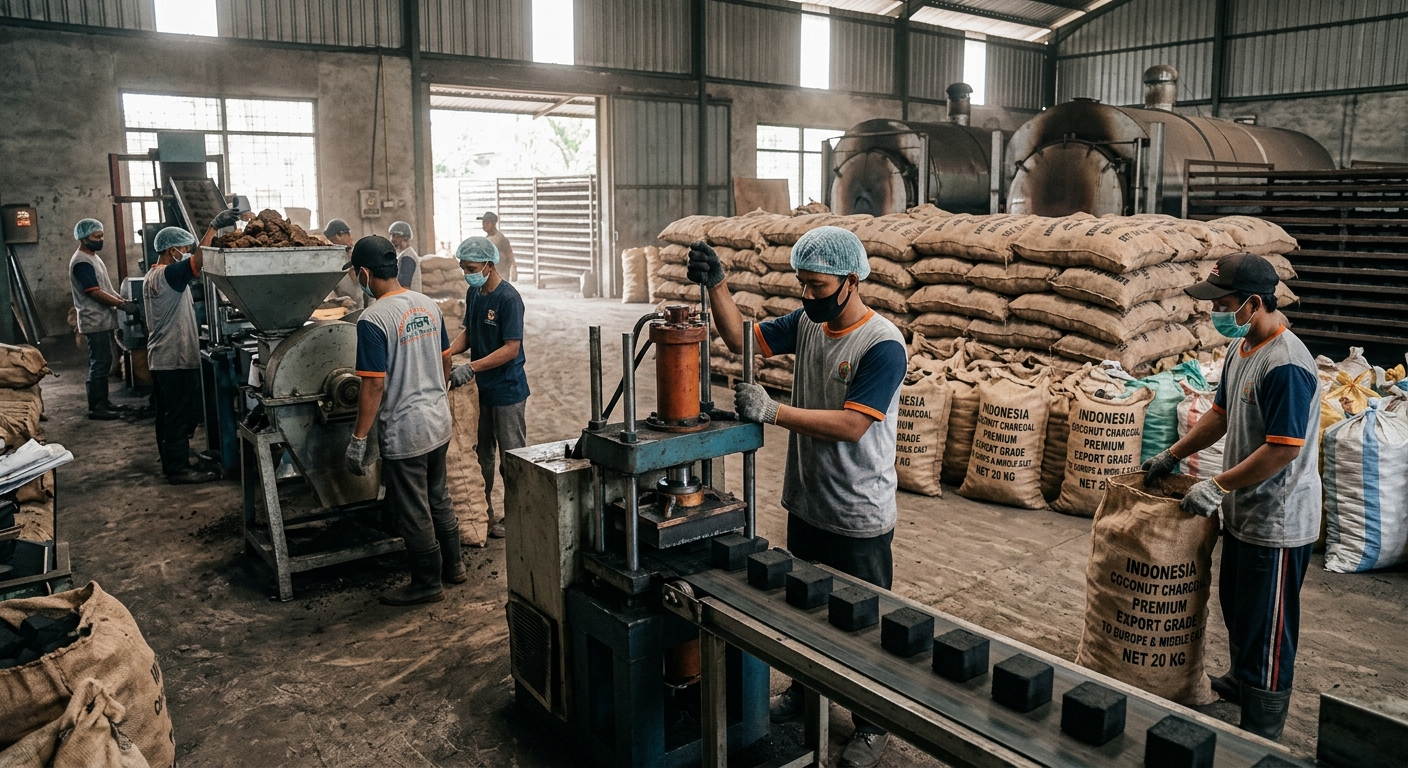
Introduction to the Indonesian Coconut Charcoal Industry
Indonesia stands as the undisputed global leader in the production and export of coconut shell charcoal. With its vast agricultural landscapes and ideal tropical climate, the archipelago produces some of the highest quality coconuts in the world. An Indonesian coconut charcoal factory capitalizes on this abundant resource, transforming agricultural waste into premium, high-heat, and low-ash briquettes used worldwide for shisha, hookah, and barbecue.
Understanding the intricacies of an Indonesian coconut charcoal factory provides valuable insight into why these briquettes are so highly prized. From sourcing raw materials to the meticulous carbonization and molding processes, every step is carefully controlled to ensure optimal performance.
The Manufacturing Process: Inside an Indonesian Coconut Charcoal Factory
The journey from raw coconut shell to a premium charcoal briquette is complex and requires specialized equipment and skilled labor. A typical factory follows a strict protocol to maintain consistency and quality.
1. Sourcing and Selection of Coconut Shells
The process begins with the procurement of mature, dry coconut shells. Factories typically source these from local farmers and copra producers. The quality of the shell directly impacts the final product. Older, harder shells yield charcoal with higher carbon content and longer burning times.
2. Carbonization
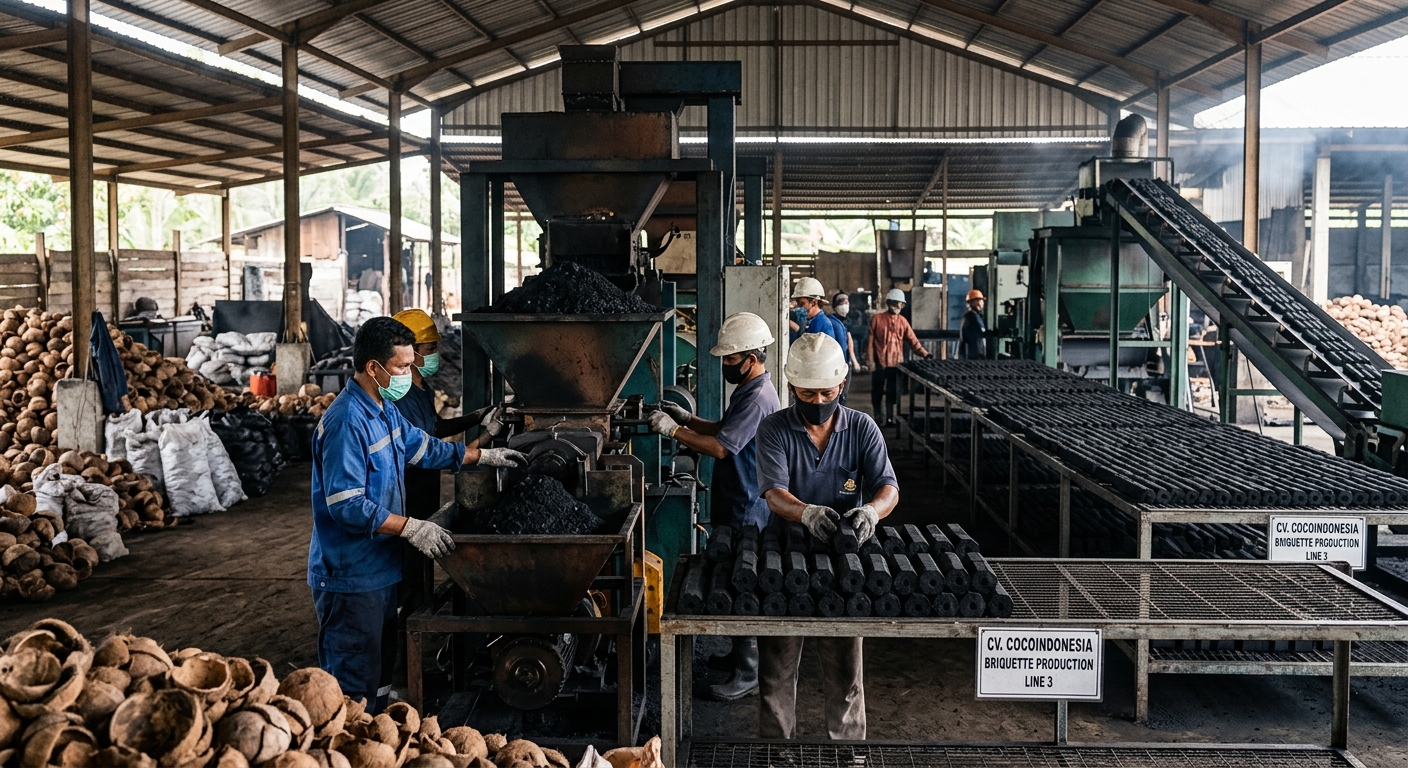
Once collected, the shells undergo carbonization. This is the process of burning the shells in a low-oxygen environment, usually in traditional brick kilns or modern steel retorts. The goal is to remove moisture and volatile compounds, leaving behind pure carbon. The temperature and duration of this stage are critical; improper carbonization can result in excessive ash or a strong, unpleasant odor when burned.
3. Crushing and Grinding
After carbonization, the carbonized shells are cooled and then fed into industrial crushers. They are pulverized into a fine, uniform powder. The consistency of this powder determines the density and smoothness of the final briquettes.
4. Mixing and Binding
To form the powder into solid shapes, a natural binder is required. Most factories use food-grade tapioca starch. The charcoal powder is mixed with the binder and water in large industrial mixers until a dough-like consistency is achieved. No chemical additives are used, which is why premium Indonesian coconut charcoal is prized by shisha enthusiasts who value a clean, flavorless burn. Speaking of optimizing your shisha experience, you might want to learn more about Mastering Hookah Bowl Packing Techniques for the Perfect Session.
5. Molding and Extrusion
The charcoal mixture is then fed into extrusion machines. These machines press the mixture through dies to create the desired shapes—typically cubes, hexagons, or fingers. The immense pressure ensures the briquettes are incredibly dense, which contributes to their long burning time.
6. Drying and Packaging
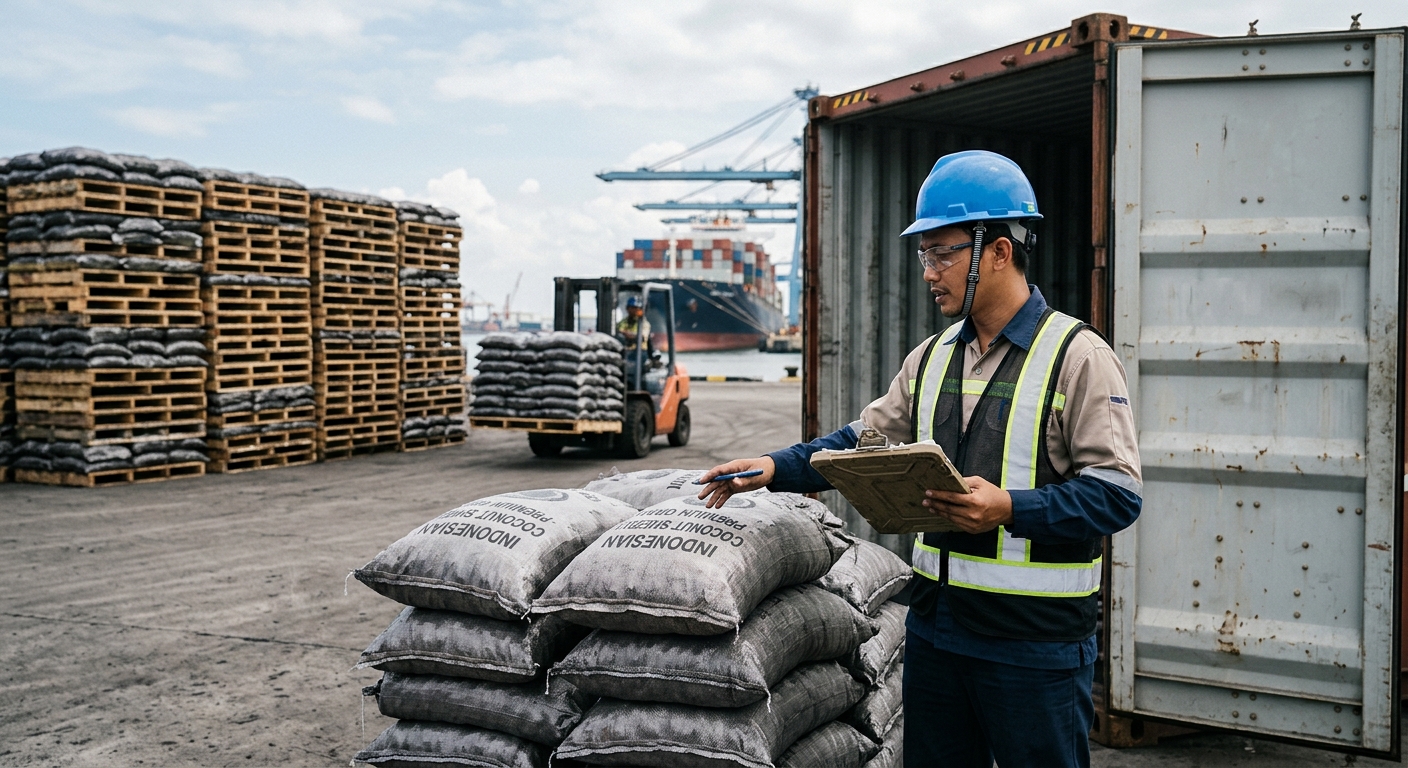
The newly formed briquettes hold significant moisture and must be dried. They are placed in large industrial ovens for 24 to 48 hours. Proper drying prevents cracking and ensures the briquettes ignite properly. Once dried, they are cooled, sorted for quality assurance, and packaged in customized boxes for international export.
Quality Standards and Export Specifications
To compete on the global stage, an Indonesian coconut charcoal factory must adhere to rigorous quality standards. Importers demand precise specifications regarding moisture content, ash content, volatile matter, and fixed carbon.
The table below highlights the typical specifications for different grades of Indonesian coconut charcoal briquettes.
| Charcoal Grade | Fixed Carbon | Ash Content | Moisture Content | Primary Use |
|---|---|---|---|---|
| Premium (Shisha) | > 80% | < 2.5% | < 5% | Hookah / Shisha |
| Standard (BBQ) | 70% – 75% | 4% – 6% | < 8% | Grilling / Barbecue |
| Industrial | 60% – 65% | 8% – 10% | < 10% | Heating / Metallurgy |
Meeting these exact parameters is vital for successful international trade. For buyers looking to import, it is highly recommended to consult a Comprehensive Guide to Indonesia Charcoal Export Specifications to ensure you are receiving the correct product for your specific market needs.
The Sustainability of Coconut Charcoal
One of the most compelling aspects of Indonesian coconut charcoal is its environmental sustainability. Unlike traditional wood charcoal, which contributes to deforestation, coconut charcoal is made from an agricultural byproduct. The coconut shells would otherwise be discarded or burned as waste. By repurposing them into high-value briquettes, the industry provides an eco-friendly alternative while supporting local farming communities with an additional revenue stream.
Conclusion
An Indonesian coconut charcoal factory is a hub of sustainable manufacturing, turning agricultural waste into a premium global commodity. Through careful sourcing, precise carbonization, and strict quality control, these factories produce briquettes that offer superior heat, low ash, and a clean burn. Whether used for a relaxing shisha session or an outdoor barbecue, the craftsmanship behind Indonesian coconut charcoal ensures an unmatched experience. As global demand for sustainable and high-performing charcoal continues to rise, Indonesia’s factories will undoubtedly remain at the forefront of the industry.
Frequently Asked Questions (FAQ)
Why is Indonesian coconut charcoal considered the best for shisha?
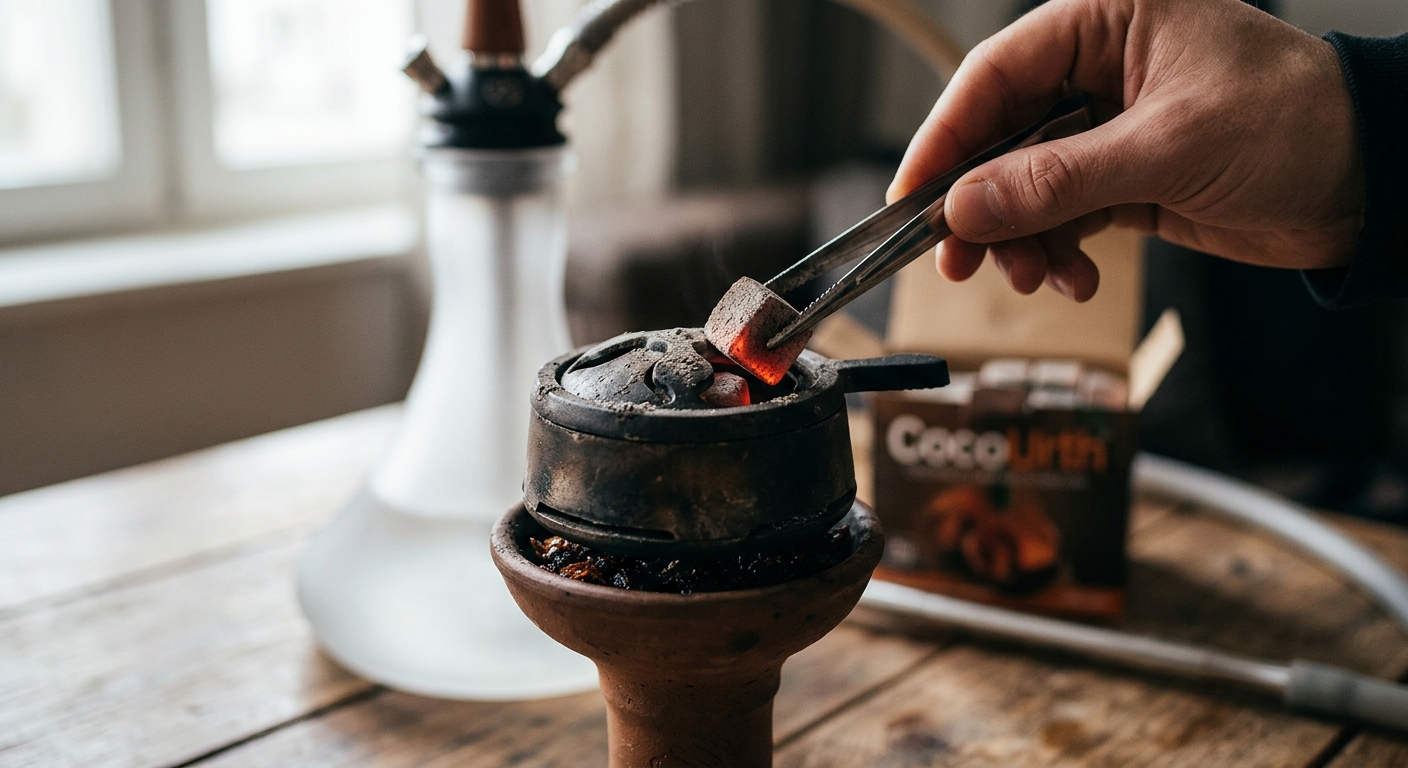
Indonesian coconut charcoal is preferred for shisha because it is made from dense, mature coconut shells. It produces high heat, lasts a long time, and leaves very little ash. Most importantly, it burns without emitting any smoke, sparks, or odors, ensuring the flavor of the shisha tobacco is not altered.
Are chemicals used in the production of coconut charcoal briquettes?
Reputable Indonesian factories do not use chemical additives or quick-lighting chemicals. They use 100% natural ingredients, primarily carbonized coconut shell powder and a natural food-grade binder, usually tapioca starch.
How long does a premium coconut charcoal cube burn?
A premium quality 25mm coconut charcoal cube manufactured in Indonesia typically burns for 90 to 120 minutes, depending on the environmental conditions and how it is used.
What is the minimum order quantity (MOQ) when buying directly from a factory?
Most Indonesian factories require a Minimum Order Quantity of one 20-foot container, which holds approximately 18 metric tons of briquettes. Some factories may offer smaller trial orders, but purchasing by the container is the standard for international trade.
One thought on “The Ultimate Guide to Indonesian Coconut Charcoal Factories: Production, Quality, and Global Export”