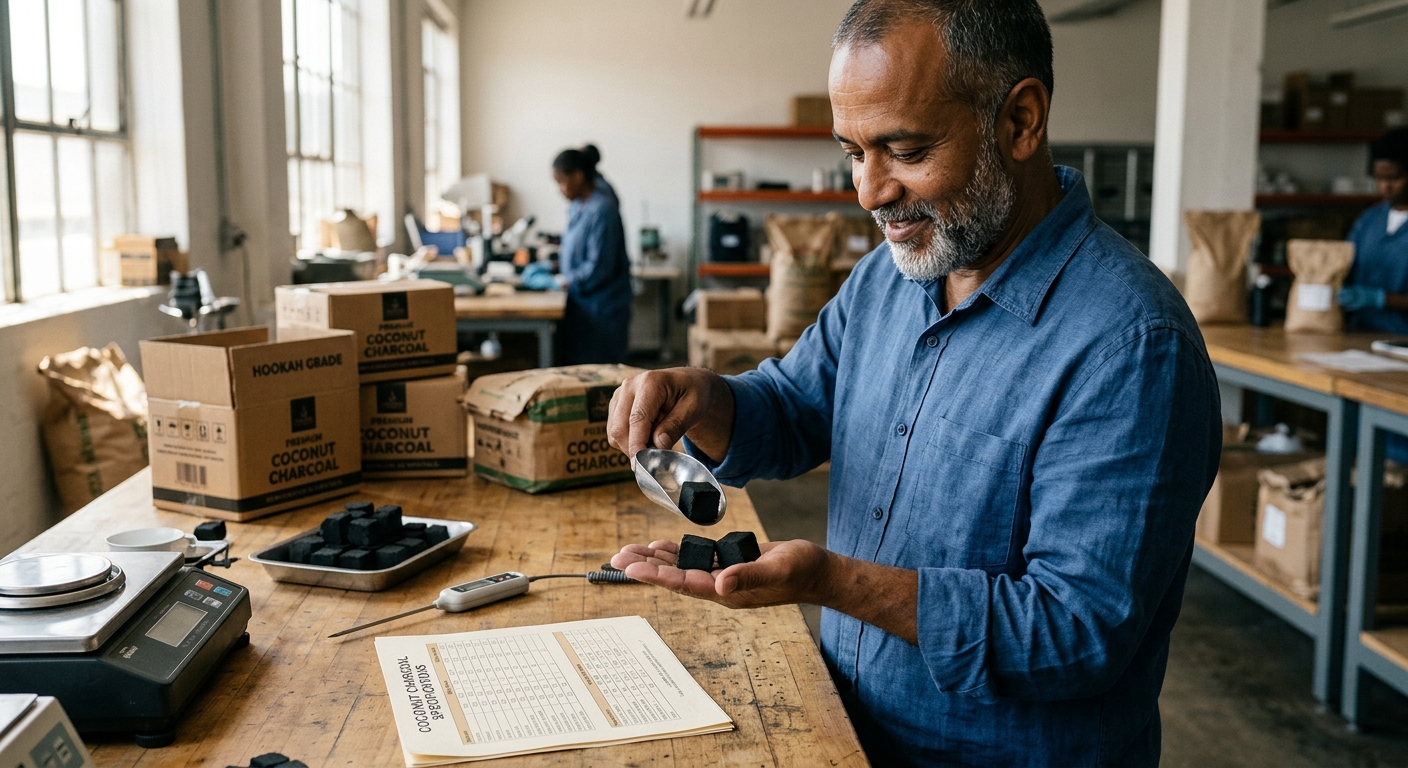
Introduction to Coconut Charcoal for Hookah
When it comes to enjoying a premium hookah session, the quality of your charcoal plays a pivotal role. Unlike quick-light coals that often contain chemical accelerants, natural coconut charcoal provides a clean, odorless, and tasteless heat source. Understanding the specific coconut charcoal specifications for hookah is crucial for both consumers and distributors. This comprehensive guide will delve into the technical specifications, performance metrics, and quality indicators that define the best coconut charcoal on the market.
The Manufacturing Process of Coconut Charcoal
Before diving into the specifications, it is important to understand how high-quality coconut charcoal is made. The process begins with sourcing premium coconut shells, which are then carbonized in controlled environments. After carbonization, the material is crushed, mixed with a natural binder (usually tapioca starch), and pressed into various shapes such as cubes, flats, or hexagons. The final step involves extensive drying to remove moisture. This meticulous process ensures that the final product meets strict quality standards and specifications required for an optimal hookah experience.
Key Specifications for Hookah Coconut Charcoal
1. Fixed Carbon Content
The fixed carbon content is arguably the most critical specification for hookah charcoal. It determines the burning time and heat output. Premium coconut charcoal for hookah should have a fixed carbon content of at least 75% to 85%. Higher carbon content means the charcoal will burn hotter and longer, providing a consistent heat source for your shisha tobacco without frequent coal replacements.
2. Moisture Content
Moisture content directly impacts the ease of lighting the charcoal and its burning stability. Ideal coconut charcoal specifications dictate a moisture content of less than 5%. If the moisture level exceeds this threshold, the charcoal will be difficult to ignite, may sputter or crack during heating, and will yield a subpar smoking experience due to lower combustion temperatures.
3. Ash Content and Color
Ash content is a significant indicator of charcoal purity and quality. For hookah use, the ash content should ideally be below 3%. Low ash production prevents the shisha bowl from becoming clogged and maintains better airflow. Furthermore, the color of the ash should be white or light gray. If you are struggling with excessive ash, reading about How to Reduce Hookah Ash: A Comprehensive Guide to Cleaner Smoking can provide valuable insights into managing your sessions more effectively.
4. Volatile Matter
Volatile matter refers to the organic compounds that vaporize when the charcoal is heated. High levels of volatile matter can produce unwanted smoke and odors that interfere with the flavor of the shisha. High-quality coconut charcoal should have a volatile matter content of less than 15%. This ensures an odorless and tasteless burn.
Comparing Charcoal Shapes and Performance
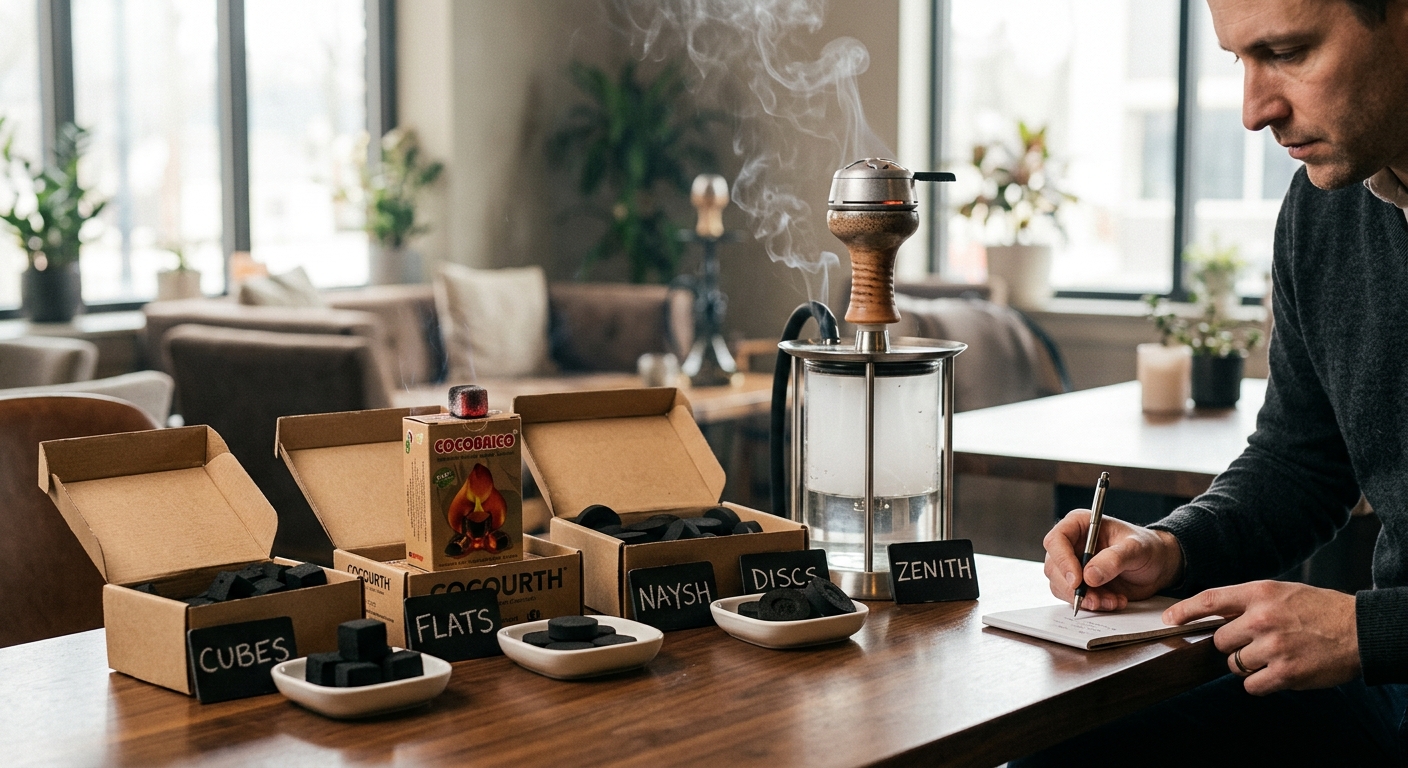
The following table compares the typical specifications and performance metrics of different coconut charcoal shapes commonly used for hookah sessions.
| Charcoal Shape | Dimensions (mm) | Burn Time (mins) | Best Use Case |
|---|---|---|---|
| Cube | 25x25x25 | 90-120 | Standard bowls, long sessions |
| Flat | 25x25x15 | 60-90 | Foil setups, heat control |
| Hexagon | 20×50 (DxL) | 100-130 | Fruit bowls, large groups |
Heat Management and Setup Considerations
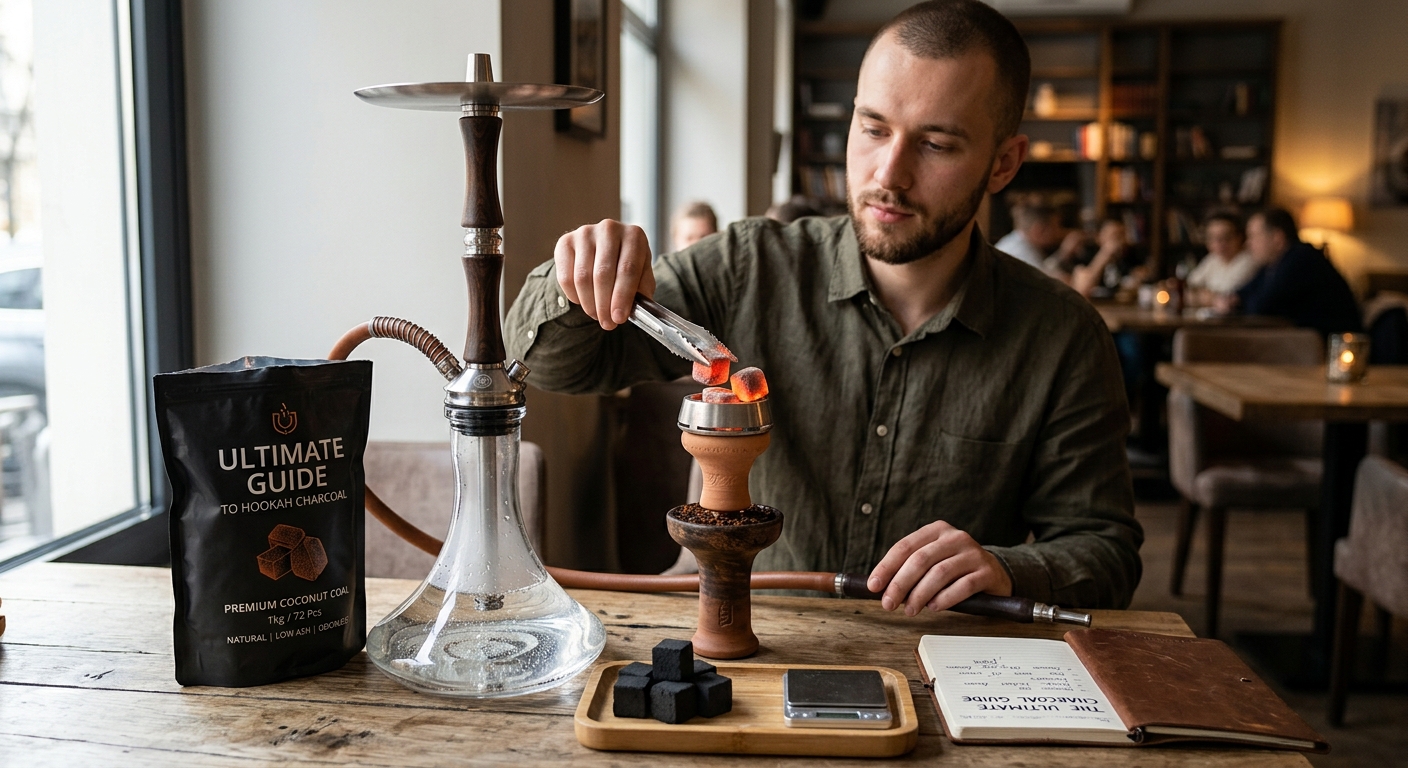
Meeting the correct coconut charcoal specifications is only half the battle; how you manage that heat dictates the quality of the session. While traditional foil setups require flat coals for better stability, modern Heat Management Devices (HMDs) often accommodate cubes perfectly. Choosing the right setup is essential for maximizing the potential of high-spec charcoal. For a deeper understanding of setup methods, check out Hookah Foil vs Heat Management: The Complete Guide to see which approach suits your smoking style best.
Conclusion
Understanding coconut charcoal specifications for hookah—such as fixed carbon, moisture content, ash yield, and volatile matter—empowers you to make informed decisions for your smoking sessions. By prioritizing natural, high-quality coconut charcoal that adheres to these stringent metrics, you guarantee a longer, cleaner, and more flavorful hookah experience free from chemical interference.
Frequently Asked Questions (FAQ)
What is the ideal ash percentage for hookah charcoal?
The ideal ash percentage for premium hookah coconut charcoal is under 3%. Lower ash content ensures that your bowl remains clean and airflow is not restricted during the session.
Why does fixed carbon matter in hookah charcoal?
Fixed carbon determines the energy density of the charcoal. A higher fixed carbon percentage (typically 75% or higher) means the coal will burn longer, hotter, and more consistently.
Can I use barbecue coconut charcoal for hookah?
No, it is highly recommended against. Barbecue charcoal often contains higher moisture, higher volatile matter, and chemical additives that will ruin the flavor of the shisha and can be harmful to inhale directly.
How long should high-quality coconut charcoal last?
Depending on the shape and size (such as a 25mm cube) and your heat management setup, high-quality coconut charcoal should last anywhere from 90 to 120 minutes per session.

2 thoughts on “Coconut Charcoal Specifications for Hookah: A Comprehensive Guide”