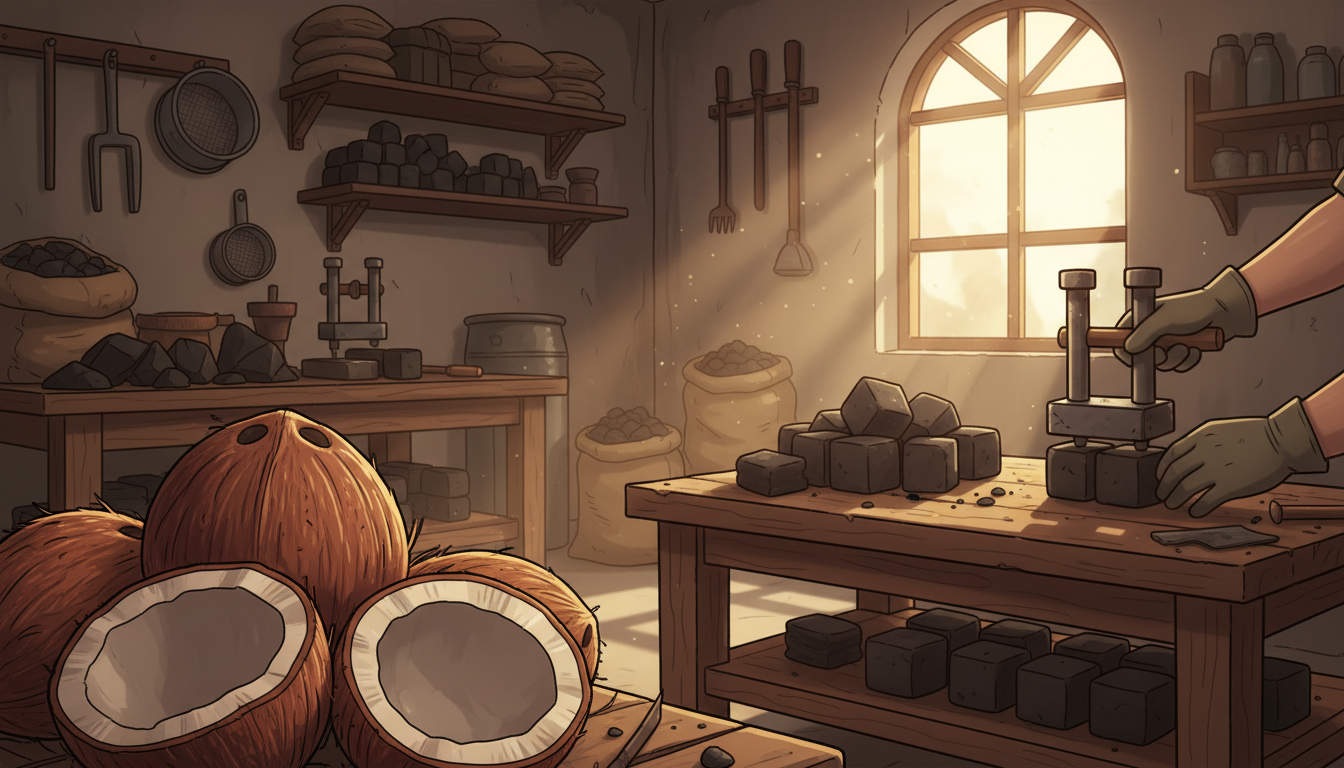
Did you know that Indonesia produces over 17 million tons of coconuts every year? This massive harvest creates a surplus of husks that people once discarded as agricultural waste. Today, you can see how this residue transforms into high-end fuel that respects the planet while providing a superior experience.
The manufacturing process within a modern factory relies on high heat and intense pressure. By using fully carbonized materials, experts ensure that the premium coconut charcoal has very low ash content. This meticulous step ensures every block remains durable and provides consistent heat for your long sessions.
Sourcing from sustainable farms ensures that coconut charcoal briquettes meet strict environmental standards. You will notice the quality immediately when the coconut charcoal glows evenly without any unpleasant odors. Choosing coconut charcoal represents a commitment to excellence for enthusiasts across Australia who value purity.
Key Takeaways
- Transformation of agricultural waste into high-end luxury fuel.
- Precision manufacturing ensures low ash and high heat output.
- Sustainable sourcing from certified Indonesian coconut farms.
- Consistent performance designed for the most demanding users.
- Eco-friendly production methods that significantly reduce environmental impact.
- Global recognition for superior durability and clean burning properties.
Understanding the Transformation Process
Transforming raw coconut shells into premium coconut charcoal briquettes requires several careful stages. You should know that this isn’t a simple one-step task but a managed process.
Using high-grade charcoal briquettes ensures a better burn for every session. Each phase directly impacts the final quality and heat of your product.
The journey starts with raw shells and moves through carbonization before reaching the final mold. When you grasp this process, you can find makers who prioritize excellence.
Choosing coconut charcoal Indonesia export quality ensures you get a superior item. This change creates green fuel that meets international standards for your home or business.
“The complexity of the manufacturing journey is what defines the performance of the ember.”
Every detail matters when creating a fuel that lasts. By focusing on each stage, producers turn simple waste into a valuable resource for hookah lovers worldwide.
| Transformation Stage | Primary Technical Focus | Impact on Final Result |
|---|---|---|
| Carbonization | Temperature Control | Fixed Carbon Content |
| Mixing | Natural Binder Ratio | Briquette Density |
| Drying | Moisture Removal | Structural Strength |
Step 1: Carbonization of Coconut Shells
Your journey to creating premium hookah charcoal starts with the essential step of carbonizing aged coconut shells. You must first select mature, hard shells as your primary raw material to ensure high lignin content. This specific material choice helps you create a foundation for a high-quality product that burns longer and cleaner.
The Pyrolysis Method
The carbonization of the organic matter involves a special process called pyrolysis. You don’t burn the coconut shells in an open fire, which would turn them to ash. Instead, you heat them in a sealed kiln with very little oxygen to preserve the carbon structure.
This method effectively burns off moisture and volatile compounds. By using this technique, you can find the best charcoal briquettes to buy for long-lasting. Modern factories prefer retort or drum kilns because they distribute energy more evenly than traditional brick kilns.
Optimal Temperature and Duration
To get the best results, you need to maintain a steady heat between 400°C and 600°C. The carbonization time usually takes about 4 to 6 hours, depending on how thick the shell is. Consistency is vital during this phase of making premium coconut charcoal briquettes.
Proper carbonization ensures that you leave behind only pure carbon. If you rush the carbonization, you might increase the ash content and ruin the final quality. Mastering this carbonization step is what truly defines a premium hookah charcoal brand.
Step 2: Crushing and Sieving Into Fine Powder
After your carbonized coconut shells have fully cooled down, it is time to transform them into a smooth powder. You must first crush the solid pieces into a coarse state before refining them with industrial grinders.
This phase is essential for creating charcoal powder that meets the high standards required for shisha. Proper processing ensures your high-quality charcoal remains consistent and burns exceptionally well for your customers.
Achieving Uniform Particle Size
You need to run your material through specialized sieving machines to create a flour-like charcoal powder. Ideally, you want a fine powder that can pass through 80-100 micron mesh screens for a smooth finish.
Using a uniform fine powder allows your briquettes to bind perfectly without falling apart during the molding process. This consistency is exactly what makes charcoal powder from coconut shells so desirable for premium hookah enthusiasts globally.
If the charcoal particles are too large, the powder may not press correctly into the desired shapes. You should monitor the powder quality closely to ensure every batch of briquettes remains durable and strong.
Consistency is the secret to a professional product that people will love. Finally, the powder must be free of any large debris to ensure a clean, long-lasting burn time.
The secret to a perfect burn lies in the precision of the grind, where every micron contributes to the heat.
| Process Step | Equipment Used | Desired Output |
|---|---|---|
| Primary Crushing | Industrial Hammer Mill | Coarse Granules |
| Secondary Grinding | Fine Disintegrator | Raw Powder |
| Sieving/Screening | Vibrating Mesh Sieve | 80-100 Micron Powder |
Step 3: Mixing Charcoal Powder with Natural Binders
To make durable cubes, you must combine the processed raw material with natural binders to create a moldable dough. Fine charcoal powder cannot form a solid shape alone, so you must add a reliable binder to the mix. This stage is vital for ensuring your product does not crumble during use.
The Role of Tapioca Starch
You use tapioca starch because it is food-grade and safe for consumers. This specific starch acts as the glue that keeps your coconut charcoal together. Since it is organic, the binder ensures your charcoal briquettes remain tasteless and odorless for a clean hookah experience.
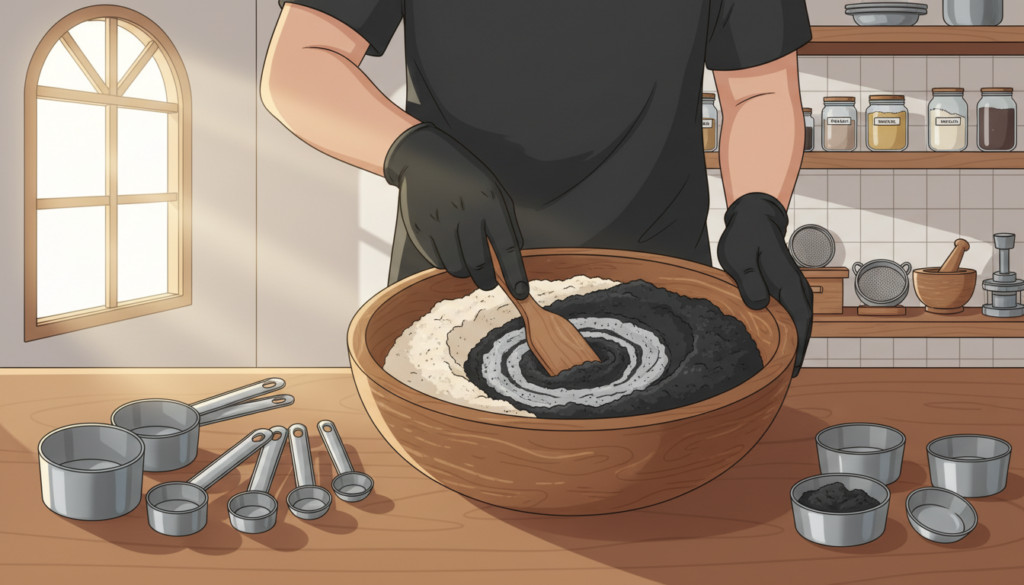
Using these binders prevents any toxic chemicals from entering the smoke. You want to maintain the purity of your coconut charcoal throughout this phase. Many producers prefer tapioca starch because it is affordable and highly effective at high temperatures.
“The secret to a long-lasting burn lies in the quality of the organic binder used during the mixing stage.”
Perfect Mixing Ratios
You achieve the best results by following a precise formula. Most premium factories mix 90% powder with 5% tapioca and 5% clean water. This specific ratio of tapioca starch to powder determines the final hardness of your charcoal briquettes.
Industrial paddle mixers help you create a homogeneous mixture from these binders. You must ensure the starch evenly coats every particle of the powder. When the tapioca turns into a sticky gel, the material is then ready for the molding machines.
You should avoid chemical additives to keep your tapioca based mixture as natural as possible. High-quality natural binders are essential if you want to compete in the premium Australian market. A consistent dough ensures your cubes remain strong throughout the drying process.
| Component | Percentage | Purpose |
|---|---|---|
| Coconut Charcoal Powder | 90% | Base fuel for the briquette |
| Tapioca Starch | 5% | Natural binding agent |
| Clean Water | 5% | Moisture and consistency |
Turning Indonesian Coconut Shell Charcoal Into Premium Hookah Cube Charcoal Step by Step Through Molding
Welcome to the molding stage, where your raw coconut paste transforms into those iconic, uniform cubes. This step is crucial for ensuring your charcoal looks professional and performs well. You need a reliable factory setup to maintain high quality during this transition.
Briquetting Machine Process
Your factory uses a powerful briquetting machine to compress the moist coconut mixture. This machine applies immense pressure to extrude the paste into long, dense logs. A hydraulic press ensures each charcoal briquette remains solid during use.
High pressure is vital because it determines how long your coconut charcoal briquettes will burn. Using a quality briquette press prevents the product from crumbling during transit. Harder cubes offer a much better experience for the end user.
Cutting Into Cube Shapes
Once the logs emerge, automated cutters slice them into a precise shape. These are usually 25mm or 26mm cubes, which are the gold standard for shisha sessions. Even charcoal needs a perfect cut to ensure it stacks well in boxes.
If you are looking for affordable charcoal briquette options for every budget, consistency in the briquette size is key. Premium briquettes provide better airflow for your shisha bowl. Proper molding creates a shape that captures the attention of quality-conscious buyers.
- Uniform coconut pieces burn more evenly than irregular chunks.
- A dense briquette lasts much longer during a smoking session.
- Precisely cut briquettes improve the overall market appeal of your charcoal.
- Quality coconut charcoal briquettes should never crumble when handled.
- Well-formed briquettes make packaging and shipping more efficient.
Step 5: Drying and Curing Your Briquettes
You have reached the stage where moisture removal turns soft paste into premium, durable hookah cubes. Freshly molded pieces are too soft for immediate use, so this step is vital for hardening. This phase ensures your briquettes withstand shipping and provide long burning sessions over time.
Moisture Control Standards
Achieving low moisture levels ensures your final product performs consistently every time. If the moisture content exceeds 6%, the charcoal might spark or crack during burning. This excess content also shortens the burn time, which often frustrates users.
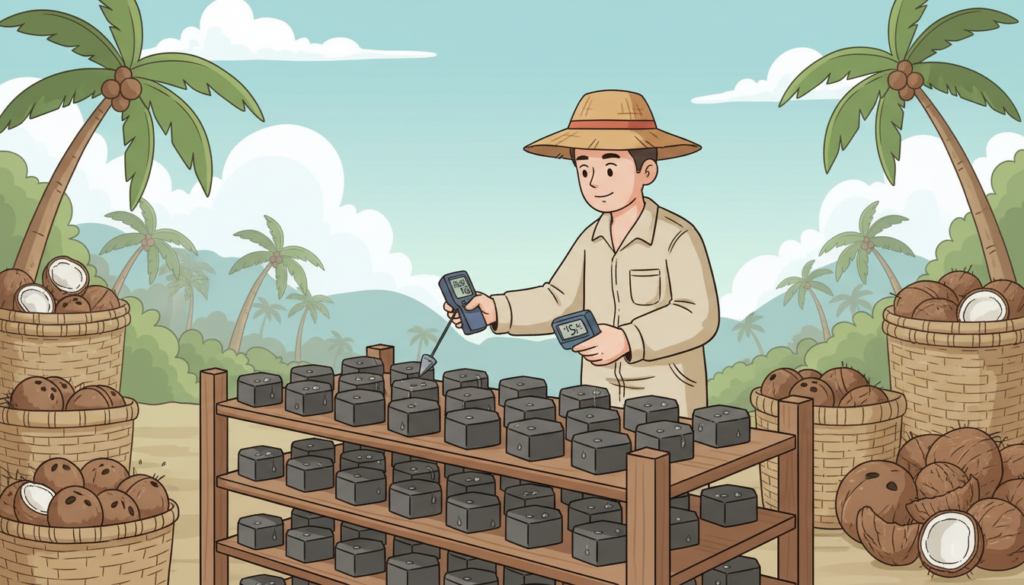
By maintaining a low ash profile and strict moisture levels, you guarantee a high-performance experience. Managing the ash production is just as important as managing water levels for a clean smoke. A reliable burn time is the hallmark of a correctly cured briquette.
Oven vs Sun Drying Methods
You can choose between two main paths for drying your charcoal. Sun drying is very economical, but it takes a long time and depends entirely on the weather. In contrast, using an industrial oven is much faster and more reliable for large production runs.
Professional factories prefer the oven to reduce the total ash content effectively. This method provides a stable environment to keep a low ash profile and consistent burning results. Proper drying usually takes about 12 hours to reach the perfect burning time.
Spending extra time in the oven guarantees your final product meets global quality standards. This ensures your cubes are hard, spark-free, and ready for the market. Review the target specifications below to see what you should aim for after curing.
| Test Parameter | Target Standard | Processing Time |
|---|---|---|
| Moisture content | Under 6% | 12-24 hours |
| Ash content | Under 2.5% | N/A |
| Burning time | Above 2 Hours | N/A |
“Proper curing is the secret behind a charcoal that never cracks and always delivers steady heat.”
Conclusion
Transforming Indonesian coconut shell into elite cubes is a journey of precision. Your factory produces premium coconut charcoal briquettes by mastering every stage. This premium coconut product requires testing.
Secure packaging like kraft bags or branded packaging ensures coconut charcoal briquettes reach shisha lovers. Another premium coconut charcoal uses charcoal from another coconut shell. Consistency is key.
A premium coconut charcoal batch leaves the factory. Charcoal briquettes need packaging. Briquettes use coconut. Briquettes need coconut. This premium coconut shell finally excels today.
FAQ
Why does the burn time of your fuel blocks last so long?
Your shisha sessions benefit from a dense briquette. These blocks provide steady heat for over two hours. The low moisture level and the quality of the final product ensure a consistent experience after drying in a large oven.
How do you achieve a low ash level during use?
Minimal ash content means less mess for your hookah. Choosing premium coconut fuel ensures a clean burn every time. This organic material leaves behind very little waste, keeping your sessions smooth and flavorful.
What is the role of tapioca starch in the manufacturing process?
A specialized factory uses a binder like tapioca to mix the charcoal powder. This natural binders approach ensures the product holds its cube form perfectly. It is a crucial step in making square blocks that do not crumble.
How do you turn the fine powder into a solid shape?
The raw material goes through a briquetting machine to ensure a uniform shape. This mechanical process uses high pressure to compress the particles. It creates a durable charcoal briquette that is ready for packaging and export.
How is the raw material prepared for the mixture?
During the carbonization phase, the outer shell is heated to very high temperatures. This turns the organic coconut fruit into pure carbon. The indonesian method ensures the base is processed perfectly for global quality standards.