Introduction to Low Ash Hookah Charcoal
For hookah enthusiasts and lounge owners alike, the quality of the charcoal used can make or break the smoking experience. Among the various characteristics that define premium charcoal, low ash production is arguably one of the most critical. Low ash hookah charcoal ensures that your session remains clean, the heat stays consistent, and the flavor of your shisha tobacco is never compromised by the taste of burning minerals or chemical additives. In this comprehensive guide, we will explore the best low ash hookah charcoal brands, what makes them superior, and how to source them effectively.
What Does “Low Ash” Mean?
In the context of hookah charcoal, ash content refers to the residual inorganic material left behind after the charcoal burns. Standard or lower-quality coals can produce ash levels upwards of 5% to 10%, which can fall into the bowl, clog the foil holes, or disrupt the heat management device (HMD). Conversely, premium low ash charcoal typically boasts an ash content of less than 2.5%.
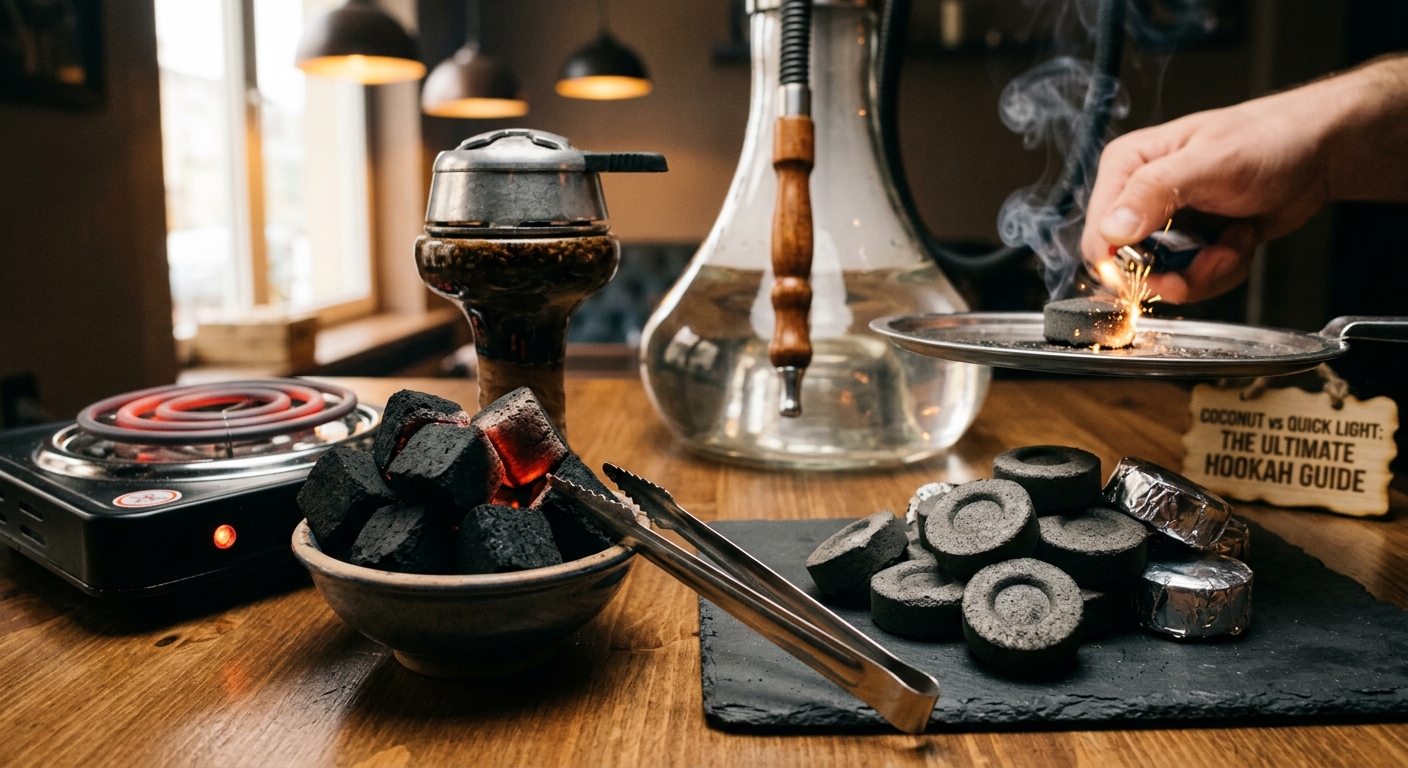
Achieving this low ash content requires high-quality raw materials—most notably, 100% natural coconut shells—and a meticulous carbonization and briquetting process. Unlike quick-light alternatives that are loaded with chemical accelerants, natural coconut charcoal is dense, burns hotter, and leaves behind minimal residue. If you are still weighing the pros and cons of different charcoal types, we highly recommend reading Coconut Charcoal vs Quick Light Coals: The Ultimate Hookah Guide to understand why natural coconut is the undisputed champion of the hookah world.
Top Low Ash Hookah Charcoal Brands
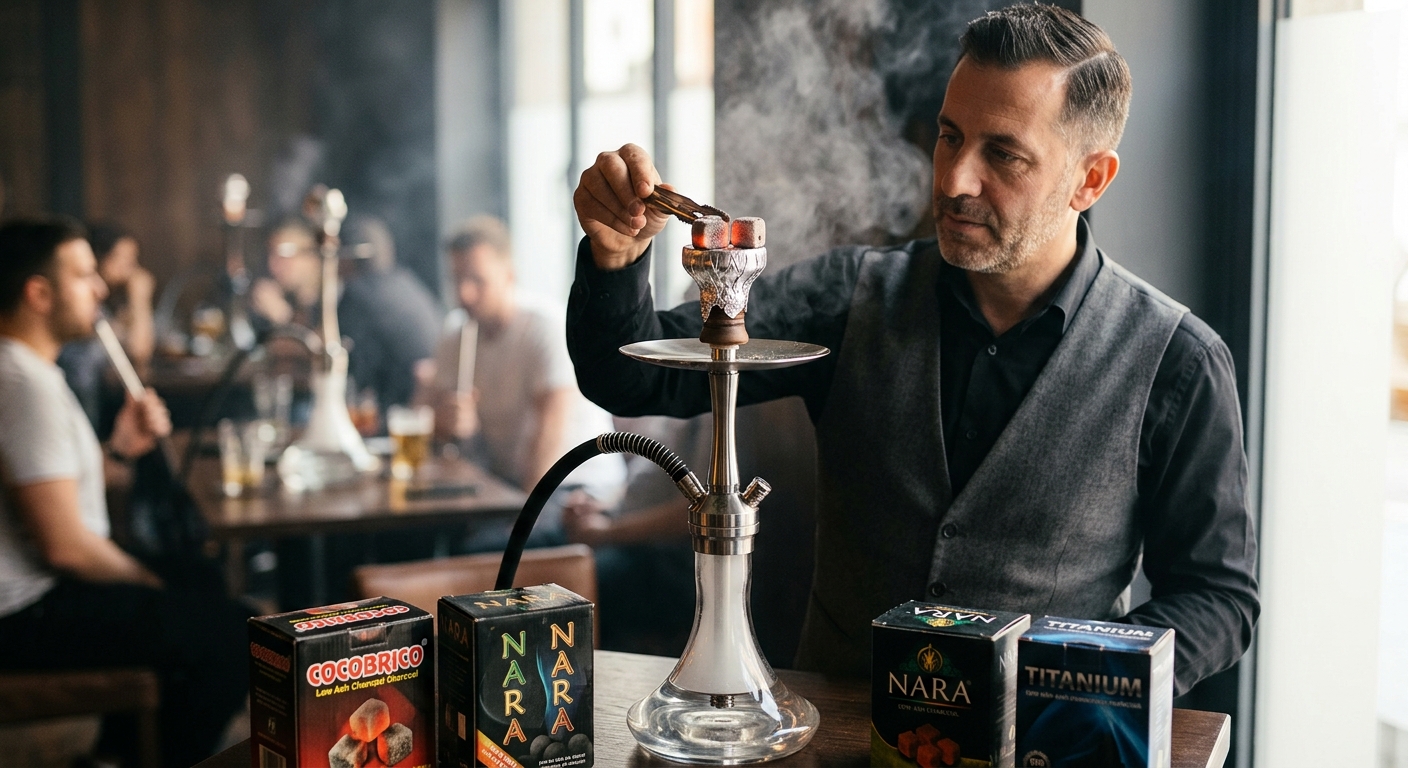
The market is flooded with dozens of charcoal brands, but only a few consistently deliver on the promise of ultra-low ash production. Below are some of the industry’s leading brands recognized for their clean burn and superior quality.
1. Titanium Hookah Coals
Titanium coals, created by HookahJohn, are famously made from 100% natural coconut shells. They are designed to burn at a slightly lower, more manageable heat, which is perfect for traditional tobaccos that are sensitive to scorching. What makes Titanium a staple in many lounges is its incredibly low ash output. The ash stays intact, meaning it will not flake off and ruin your bowl during ash management.
2. Cocourth Natural Charcoal
Cocourth has built a massive following due to its consistency and organic manufacturing process. They use absolutely no chemical additives, resulting in a charcoal that produces less than 2% ash. Their cubes and flats are perfectly cut, ensuring an even burn and a session that can easily last over an hour and a half with minimal maintenance.
3. Charco Flare
Charco Flare is another premium brand that excels in the low ash category. They are known for providing high heat output without the messy ash fallout. Their coals are tightly compressed, which prevents the structural breakdown of the coal as it burns. This structural integrity is what keeps the ash content low and the heat focused on your shisha.
4. OxiCarbon and OxiCharcoal
When discussing top-tier charcoal, it is essential to look at the source. Brands that source directly from reliable charcoal manufacturers in Indonesia often boast the best specifications. Products manufactured under strict quality control measures in these regions guarantee low volatile matter and minimal ash.
The Importance of Sourcing and Bulk Ordering
For hookah lounges, distributors, and heavy smokers, buying charcoal by the individual box is rarely cost-effective. Purchasing in bulk not only reduces the cost per kilo but also ensures that you have a consistent supply of a single, reliable batch of low ash charcoal. When charcoal is manufactured, slight variations can occur between batches; buying in bulk mitigates this inconsistency.
If you are a business owner looking to elevate your lounge’s smoking experience while managing operational costs, understanding bulk procurement is vital. You can find excellent insights by checking out the Premium Shisha Charcoal Supplier in Bulk: The Ultimate Guide. This resource breaks down the logistics of ordering massive quantities without sacrificing the low ash quality your customers demand.
Why Indonesia is the Hub for Low Ash Charcoal
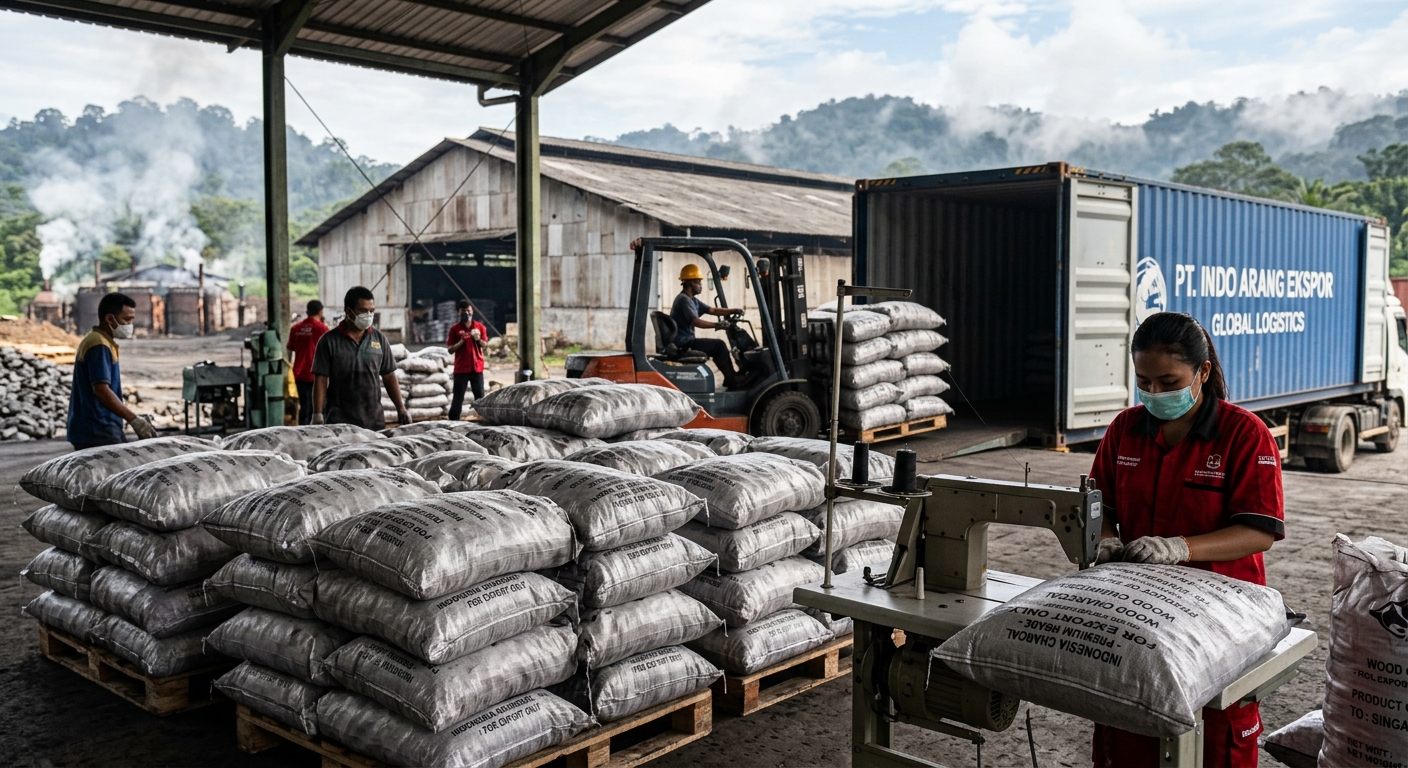
It is no secret that the best hookah charcoal in the world comes from Indonesia. The archipelago’s tropical climate provides the ideal conditions for growing coconuts with incredibly dense shells. These shells are the foundational ingredient for producing low ash, high-heat charcoal briquettes. Indonesian manufacturers have perfected the art of carbonizing these shells, grinding them into a fine powder, mixing them with a natural tapioca binder, and pressing them into the precise shapes hookah smokers love.
Importing charcoal directly from the source requires an understanding of international shipping, quality assurance, and supplier vetting. For those interested in importing directly from the world’s premier production capital, The Ultimate Guide to Shisha Charcoal Bulk Order in Indonesia provides an in-depth look at navigating the supplier landscape to secure the lowest ash content possible.
Comparing Low Ash Brands
To help you choose the right brand for your specific needs, we have compiled a comparison table based on ash content, heat output, and ideal use cases.
| Brand Name | Average Ash Content | Heat Output | Ideal Use Case |
|---|---|---|---|
| Titanium | Under 2.5% | Medium | Dark leaf tobacco, foil setups |
| Cocourth | Under 2.0% | High | Blonde leaf, HMD setups |
| Charco Flare | Under 2.0% | High | Long sessions, heavy smoke |
| Premium Indonesian Bulk | 1.8% – 2.2% | Customizable | Hookah lounges, wholesale distributors |
Maintaining Your Hookah Charcoal
Even with the best low ash hookah charcoal brands, proper handling is necessary to ensure the best session. Always light your coals fully on a dedicated electric coil burner until they are glowing red on all sides. Lighting them partially can lead to a foul taste and higher carbon monoxide output. Once lit, handle them gently with tongs; even densely pressed low ash coals can crack if dropped aggressively. Ash your coals periodically by lightly dropping them in your tray to remove the thin layer of ash, keeping the core heat exposed to your bowl.
Conclusion
Investing in low ash hookah charcoal brands is one of the easiest ways to instantly upgrade your hookah sessions. Brands like Titanium, Cocourth, and Charco Flare have set the industry standard by utilizing premium Indonesian coconut shells and avoiding chemical binders. By producing less than 2.5% ash, these coals ensure that your bowl remains clean, your heat remains stable, and your shisha flavor shines through beautifully. Whether you are smoking at home or supplying a bustling lounge, prioritizing low ash content will always lead to a superior smoking experience.
Frequently Asked Questions (FAQ)
Why is low ash charcoal better for hookah?
Low ash charcoal is better because it prevents loose ash from falling into your shisha tobacco or clogging the air vents of your heat management device. This results in a cleaner, better-tasting smoke and requires less maintenance during your session.
How can I tell if my charcoal is low ash?
You can tell by observing the coal as it burns. Low ash charcoal will maintain its shape and form a thin, tight layer of white or gray ash that does not easily crumble or flake off until you intentionally tap it against the tray.
Can I use quick-light coals if I want a low ash session?
No. Quick-light coals are infused with chemical accelerants like sulfur or saltpeter, which not only ruin the flavor of your shisha but also produce a significantly higher amount of messy, powdery ash. Natural coconut charcoal is the only way to achieve a true low ash session.
Where do the best low ash charcoal brands source their materials?
The vast majority of premium, low ash coconut charcoal brands source their raw coconut shells and manufacture their briquettes in Indonesia, due to the high density of the native coconut shells and the country’s specialized manufacturing expertise.