Introduction to Shisha Charcoal
When it comes to enjoying a perfect hookah session, the type of charcoal you use plays a pivotal role. The debate between quick light vs coconut charcoal for shisha has been ongoing among enthusiasts for years. Each type offers distinct advantages and drawbacks, affecting everything from flavor and heat management to convenience and safety.
In this comprehensive guide, we will delve deep into the characteristics of both quick light and coconut charcoal, comparing their burn times, chemical compositions, environmental impacts, and overall performance. Whether you are a casual smoker or a seasoned hookah connoisseur, understanding these differences will help you elevate your shisha experience.
Understanding Quick Light Charcoal
Quick light charcoal is precisely what its name suggests: charcoal designed to ignite rapidly and easily. These coals are typically made from compressed coal dust or wood dust and are coated with a chemical accelerant, such as sulfur or benzene. This allows them to be lit with a standard standard lighter or match within a matter of seconds.
Pros of Quick Light Charcoal
- Convenience: The primary advantage of quick light coals is their ease of use. They require no special equipment like a single coil burner; a simple lighter is all you need.
- Portability: Due to their easy lighting process, they are ideal for outdoor sessions, travel, or situations where electrical burners are unavailable.
- Speed: They light up almost instantly, allowing you to start your smoking session without delay.
Cons of Quick Light Charcoal
- Chemical Additives: The accelerants used to make these coals ignite quickly can produce an unpleasant odor and taste, which often masks the flavor of your premium shisha tobacco.
- Shorter Burn Time: Quick light coals generally burn out much faster than natural alternatives, often lasting only 30 to 45 minutes.
- High Ash Production: They tend to produce a significant amount of ash, requiring constant maintenance and ash removal during the session.
- Health and Safety Concerns: The chemical fumes emitted during the lighting process can be harmful if inhaled, and they often cause headaches for sensitive individuals.
Exploring Coconut Charcoal
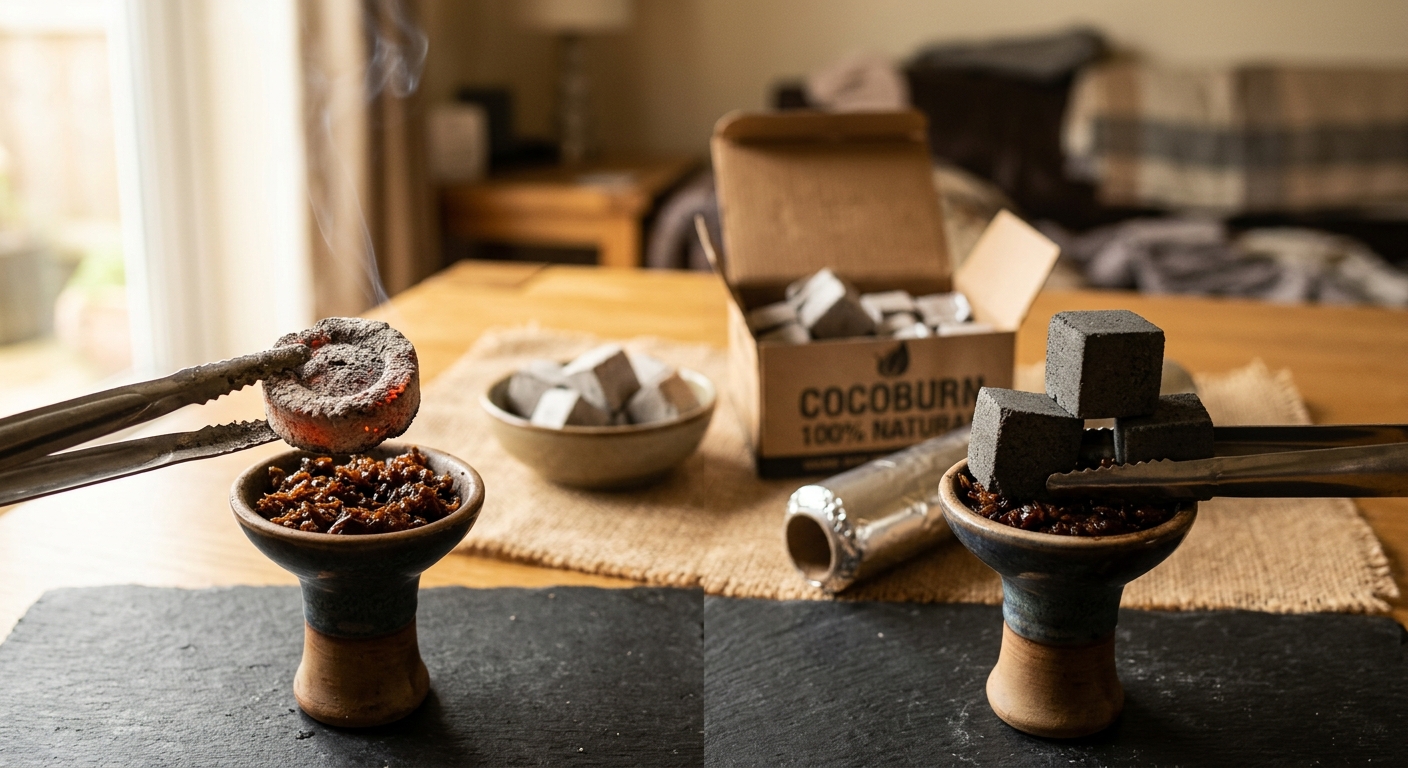
Coconut charcoal, often referred to as natural charcoal, is manufactured from compressed coconut shells. It contains no chemical accelerants, relying entirely on natural binding agents, usually starch. Because of their pure composition, lighting coconut coals requires a dedicated heat source, such as an electric coil burner or a gas stove, taking about 10 to 15 minutes to become fully red hot.
For those looking to upgrade their hookah setup, checking out The Ultimate Guide to the Best Coconut Charcoal for Hookah is highly recommended to ensure you get the best quality.
Pros of Coconut Charcoal
- Clean Taste: Without chemical accelerants, coconut coals are virtually odorless and tasteless, allowing the true flavor of your shisha tobacco to shine through.
- Long Burn Time: Coconut charcoal burns significantly longer, often lasting between 1.5 to 2 hours, reducing the need for frequent coal changes.
- Low Ash Production: They leave behind very little ash (often less than 3%), making heat management easier and keeping your setup cleaner.
- Consistent Heat: They provide a steady, even heat distribution, which is crucial for baking the shisha properly rather than burning it.
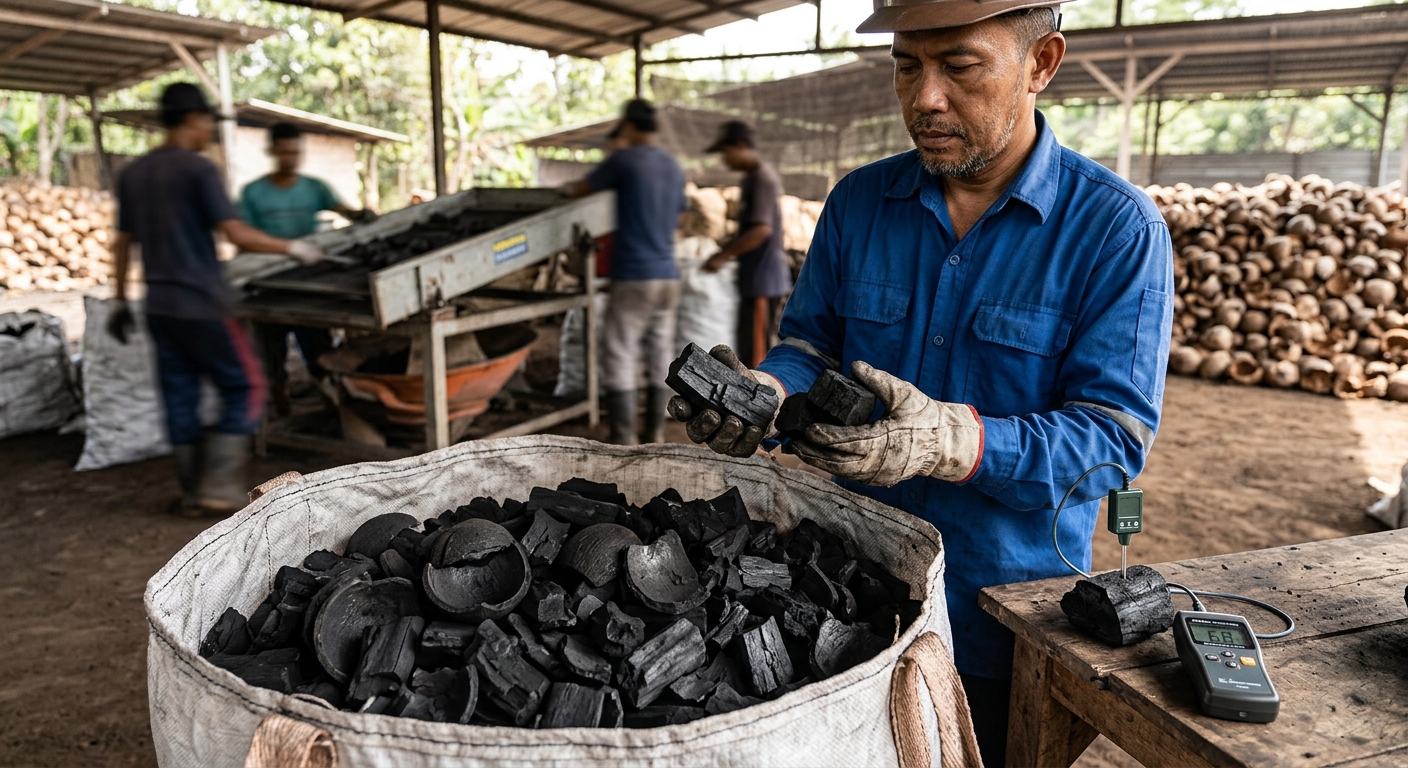
- Eco-Friendly: Made from repurposed coconut shells, this type of charcoal is sustainable and environmentally friendly, as no trees are cut down to produce it.
Cons of Coconut Charcoal
- Lighting Process: They require a strong heat source and patience, taking up to 15 minutes to light properly.
- Less Portable: You need an electric burner or gas stove, making them less suitable for outdoor smoking where electricity is scarce.
Quick Light vs Coconut Charcoal: A Side-by-Side Comparison
To help you make an informed decision, let us compare quick light and coconut charcoal across several critical factors.
| Feature | Quick Light Charcoal | Coconut Charcoal |
|---|---|---|
| Ignition Time | Seconds (with a lighter) | 10 – 15 minutes (with an electric burner) |
| Burn Time | 30 – 45 minutes | 1.5 – 2 hours |
| Taste / Odor | Can impart a chemical taste and smell | Odorless and tasteless |
| Ash Production | High | Very Low |
| Heat Consistency | Variable, can be too harsh initially | Stable and consistent |
| Eco-friendliness | Low (contains chemicals, often wood-based) | High (sustainable coconut shells) |
Which One Should You Choose?
The choice between quick light and coconut charcoal ultimately depends on your priorities and the context of your hookah session.
If you are traveling, camping, or simply lack access to an electric burner, quick light coals are a practical, albeit compromised, solution. They get the job done when convenience is the top priority.
However, if you are smoking at home or at a dedicated hookah lounge, coconut charcoal is the undisputed winner. The enhancement in flavor, the longevity of the session, and the clean burning properties make the extra 10 minutes of preparation completely worthwhile. Serious enthusiasts and lounges almost exclusively use coconut charcoal to ensure a premium experience.
If you are a business looking to source high-quality natural coals, you might find the Indonesian Charcoal Exporter Contact Details: A Complete Guide for Wholesalers to be an invaluable resource for connecting with reputable suppliers.
Conclusion
In the debate of quick light vs coconut charcoal for shisha, coconut charcoal clearly stands out as the superior choice for a quality smoking experience. While quick lights offer undeniable convenience and portability, their chemical taste, short burn time, and high ash production detract from the enjoyment of premium shisha flavors. Coconut charcoal, though requiring more effort to light, rewards the smoker with clean, odorless heat, a longer-lasting session, and a pure flavor profile. By choosing the right charcoal, you take a significant step toward mastering the art of the perfect hookah session.
Frequently Asked Questions
Why does quick light charcoal give me a headache?
Quick light charcoal contains chemical accelerants like sulfur and benzene to help it ignite quickly. When burned, especially before the coal is fully lit, these chemicals release carbon monoxide and other fumes. Inhaling these fumes can lead to headaches, dizziness, and nausea. It is crucial to let quick light coals burn completely until they are covered in gray ash before placing them on your hookah.
Can I light coconut charcoal with a regular lighter?
No, you cannot light natural coconut charcoal with a standard butane lighter or matches. Because they lack chemical accelerants, they require a sustained, high-temperature heat source. An electric single coil burner or a gas stove is necessary to heat them until they are glowing red all over, which usually takes about 10 to 15 minutes.
Are coconut coals better for the environment?
Yes, coconut coals are highly eco-friendly. They are made from the shells of coconuts, which are an agricultural byproduct. Producing coconut charcoal does not require cutting down trees, unlike traditional wood charcoal, making it a sustainable and environmentally responsible choice for hookah smokers.