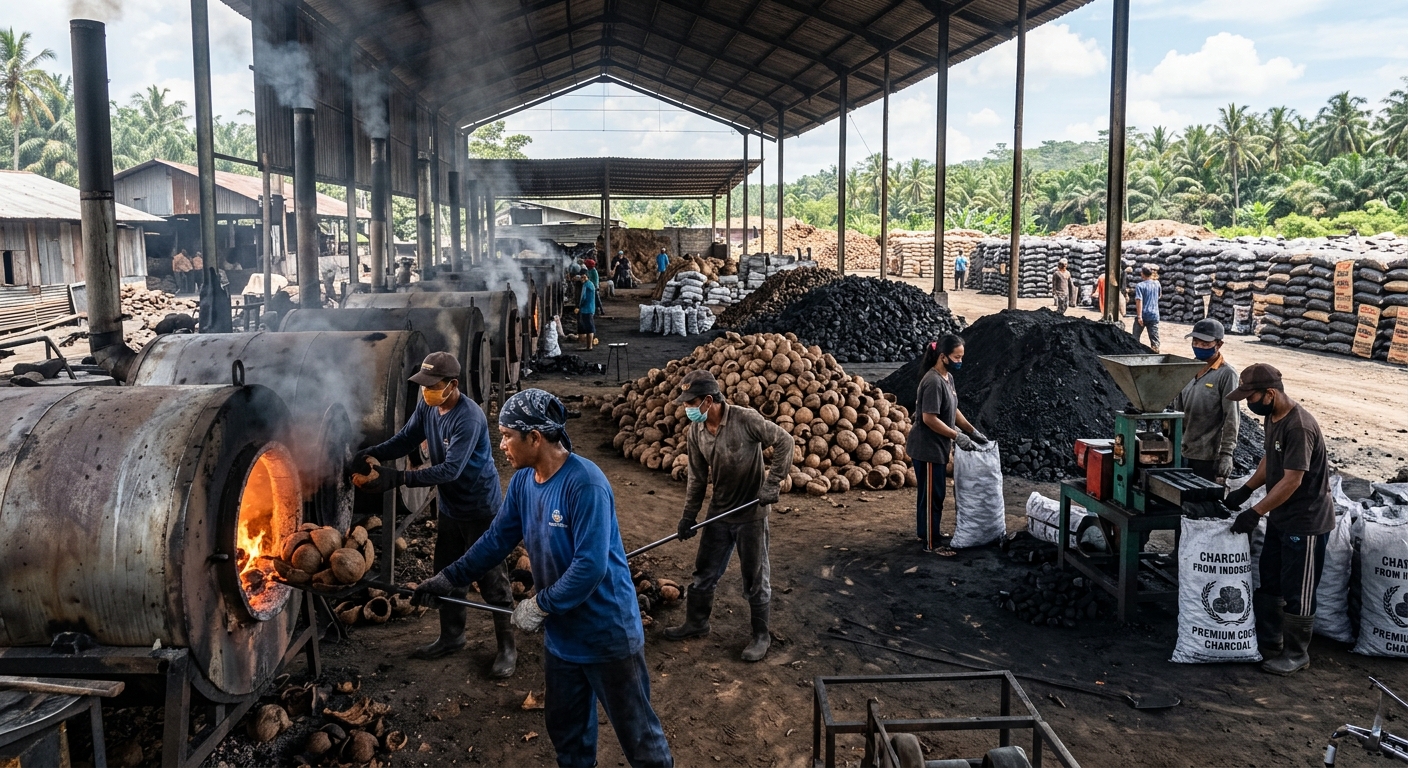
Introduction to Indonesia’s Coconut Charcoal Industry
Indonesia is globally recognized as a leading producer of coconut-based products, and at the heart of this agricultural powerhouse is the booming coconut charcoal industry. A coconut charcoal factory in Indonesia leverages the country’s vast coconut plantations to produce high-quality, sustainable fuel alternatives. These factories transform coconut shells, which were once considered agricultural waste, into premium charcoal briquettes used worldwide for grilling, shisha, and industrial applications.
The strategic advantage of Indonesia lies in its tropical climate, which is ideal for year-round coconut cultivation. This ensures a consistent supply of raw materials for factories. As global demand shifts towards eco-friendly and sustainable products, the role of an Indonesian coconut charcoal factory becomes increasingly vital. Understanding the intricacies of this industry is crucial for buyers, investors, and businesses looking to source premium charcoal products.
The Production Process: From Shell to Briquette
The journey of a coconut shell from the plantation to a packaged briquette involves a meticulous and highly controlled process within a coconut charcoal factory in Indonesia. Quality control at each step is essential to ensure the final product meets international standards, particularly for specialized uses like shisha.
Sourcing and Carbonization
The first step involves sourcing high-quality, mature coconut shells. Once collected, these shells undergo carbonization, a process of burning the shells in a low-oxygen environment. This step is critical; if the temperature is not carefully monitored, the resulting charcoal will have a high ash content and lower carbon percentage, affecting its burning efficiency.
Crushing, Mixing, and Molding
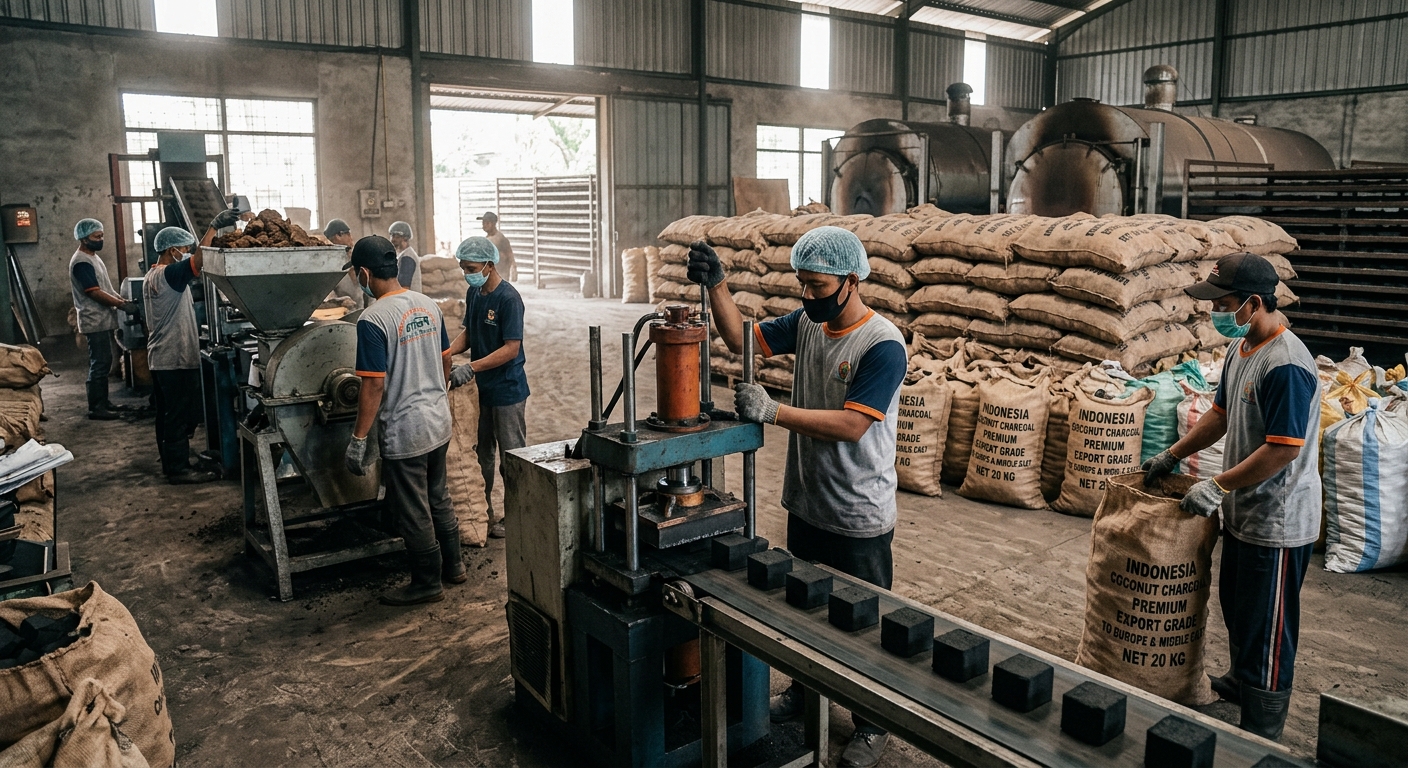
After carbonization, the charcoal is crushed into a fine powder. This powder is then mixed with a natural binder, usually tapioca starch, to hold the shape without compromising the organic nature of the product. Water is added to create a dough-like consistency. The mixture is then fed into molding machines where it is pressed into various shapes, predominantly cubes, hexagons, or fingers, depending on market demand.
Drying and Packaging
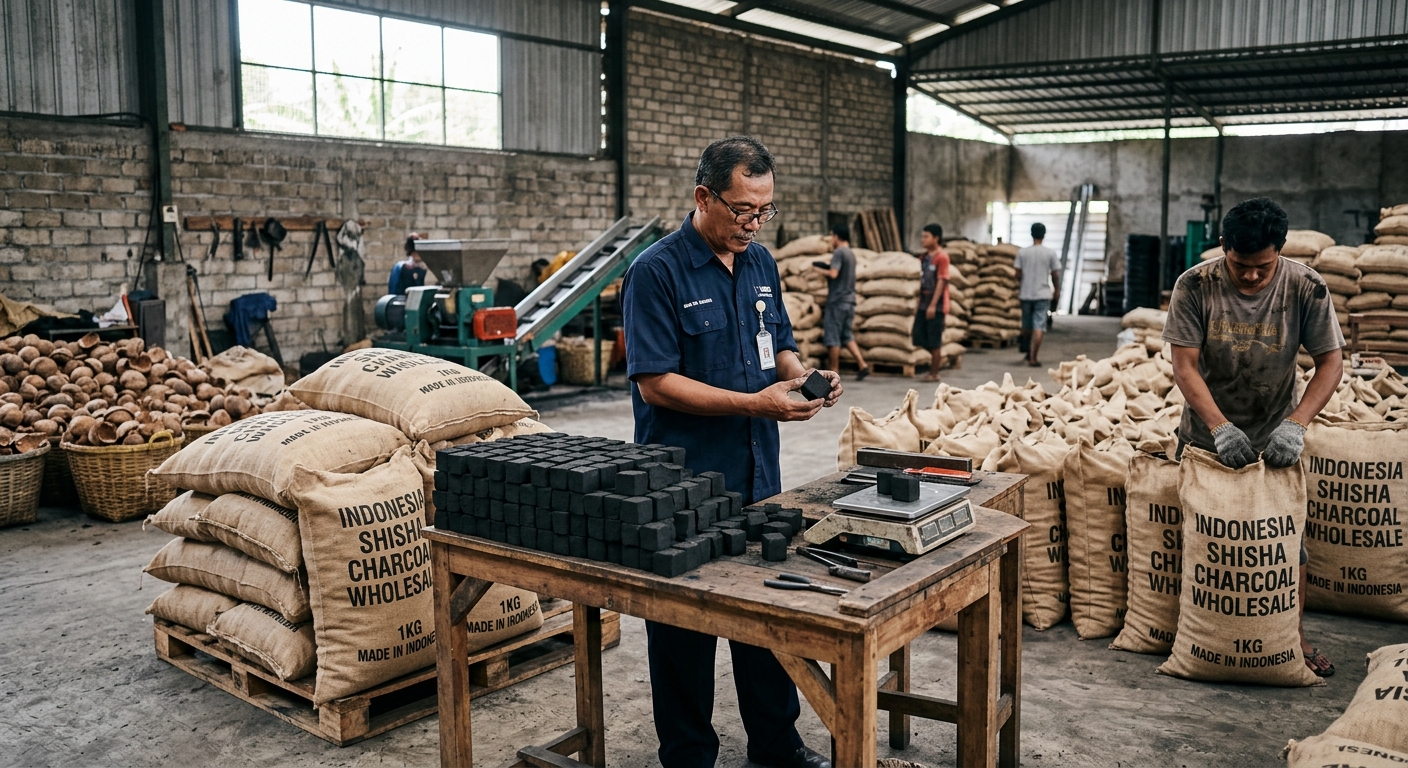
The molded briquettes contain significant moisture and must be dried in industrial ovens for up to 24 hours. The drying process ensures the briquettes are completely dry, which is essential for a long-lasting, smokeless burn. Finally, the briquettes are cooled, sorted for quality assurance, and packaged for export. For businesses looking to source these products in large quantities, reading A Complete Guide to Buying Wholesale Coconut Charcoal Briquettes is highly recommended to understand purchasing dynamics and quality indicators.
Why Indonesian Coconut Charcoal is Superior
Coconut charcoal factories in Indonesia are renowned for producing some of the best briquettes in the world. Several factors contribute to this superiority, making it the preferred choice for discerning consumers and businesses alike.
- High Fixed Carbon Content: Indonesian coconut shells naturally yield charcoal with high fixed carbon (often above 75%). This translates to higher heat output and longer burning time.
- Low Ash Content: Quality factories ensure the ash content remains below 2.5%, which is crucial for shisha users who desire a clean experience without flavor interference.
- Smokeless and Odorless: Because it is made from 100% natural coconut shells without chemical additives, the burning process is smokeless and leaves no residual odor.
- Eco-Friendly: Utilizing coconut shells prevents agricultural waste and does not involve cutting down trees, making it a highly sustainable energy source.
Market Demand and Applications
The output from a coconut charcoal factory in Indonesia serves two primary global markets: barbecue (BBQ) and shisha/hookah. The specifications required for these two applications differ significantly, and factories often tailor their production lines accordingly.
For the BBQ market, briquettes are usually larger, providing sustained heat for long grilling sessions. In contrast, the shisha market demands smaller, precisely cut cubes that produce minimal ash and no off-flavors. Providing high-quality charcoal to lounges is a lucrative business model, and operators can gain valuable insights from Hookah Lounge Charcoal Wholesale: The Ultimate Guide for Business Owners to optimize their supply chains.
Comparing Charcoal Types: Coconut vs. Wood
To better understand the value proposition of Indonesian coconut charcoal, it is helpful to compare it directly with traditional hardwood charcoal. The following table highlights the key differences between premium coconut shell briquettes and standard hardwood lump charcoal.
| Feature | Coconut Shell Briquettes | Hardwood Lump Charcoal |
|---|---|---|
| Burn Time | 2 to 3 hours | 1 to 1.5 hours |
| Ash Production | Very Low (Under 3%) | Moderate to High (5% – 10%) |
| Environmental Impact | Sustainable (Uses agricultural waste) | Deforestation risk (Requires cutting trees) |
| Shape & Consistency | Uniform shapes (Cubes, hexagons) | Irregular lumps |
| Odor & Smoke | Odorless and smokeless | Often produces smoke and wood aroma |
Challenges and the Future of the Industry
Despite its success, operating a coconut charcoal factory in Indonesia comes with challenges. Fluctuations in raw material prices due to weather conditions impacting coconut harvests can affect production costs. Additionally, maintaining stringent quality control to meet the varying standards of different importing countries requires constant vigilance and investment in modern machinery.
Looking ahead, the industry is poised for continuous growth. Innovations in automated production lines, more energy-efficient drying ovens, and advanced packaging solutions are helping factories increase output while maintaining quality. As the global push for sustainable, non-timber forest products accelerates, Indonesian coconut charcoal will remain at the forefront of the international market.
Conclusion
The coconut charcoal factory in Indonesia represents a perfect synergy between agricultural abundance and industrial innovation. By converting what was once considered waste into a premium, sustainable fuel source, these factories support the local economy while supplying the global market with an unparalleled product. Whether used for a weekend barbecue or in high-end shisha lounges, Indonesian coconut charcoal briquettes set the standard for quality, sustainability, and performance.
Frequently Asked Questions
What makes Indonesian coconut charcoal better than others?
Indonesian coconut charcoal is superior due to the high quality of locally grown coconuts, which yield shells with very high density. This results in charcoal with higher fixed carbon, longer burn times, lower ash content, and no chemical odors.
Are coconut charcoal briquettes environmentally friendly?
Yes, they are highly eco-friendly. They are made from discarded coconut shells, meaning no trees are cut down to produce them, which helps prevent deforestation and reduces agricultural waste.
How do I choose a reliable coconut charcoal factory in Indonesia?
Look for factories that can provide consistent quality testing reports (such as fixed carbon, ash content, and moisture levels), have transparent production processes, offer samples, and possess relevant export certifications and positive buyer references.
Can I request custom shapes and packaging for wholesale orders?
Yes, most reputable coconut charcoal factories in Indonesia offer OEM (Original Equipment Manufacturer) services, allowing buyers to customize the shape (cubes, flats, hexagons) and design their own branded packaging for wholesale orders.
2 thoughts on “Coconut Charcoal Factory in Indonesia: The Ultimate Guide”