Did you know that a single water pipe session exposes you to 200 times more smoke than one cigarette? This fact surprises many who think it’s harmless.
Sharing a water pipe with friends might seem safer than smoking. But, the hookah health implications are serious. These long sessions can harm your body.
This guide will teach you about tobacco use through water pipes. You’ll learn how it affects your lungs and heart.
If you smoke regularly or just sometimes, you need honest information about your body. We’ll also talk about how to keep your equipment clean to lower some risks.
By the end, you’ll know everything to make informed decisions about your health.
Key Takeaways
- One water pipe session delivers 200 times more smoke than a single cigarette, exposing you to significant toxic compounds
- Common belief that water filtration removes harmful substances is a dangerous myth not supported by scientific evidence
- Regular use significantly impacts your respiratory system and cardiovascular function, similar to traditional cigarette smoking
- Sharing mouthpieces increases your risk of transmitting infectious diseases between users during social sessions
- Proper cleaning and maintenance of equipment can reduce some contamination hazards but doesn’t eliminate core smoking dangers
- Understanding the real consequences empowers you to make better decisions about your long-term well-being
Understanding the Basics of Hookah Smoking
Starting your journey to learn about hookah dangers means separating fact from fiction. Hookah, an ancient practice, has become popular today. Knowing what it is and how it works is key to making informed choices.
Hookah lounges are now trendy spots in American cities. Yet, many users don’t know the dangers or how it works.
What is Hookah?
Hookah is a water pipe device for smoking flavored tobacco. It’s also known as shisha, narghile, argileh, or waterpipe. It originated in the Middle East and South Asia for social gatherings.
The typical hookah has a bowl for tobacco, a metal stem, and a water-filled glass base. Hoses connect to the base for inhaling smoke.
Hookahs come in many designs, from traditional brass to modern glass with LED lights.
Today’s hookah culture is very different from its roots. Hookah lounges offer many flavor options. This variety makes it seem like drinking flavored drinks, appealing to the young.
How Does Hookah Work?
Knowing how hookah works helps understand its health risks. The process starts with flavored tobacco in the bowl. A foil or screen covers it.
Lit charcoal heats the tobacco without burning it. This creates smoke that goes down through the stem when you inhale.
The smoke goes through a water chamber that cools it. Many think harmful substances get filtered out here. But, the smoke then goes into your lungs.
A typical session lasts 45 to 60 minutes. You take many puffs, inhaling a lot of smoke. The long sessions and social nature mean you’re exposed to a lot of smoke.
| Hookah Component | Function | Common Misunderstanding |
|---|---|---|
| Bowl | Holds flavored tobacco that gets heated | Users think flavorings make it safer |
| Charcoal | Heat source that produces smoke from tobacco | Many don’t realize charcoal adds carbon monoxide |
| Water Base | Cools smoke before inhalation | Believed to filter out harmful chemicals (it doesn’t) |
| Hose | Delivers smoke from base to user | Sharing hoses can spread infectious diseases |
Common Misconceptions About Hookah
Many myths surround hookah use, making people underestimate its dangers. One big myth is that water filtration removes toxins from the smoke. But, research shows water doesn’t filter out harmful chemicals like tar or carbon monoxide.
Another myth is that hookah is less addictive than cigarettes. But, shisha tobacco has nicotine, the same addictive substance as cigarettes. You might absorb more nicotine from a single hookah session than from smoking a cigarette.
“A typical one-hour hookah session involves inhaling 100 to 200 times the volume of smoke inhaled from a single cigarette.”
Many think smoking hookah occasionally is safe. But, research shows even occasional use exposes you to toxic substances and increases health risks.
Some believe herbal shisha or tobacco-free alternatives are safe. But, these products also produce harmful smoke when burned. The combustion process creates toxic byproducts, and you’re inhaling carbon monoxide from the charcoal.
The pleasant flavors and smooth smoke create a false sense of security. Unlike harsh cigarette smoke, hookah smoke is easy to inhale. This makes you take more puffs without realizing the harm.
Seeing hookah as a social activity instead of tobacco smoking is dangerous. The social aspect and comfortable settings make it seem different from cigarettes. But, it’s tobacco use with all its health consequences.
Learning the basics and debunking myths is key to understanding health concerns about hookah. The pleasant experience doesn’t change the harm it causes to your body with each puff.
Health Risks Associated with Hookah Use
Hookah use can harm your body in many ways. It affects your lungs, heart, and mouth. These effects can lead to serious health problems that change your life.
Knowing these risks helps you make better choices for your health. Research keeps finding new health problems linked to hookah use. Let’s look at how hookah affects your body’s main systems.
Breathing Problems and Lung Damage
Smoking hookah hurts your lungs a lot. The risks of smoking hookah include lung function loss and chronic bronchitis. Hookah smokers can breathe less easily, like cigarette smokers.
The water in a hookah pipe might seem gentle. But it lets you inhale deeper, bringing harmful particles into your lungs. These particles can damage your airways and lungs over time.
Hookah use can also lead to more respiratory infections. Your lungs become more open to bacteria and viruses. You’re also at higher risk for developing conditions like emphysema and other chronic obstructive pulmonary diseases.
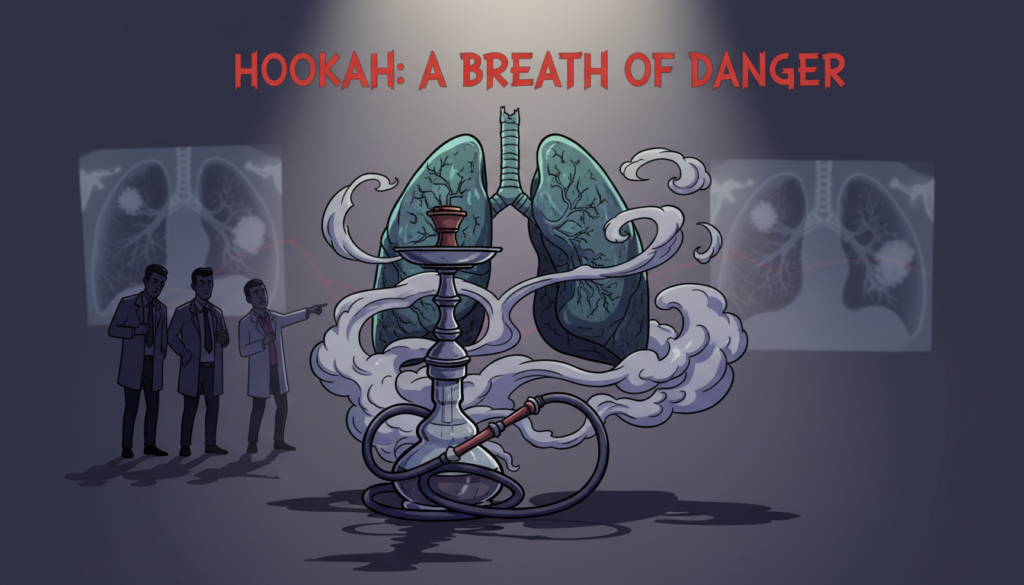
If you don’t clean your hookah, you face more dangers. Mold and bacteria can grow, causing allergic reactions and infections. These can harm your respiratory health.
- Reduced oxygen intake capacity
- Persistent coughing and wheezing
- Increased mucus production
- Higher susceptibility to pneumonia
- Potential development of lung cancer over time
Heart and Blood Vessel Problems
The hookah consumption risks affect your heart and blood vessels too. Hookah sessions raise your heart rate and blood pressure. Your arteries become less flexible, straining your heart and blood vessels.
Carbon monoxide from burning charcoal is a big problem. It reduces your blood’s oxygen-carrying ability. Your heart has to work harder to compensate for the lack of oxygen.
Hookah use increases your risk of heart disease, heart attack, and stroke. Even occasional smoking can be dangerous for people with heart conditions. Your arteries may build up plaque faster due to hookah smoke.
The effects on your circulatory system happen quickly. Within minutes, your blood pressure and arterial stiffness change. These changes get worse with repeated use, leading to permanent damage.
| Body System | Immediate Effects | Long-Term Consequences | Risk Level |
|---|---|---|---|
| Respiratory | Reduced oxygen intake, coughing | Chronic bronchitis, lung disease | High |
| Cardiovascular | Elevated heart rate, increased blood pressure | Heart disease, stroke risk | High |
| Oral | Dry mouth, tissue irritation | Gum disease, oral cancer | Moderate to High |
| Circulatory | Reduced blood oxygen levels | Arterial plaque buildup | Moderate |
Mouth, Teeth, and Gum Damage
Hookah use harms your mouth a lot. The smoke damages your mouth’s delicate tissues. This increases your risk for gum disease and tooth decay.
The sugary molasses in flavored tobacco creates a perfect environment for bacteria. This bacteria attacks your tooth enamel, leading to cavities. You may notice chronic bad breath and tooth staining.
Hookah use also raises your risk of oral cancers. The heat, tobacco, and chemicals in hookah create dangerous conditions in your mouth. Your gums may recede, exposing tooth roots and making your teeth sensitive.
Dentists can spot hookah smokers by the damage they see. You might experience bleeding gums, loose teeth, or sores that take longer to heal. These signs show your oral tissues are struggling with smoke exposure.
The full picture of health risks shows what’s at stake with hookah use. Understanding these dangers empowers you to make informed decisions about protecting your health. Each hookah session carries risks that add up over time, affecting your health in ways that may not be obvious but have lasting effects.
The Ingredients in Hookah Tobacco
Hookah smoke seems harmless but is actually a mix of tobacco, sweeteners, and chemicals. Knowing what’s in your hookah helps you see the dangers of hookah tobacco.
Shisha in your hookah isn’t just tobacco. It’s a wet mix of tobacco, molasses or honey, glycerin, and flavorings. Each part affects the taste and health risks of hookah.
Types of Tobacco Used in Hookah
Hookah tobacco comes in different types, each with its own nicotine level. Knowing these differences helps you choose wisely.
Virginia tobacco is the base of most shisha. It has less nicotine and is milder. It’s good for casual users and social smoking.
Dark Blend or Dark Leaf tobacco is stronger. It has more nicotine and intense flavor. It’s for experienced smokers but increases nicotine addiction risks.
Some products claim to be herbal or tobacco-free. They use tea leaves or sugarcane instead of tobacco. But, they also produce harmful smoke when burned.
| Tobacco Type | Nicotine Level | User Experience | Common Uses |
|---|---|---|---|
| Virginia Tobacco | Low to Moderate | Mild, smooth smoke | Social sessions, beginners |
| Dark Blend/Dark Leaf | High | Intense flavor, strong buzz | Experienced users, solo smoking |
| Herbal/Tobacco-Free | None | Similar smoke volume, no nicotine | Nicotine-avoiding users |
| Blonde Leaf | Low | Light, easy smoking | Extended sessions, flavor focus |
Harmful Chemicals Found in Hookah Tobacco
Hookah smoke contains many toxic substances. These pose serious health threats.
Tar builds up in your lungs like with cigarette smoking. It damages lung tissue and causes respiratory diseases.
Heavy metals like lead, arsenic, and chromium are also in hookah smoke. These come from tobacco and charcoal. Your body absorbs these toxins, leading to health problems.
Water filtration doesn’t remove harmful chemicals from hookah smoke. Hookah users face many toxic compounds found in cigarette smoke, often in higher concentrations.
Carbon monoxide is a major hazard. Charcoal burning produces large amounts of this gas. It reduces your blood’s oxygen-carrying capacity and strains your heart.
Carcinogens like formaldehyde, benzene, and nitrosamines are in hookah smoke. These cancer-causing chemicals form during burning. Longer sessions mean more exposure to these dangers.
Many think water filtration protects them from hookah hazards. But, research shows it only removes a small fraction of harmful chemicals. You’re left vulnerable to most toxins.
The Role of Flavorings
Flavors make hookah enjoyable but also increase health risks. They mask the harshness of tobacco and smoke, leading to longer sessions.
Flavorings don’t reduce dangers. They make harmful smoke easier to inhale. Flavored hookah seems safer, but it’s just as toxic.
Some flavoring chemicals may pose additional health risks when heated. Research is ongoing, but early studies suggest certain compounds become harmful at high temperatures.
Molasses and glycerin in flavorings create sticky residue. This residue can harbor bacteria and mold if not cleaned regularly. It adds another health concern to smoking.
Understanding hookah tobacco reveals its dangers. Pleasant tastes and smells don’t change the harmful substances in every bowl you smoke.
Secondhand Smoke: A Hidden Danger
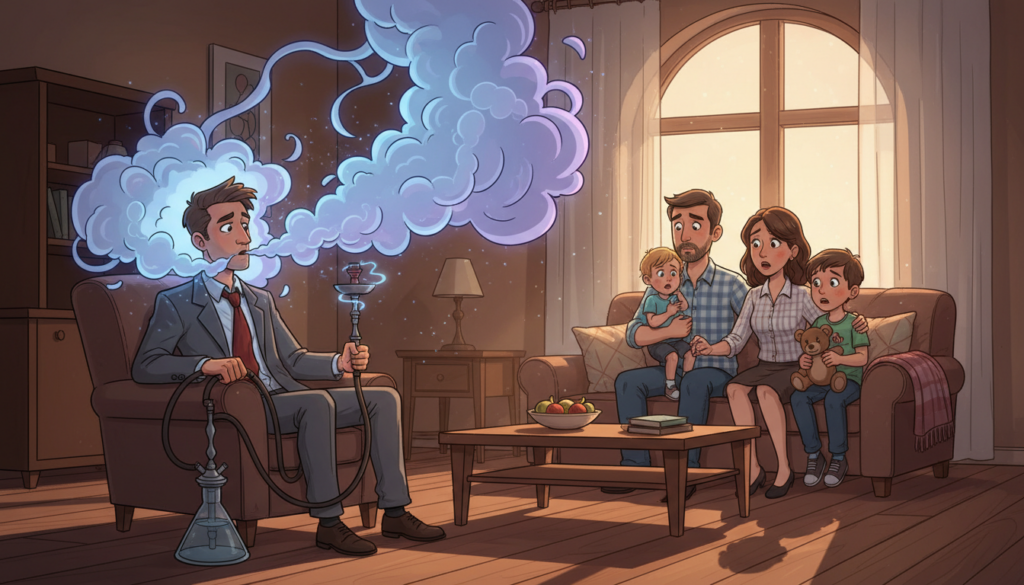
Hookah smoke doesn’t just affect the person smoking. It also harms those nearby. The sweet-smelling clouds from hookah lounges and homes carry the same dangers of hookah use as they do to smokers.
It’s important to know how secondhand hookah smoke affects others. This knowledge helps you make better choices about where and when to smoke. It also shows your responsibility to protect those who are vulnerable.
What Makes Secondhand Hookah Smoke Dangerous
The smoke from your hookah fills spaces with toxic chemicals. These harmful substances don’t disappear after passing through water. Everyone breathing that air inhales carbon monoxide, heavy metals, and cancer-causing particles.
A typical hookah session lasts 45 to 60 minutes. This means a lot of smoke is produced. Your friends sitting across the table breathe in these toxins for the whole session.
Hookah secondhand smoke is a lot. Research shows it produces more smoke than cigarettes. This means more harmful chemicals in the air around you.
People exposed to hookah secondhand smoke feel immediate effects. Their heart rate and blood pressure go up. Many report respiratory irritation, coughing, and eye discomfort, even without touching the hookah.
Who Faces the Greatest Risk from Exposure
Certain groups are more at risk from secondhand hookah smoke. Pregnant women are at the top of this list. The toxins can cross the placental barrier, threatening fetal development and possibly leading to low birth weight or developmental complications.
Children and infants have developing respiratory systems. Their smaller airways and faster breathing rates mean they inhale more pollutants. This puts them at serious risk for asthma, frequent respiratory infections, and impaired lung growth.
The following groups need special protection from hookah smoke exposure:
- Pregnant women and their unborn babies facing developmental risks
- Children under 12 with developing lungs and airways
- Elderly individuals with age-related vulnerabilities
- People with asthma or COPD experiencing worsened symptoms
- Heart disease patients at risk for cardiovascular events
If you smoke hookah at home, consider who shares that space with you. Your elderly parents or young nieces and nephews face real health consequences from your sessions. People with compromised immune systems or chronic conditions also experience more severe reactions to secondhand smoke.
How It Compares to Cigarette Secondhand Smoke
Many people think hookah smoke is safer than cigarette smoke. But this is a dangerous misconception. The dangers of hookah use through secondhand exposure are just as bad as cigarette smoke.
A single hookah session produces smoke volume equivalent to smoking multiple cigarettes. The sweet aroma and fruit flavors don’t make it less harmful. They simply mask the danger and make the contaminated air more tolerable to breathe.
The ventilation systems in most hookah lounges cannot keep up with smoke production. Even establishments with fans or windows have high levels of airborne toxins. Everyone inside these spaces breathes contaminated air for extended periods.
| Exposure Factor | Hookah Secondhand Smoke | Cigarette Secondhand Smoke |
|---|---|---|
| Average Session Duration | 45-60 minutes continuous exposure | 5-7 minutes per cigarette |
| Total Smoke Volume | Equivalent to 100+ cigarettes per session | One cigarette per smoking event |
| Carbon Monoxide Levels | Significantly elevated in enclosed spaces | Lower concentration per unit |
| Particulate Matter | High levels of PM2.5 and ultrafine particles | Similar particle composition |
| Indoor Air Quality Impact | Severe degradation lasting hours after session | Moderate degradation, shorter duration |
The table shows that hookah creates more secondhand smoke exposure than cigarettes. Your choice to smoke hookah affects everyone around you. This adds an ethical dimension to your decision-making process.
Understanding these risks helps you protect the people you care about. If you continue smoking hookah, do it in well-ventilated outdoor spaces. Keep vulnerable populations away from areas where hookah sessions occur. Your awareness can prevent unnecessary health consequences for innocent bystanders.
Preventative Measures for Safer Hookah Use
By taking steps to reduce harm, you can lower the health risks of hookah use. While quitting is the best choice, there are ways to make hookah safer. These include using better equipment, controlling how long you smoke, and trying alternatives that might be safer.
Learning about these steps helps you make better choices for your health. These strategies won’t get rid of all risks, but they can help a lot. They can cut down on toxins and lower the chance of serious health problems.
Choosing a Clean and Safe Hookah Setup
The quality of your equipment is key to staying safe while smoking. A high-quality hookah made from safe materials is a good start. It helps reduce health risks.
Stainless steel stems from brands like Steamulation or Alpha Hookah are a good choice. They don’t corrode and clean well. They also don’t add harmful substances to your smoke.
Medical-grade silicone hoses are another upgrade. They prevent bacteria and keep flavors clean. You can wash them after each use to remove residue.
When you go to hookah lounges, ask about their cleaning. You can ask how often they clean and if they use disposable mouthpieces. Health experts say proper care can lower some risks.
- Mold in the base: White or green spots mean dangerous fungi
- Foul odors from hoses: Bad smells mean bacteria
- Residue in the stem: Dark spots have concentrated toxins
- Cracked or damaged parts: Broken equipment leaks air and smoke
Proper storage helps prevent many problems. Keep your hookah in a cool, dry place. Disassemble and dry parts well before your next use.
Reducing Frequency and Duration of Use
Smoking less often and for shorter times is safer. It reduces your exposure to harmful chemicals. This approach lowers health risks and makes it easier to control your smoking.
Research shows that smoking once a week or less is safer. It reduces toxin buildup and lowers nicotine addiction risk. This makes it easier to manage your smoking habits.
Shorter sessions are also safer. Cutting your 60-minute sessions to 20-30 minutes reduces smoke and carbon monoxide. You can enjoy social time while protecting your lungs.
Here are some tips for shorter sessions:
- Use fewer charcoal pieces to reduce harmful byproducts
- Take breaks during long sessions to recover
- Set a timer to keep track of time
- Alternate between smoking and non-smoking activities
Breaks are important for your heart and lungs. They help your heart rate and blood oxygen levels recover. This is key during long social gatherings.
Exploring Less Harmful Alternatives
There are safer options than traditional hookah. Knowing your choices helps you make better decisions. These alternatives can reduce health risks.
Herbal shisha has no tobacco, so it’s nicotine-free. It uses tea leaves and flavorings. But, it’s not completely safe because it’s burned.
Heat-not-burn tobacco products are new. They heat tobacco at lower temperatures than traditional methods. Research is limited, but they might be safer.
Vaping is another option. It eliminates burning, which reduces many toxins. But, vaping has its own risks, like lung irritation.
You can also enjoy social gatherings without smoking. Focus on tea, coffee, or other drinks. This keeps the social vibe without the smoke.
| Harm Reduction Strategy | Primary Benefits | Limitations | Best For |
|---|---|---|---|
| Premium Equipment | Reduces bacterial growth, prevents contamination, easier cleaning | Higher upfront cost, involves tobacco smoke | Regular users committed to maintenance |
| Reduced Frequency | Lower toxin accumulation, decreased addiction risk, health recovery time | Requires discipline and tracking, social pressure challenges | Those able to moderate consumption |
| Herbal Shisha | No nicotine exposure, eliminates tobacco-specific toxins | Produces combustion byproducts, less satisfying for some | Users wanting to eliminate nicotine |
| Heat-Not-Burn Devices | Potentially fewer toxic byproducts, controlled temperature | Limited research, higher device cost, learning curve | Tech-savvy users seeking innovation |
Each alternative has its own benefits. The best approach often combines several strategies. This includes using quality equipment, smoking less, and trying tobacco-free options.
Complete risk elimination only comes from quitting. These steps help if you can’t quit. But, they don’t make smoking completely safe. Regular health checks are important to catch problems early.
Knowing these steps helps you make choices that protect your health. Using one or more strategies is a step towards safer smoking. It shows you’re thinking about your health and making progress.
Cleaning Your Hookah for Better Health
Keeping your hookah clean is key to your health and smoking fun. Tobacco, molasses, and smoke particles build up inside. This creates a home for harmful bacteria and mold.
Why Regular Maintenance Matters
After each use, your hookah needs a good rinse. Use warm water to prevent molasses from sticking. For those who smoke daily, clean it weekly. Occasional smokers should do it every 3-4 times.
Not cleaning it can lead to bad smells and taste. It’s not worth the risk.
Proper Cleaning Methods for Each Component
Begin by taking apart your hookah. Rinse the stem with hot water for 30 seconds. Use a stem brush with warm water and lemon juice to clean inside.
For the base, mix warm water and lemon juice or vinegar. Fill it 25% and let it soak. This keeps it fresh.
For silicone hoses, run water through for 60 seconds and let them dry. Don’t soak non-washable hoses. Instead, blow through them hard before smoking.
Essential Tools and Products
Get the right cleaning tools. You’ll need a long stem brush, a flexible base brush, and natural cleaners. Baking soda or white vinegar work well. Microfiber cloths are great for drying and polishing.
Avoid harsh chemicals or rough scrubbers. They can harm your hookah. Always dry your hookah well before storing it. Moisture can cause rust and bacteria, harming your health.
FAQ
Is hookah really safer than cigarettes because the smoke passes through water?
No, this is a dangerous myth about hookah. The water in your hookah base cools the smoke and traps some particles. But it doesn’t remove harmful chemicals that pose serious health risks. Hookah smoke contains many toxins found in cigarette smoke, including tar and heavy metals.
Because a typical hookah session lasts 45-60 minutes, you’re exposed to more smoke than cigarette smokers. The water filtration gives you a false sense of security. It allows toxic substances to go deeper into your respiratory system. Knowing these risks helps you make better choices.
How often should I clean my hookah to minimize health hazards?
Clean your hookah after every session, even if it was brief. Residue from flavored tobacco and smoke particles accumulate inside. This creates a perfect environment for mold and bacteria growth.
Your stem should be flushed with warm water and cleaned with a soft brush. Rinse your base with warm water and use lemon juice or baking soda to remove smells. Modern hoses should be rinsed and dried completely. Traditional hoses should be blown out and replaced periodically.
Thorough drying is key to prevent rust and mold growth. Leaving parts wet or storing your hookah in a damp environment is dangerous.
Can I get addicted to hookah like I would to cigarettes?
Yes, absolutely. Hookah tobacco contains nicotine, the same addictive substance as cigarettes. You can develop nicotine dependence from regular use. Hookah sessions can deliver as much nicotine as smoking several cigarettes.
Withdrawal symptoms like irritability and cravings occur when you try to quit. The social aspect of hookah culture can make addiction seem less serious. But, the risks of smoking hookah include physical and psychological dependence.
What health problems can hookah cause to my lungs?
Hookah poses serious respiratory issues that can significantly impact your lung health. You face decreased lung function and reduced lung capacity. Regular use increases your risk of chronic bronchitis and respiratory infections.
Research links hookah to increased lung cancer risk. The toxic particles you inhale penetrate deep into your lung tissue. Inhaling more deeply due to the cooling effect of water brings harmful substances further into your respiratory system.
Does hookah affect my heart and cardiovascular system?
Yes, hookah has significant and immediate effects on your cardiovascular system. It strains your heart and blood vessels. Carbon monoxide from charcoal combustion reduces your blood’s ability to carry oxygen.
Regular use has been associated with increased risk of heart disease, heart attack, and stroke. These risks are concerning if you already have cardiovascular risk factors. Even occasional use causes measurable changes in heart function and arterial health.
Is secondhand hookah smoke dangerous to people around me?
Yes, secondhand hookah smoke poses genuine health risks. It contains the same harmful chemicals as direct inhalation. The volume of secondhand smoke produced is greater than cigarette smoke.
Anyone around you experiences increased heart rate and respiratory irritation. Vulnerable populations face serious risks. Pregnant women, children, and elderly individuals are at higher risk.
What harmful chemicals am I inhaling when I smoke hookah?
You’re inhaling a complex and dangerous mixture of toxic substances. Research has identified tar, heavy metals, carbon monoxide, and carcinogens in hookah smoke. Water filtration doesn’t significantly reduce these risks.
Studies show hookah smoke contains many of the same dangerous chemicals as cigarette smoke. The charcoal used to heat the tobacco produces additional carbon monoxide and combustion byproducts. Even herbal shisha contains harmful combustion products.
Can hookah cause damage to my teeth and gums?
Yes, hookah poses significant risks to your oral health. Your mouth, teeth, and gums receive direct exposure to smoke. This increases your risk of gum disease and tooth loss.
The hot smoke damages the delicate tissues in your mouth. The sugary molasses in flavored tobacco promotes bacterial growth, leading to cavities and tooth decay. You may experience chronic bad breath and tooth staining.
Are there any safer alternatives to traditional hookah smoking?
While avoiding hookah is the safest choice, some alternatives may reduce certain health risks. Herbal shisha eliminates nicotine exposure but produces harmful combustion products. Heat-not-burn tobacco products may produce fewer toxins than traditional shisha.
Vaping eliminates combustion but carries its own health concerns. Exploring tobacco-free gatherings allows you to enjoy the ambiance without smoking. High-quality equipment can reduce some equipment-related health hazards, but it doesn’t eliminate the fundamental risks from tobacco smoke.
How can I reduce health risks if I choose to continue using hookah?
If you’re not ready to quit, there are preventative measures to reduce health risks. Reduce your frequency and duration of use. Limit sessions to once weekly or less and shorten them to 20-30 minutes.
Invest in high-quality equipment made from safe materials. Use medical-grade silicone hoses and clean your hookah meticulously after every session. When visiting lounges, ask about their cleaning practices and request disposable mouthpieces.
What’s the difference between Virginia tobacco and Dark Blend tobacco in hookah?
The types of tobacco used in hookah vary significantly. Virginia tobacco is lighter, milder, and contains less nicotine. It’s mixed with more molasses and glycerin, producing sweeter flavors and a smoother experience.
Dark Blend or Dark Leaf tobacco is stronger, contains higher nicotine levels, and delivers more intense flavor. Because of the higher nicotine content, Dark Blend tobacco carries greater addiction risk. Neither type is “safer” in terms of the fundamental health risks from inhaling smoke and toxic substances.
What cleaning supplies should I use for my hookah?
Using the right cleaning supplies is essential for maintaining your hookah’s hygiene. You should have hookah-specific brushes in various sizes. Natural cleaning agents like lemon juice and baking soda work best.
Avoid using large amounts of household dish soap inside your hose or base. It leaves unwanted residue. For deep cleaning, specialized hookah cleaning solutions are formulated for hookah components. Always dry components thoroughly to prevent mold and bacteria growth.
Can pregnant women safely be around hookah smoke?
No, pregnant women should avoid exposure to hookah smoke. Hookah smoke contains carbon monoxide, which reduces oxygen levels in the blood. This affects the oxygen supply to the developing baby and can lead to serious complications.
Research shows that exposure to hookah smoke during pregnancy is associated with low birth weight, premature birth, and developmental complications. The toxic chemicals in hookah smoke can cross the placental barrier and affect fetal development. Even secondhand exposure poses risks to pregnant women and their unborn babies.
How does hookah addiction compare to cigarette addiction?
Hookah addiction and cigarette addiction are both driven by nicotine dependence. Hookah smokers may use less frequently but each session delivers a substantial dose of nicotine. This can create a pattern where you don’t feel daily cravings but experience strong urges in social situations or at specific times.
The hookah smoking dangers related to addiction are often underestimated. You may rationalize that smoking hookah only once or twice a week isn’t a problem. But, you’re experiencing physiological addiction and the associated health risks. Both forms of tobacco use lead to the same withdrawal symptoms when you try to quit.
What should I look for when choosing a hookah lounge to minimize health risks?
When selecting a hookah lounge, look for establishments with better hygiene practices. Disposable mouthpieces for all hoses are essential for preventing the spread of infectious diseases. The lounge should have adequate ventilation systems to reduce secondhand smoke concentration.
Don’t hesitate to ask staff about their cleaning procedures. Reputable establishments clean hookahs thoroughly between uses and regularly replace hoses. Observe the general cleanliness of the space. Quality lounges invest in good equipment and knowledgeable staff.