Introduction to Indonesian Shisha Charcoal
Indonesia is globally recognized as a premier producer of high-quality coconut charcoal briquettes, especially formulated for shisha and hookah consumption. The unique geographic and climatic conditions in Indonesia yield coconut shells that are exceptionally dense and robust. When properly carbonized and formed into briquettes, these shells create an unparalleled smoking experience characterized by long burn times, minimal ash, and zero interference with the flavor of the shisha tobacco.
For international buyers and distributors, understanding the strict export specifications is crucial. Sourcing the right product ensures customer satisfaction, repeat business, and compliance with international trade regulations. In this comprehensive article, we will delve deep into the technical specifications, manufacturing processes, quality control measures, and packaging requirements for exporting Indonesian shisha charcoal.
The Manufacturing Process of Coconut Charcoal Briquettes
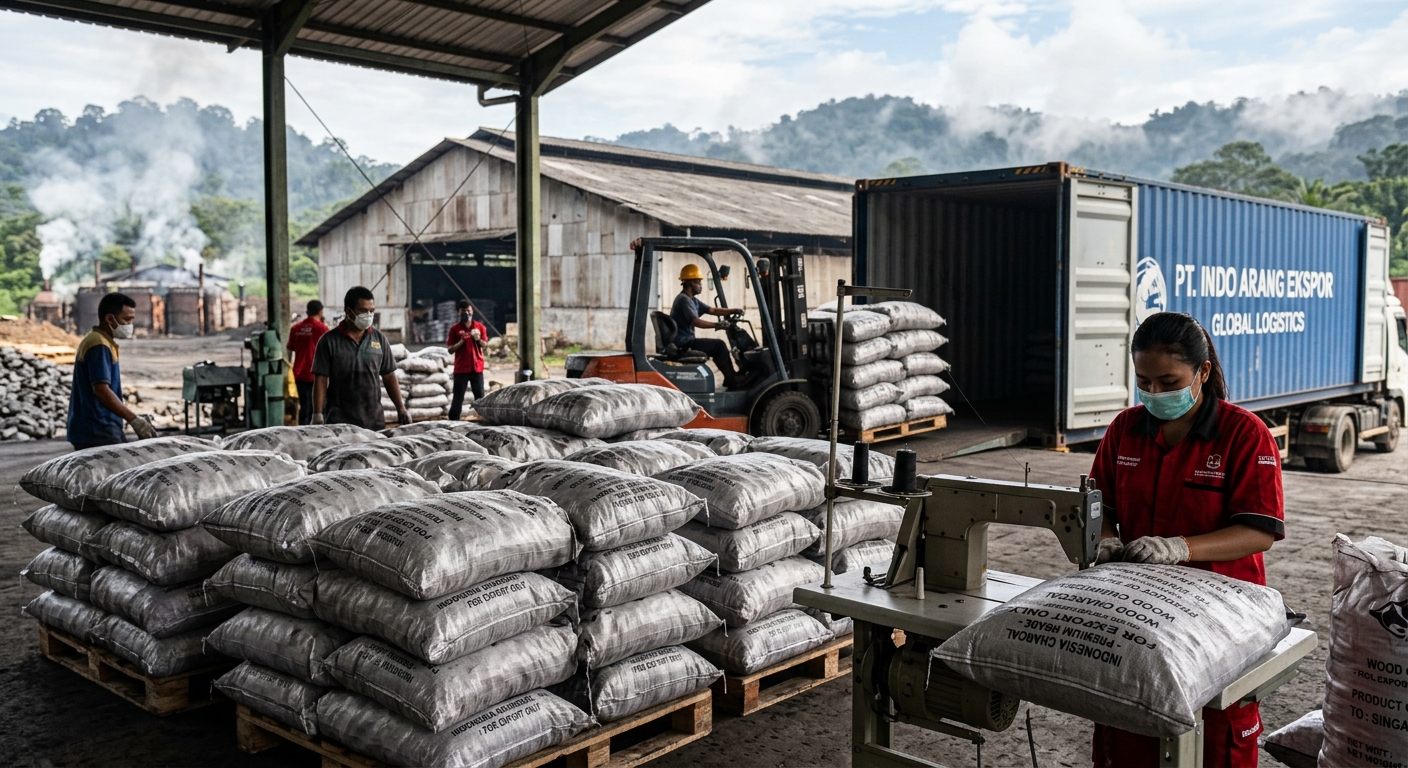
The journey from raw coconut shell to premium shisha charcoal involves a meticulous, multi-step process designed to maximize purity and performance. It begins with the careful selection of mature coconut shells, which are then cleaned and dried to a specific moisture content.
Carbonization and Grinding
The dried shells undergo a controlled carbonization process, typically in traditional brick kilns or modern steel retorts. This process burns off volatile compounds and moisture, leaving behind pure carbon. The resulting charcoal is then crushed and milled into a fine powder. The consistency of this powder is critical, as it directly impacts the density and smooth finish of the final briquette.
Mixing and Extrusion
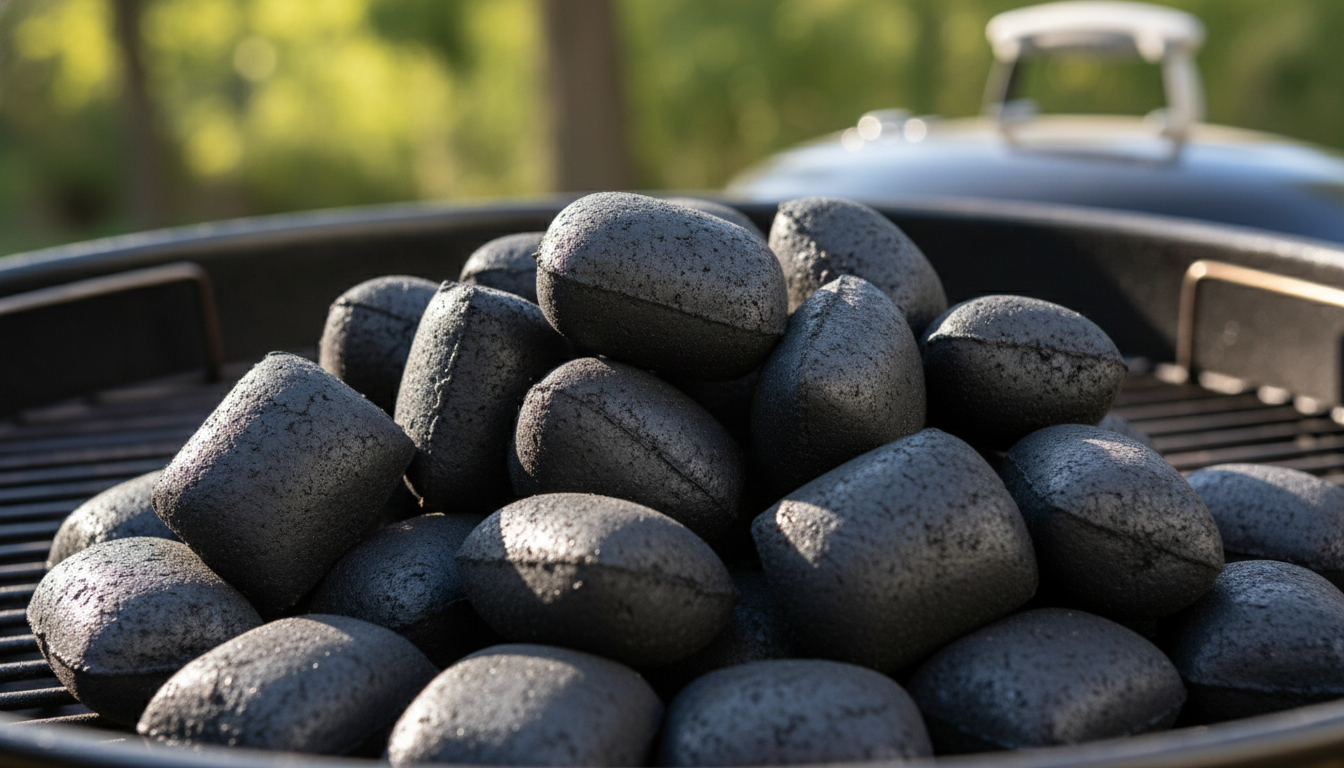
The charcoal powder is mixed with a natural binder, usually food-grade tapioca starch, to help the briquettes maintain their shape during combustion. No chemical additives or artificial accelerants are used in premium Indonesian shisha charcoal. The mixture is then fed into an extrusion machine or pressed into molds to form the desired shapes, such as cubes, flats, or hexagons.
Drying and Quality Control
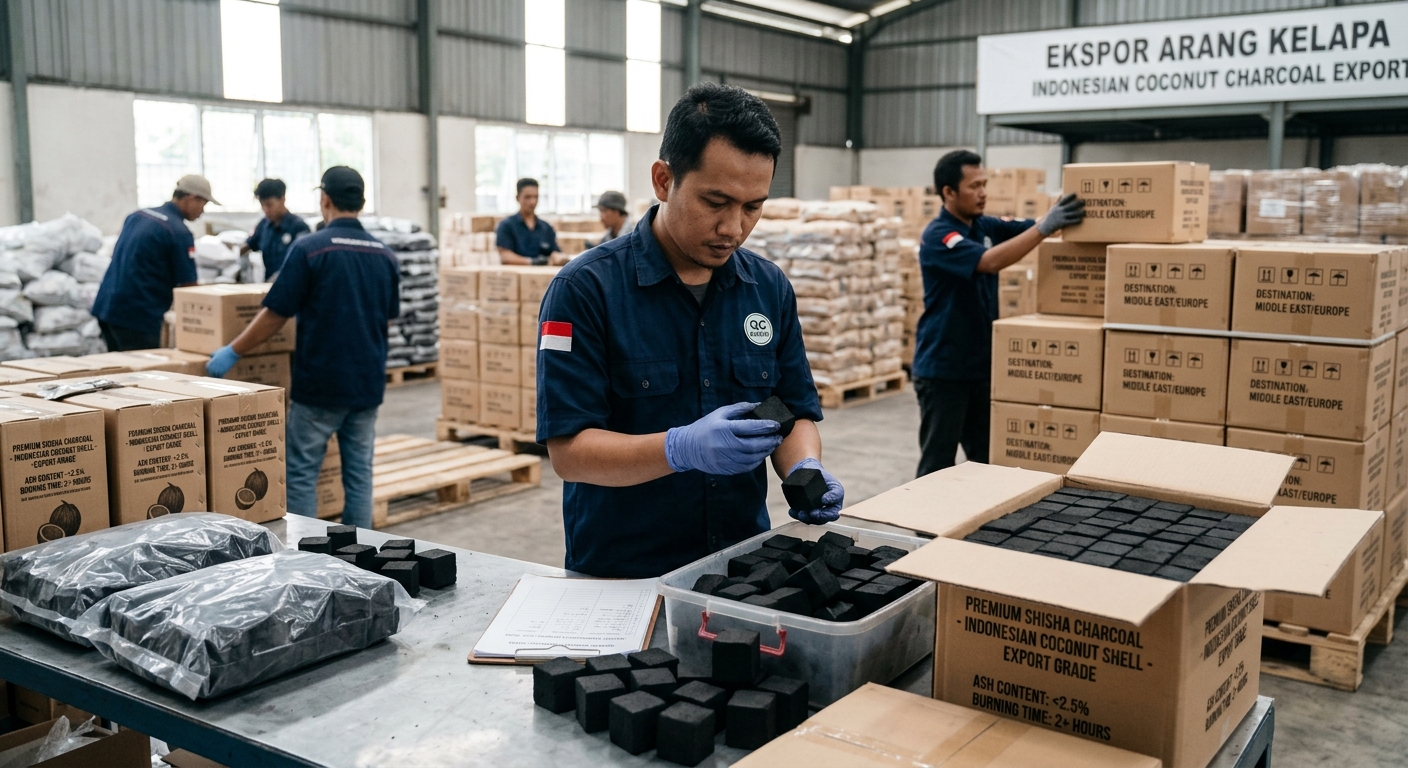
Once formed, the briquettes are subjected to a rigorous drying process in industrial ovens to reduce the moisture content to below 5%. Strict quality control checks are performed at every stage, including drop tests to ensure durability and burn tests to verify performance. For businesses looking to maintain a high standard in their establishments, reading The Ultimate Guide to Finding the Best Charcoal for a Hookah Lounge is highly recommended.
Key Export Specifications for Shisha Charcoal
When exporting Indonesian coconut charcoal briquettes, buyers must be aware of the standard specifications that define premium quality. These specifications are often outlined in a Certificate of Analysis (CoA) provided by independent testing laboratories.
Chemical and Physical Properties
The following table outlines the typical specifications for high-grade Indonesian shisha charcoal:
| Specification Parameter | Standard Export Value | Importance for Shisha |
|---|---|---|
| Fixed Carbon | 75% – 85% | Determines the heat output and burn duration. Higher is better. |
| Ash Content | 1.8% – 2.5% | Low ash prevents a mess and keeps the shisha flavor pure. White ash is preferred. |
| Volatile Matter | 10% – 14% | Affects ignition speed. Too high can cause smoke and odors. |
| Moisture Content | Below 5% | Ensures easy lighting and prevents the briquettes from cracking during combustion. |
| Calorific Value | 7,000 – 7,500 Kcal/kg | Provides consistent, high-temperature heat for a long-lasting session. |
| Burn Time | 90 – 120 minutes | Crucial for consumer satisfaction and prolonged shisha sessions. |
To gain a deeper understanding of these parameters, you should consult the Comprehensive Guide to Coconut Charcoal Briquettes Specification for Shisha.
Shapes and Sizes
Indonesian manufacturers offer a variety of shapes and sizes to cater to different regional preferences and shisha bowl designs. The most popular shapes for export include:
- Cubes: The most common shape, typically available in 22mm, 25mm, 26mm, and 27mm sizes. Cubes offer excellent stability and consistent heat distribution.
- Flats: Often measuring 25mm x 25mm x 15mm, flats are preferred in certain markets for their quicker ignition time and lower profile on the shisha bowl.
- Hexagonal: Shaped like a cylinder with six flat sides, these are often used in traditional settings and provide a unique burning profile.
- Finger/Cylinder: Long, cylindrical shapes that are easily broken into desired lengths.
Packaging and Shipping Standards
Proper packaging is vital to protect the charcoal from moisture and physical damage during international transit. Export packaging typically involves a multi-layered approach.
Inner Packaging
The briquettes are first placed into a thick, sealed plastic bag (often up to 0.8mm thickness) to prevent any moisture absorption. This is critical, as elevated moisture can ruin the charcoal’s ability to light and burn properly.
Inner Box and Master Carton
The plastic bags are then placed into full-color, custom-printed inner boxes, usually weighing 1kg. These inner boxes are then packed into a durable, corrugated master carton, typically holding 10kg to 20kg of product. The master cartons are strapped securely for added structural integrity.
Container Loading
For large-scale exports, the master cartons are loaded into shipping containers. A standard 20-foot container can hold approximately 18 to 18.5 metric tons of shisha charcoal, without the use of wooden pallets, to maximize space. If pallets are required by the buyer, the total capacity will be slightly reduced.
Environmental and Sustainability Aspects
One of the major selling points of Indonesian coconut charcoal is its environmental sustainability. Unlike wood charcoal, which contributes to deforestation, coconut charcoal is made from agricultural waste—the shells of coconuts that have already been harvested for their meat and water. This upcycling process provides an eco-friendly alternative for consumers who are conscious of their carbon footprint.
Conclusion
Importing Indonesian coconut charcoal briquettes for shisha requires a solid understanding of the product’s manufacturing process, physical specifications, and export logistics. By adhering to the stringent specifications regarding fixed carbon, ash content, and moisture, buyers can ensure they are sourcing a premium product that will satisfy even the most discerning shisha enthusiasts. Indonesia’s commitment to quality, combined with the natural superiority of its coconut shells, solidifies its position as the leading global supplier of shisha charcoal.
Frequently Asked Questions (FAQ)
What makes Indonesian coconut charcoal better than other types for shisha?
Indonesian coconut charcoal is made from extremely dense coconut shells, resulting in a higher fixed carbon content. This leads to a longer burn time, higher heat output, and significantly less ash compared to wood or quick-light charcoals. Furthermore, it is completely tasteless and odorless, ensuring the pure flavor of the shisha tobacco is maintained.
Why is ash content an important specification?
Ash content is crucial because high ash can insulate the burning charcoal, reducing the heat transferred to the shisha bowl. Additionally, excessive ash can fall into the tobacco, ruining the flavor and causing a harsh smoke. Premium Indonesian shisha charcoal boasts an ash content of under 2.5%.
How long does premium Indonesian shisha charcoal burn?
When manufactured to the correct specifications, premium coconut charcoal briquettes from Indonesia will burn consistently for 90 to 120 minutes, depending on the size of the briquette and the smoking conditions.
Is any chemical binder used in the manufacturing process?
No, reputable Indonesian manufacturers use only natural binders, primarily food-grade tapioca starch. This ensures that no harmful chemicals are inhaled during the shisha session and that the charcoal remains 100% natural.