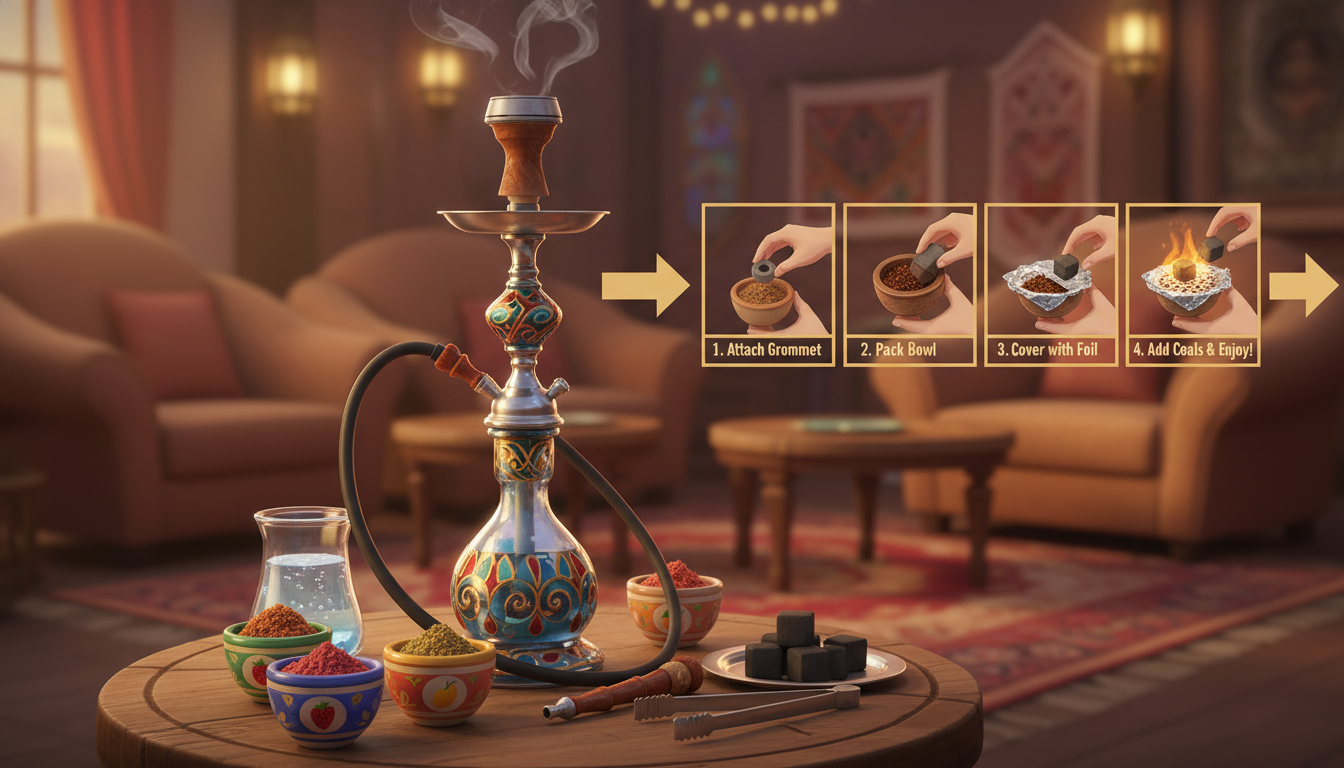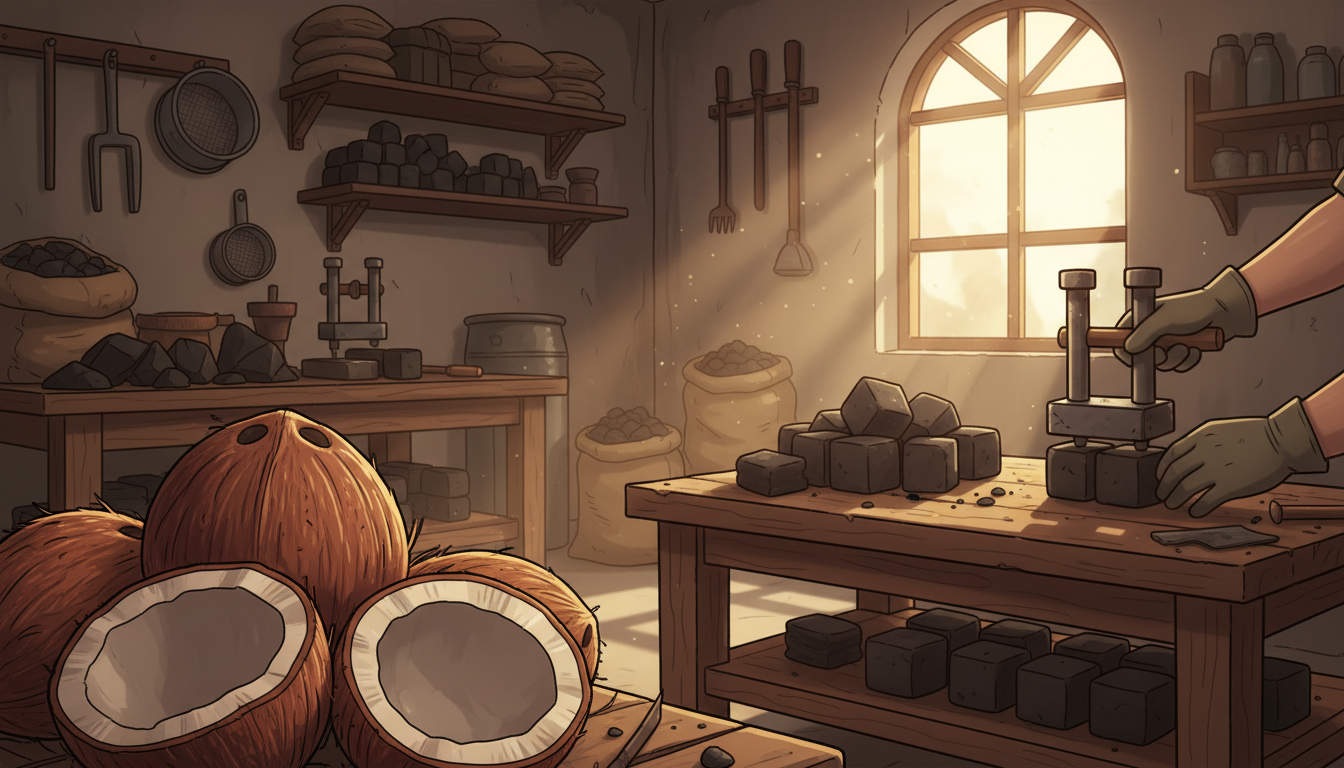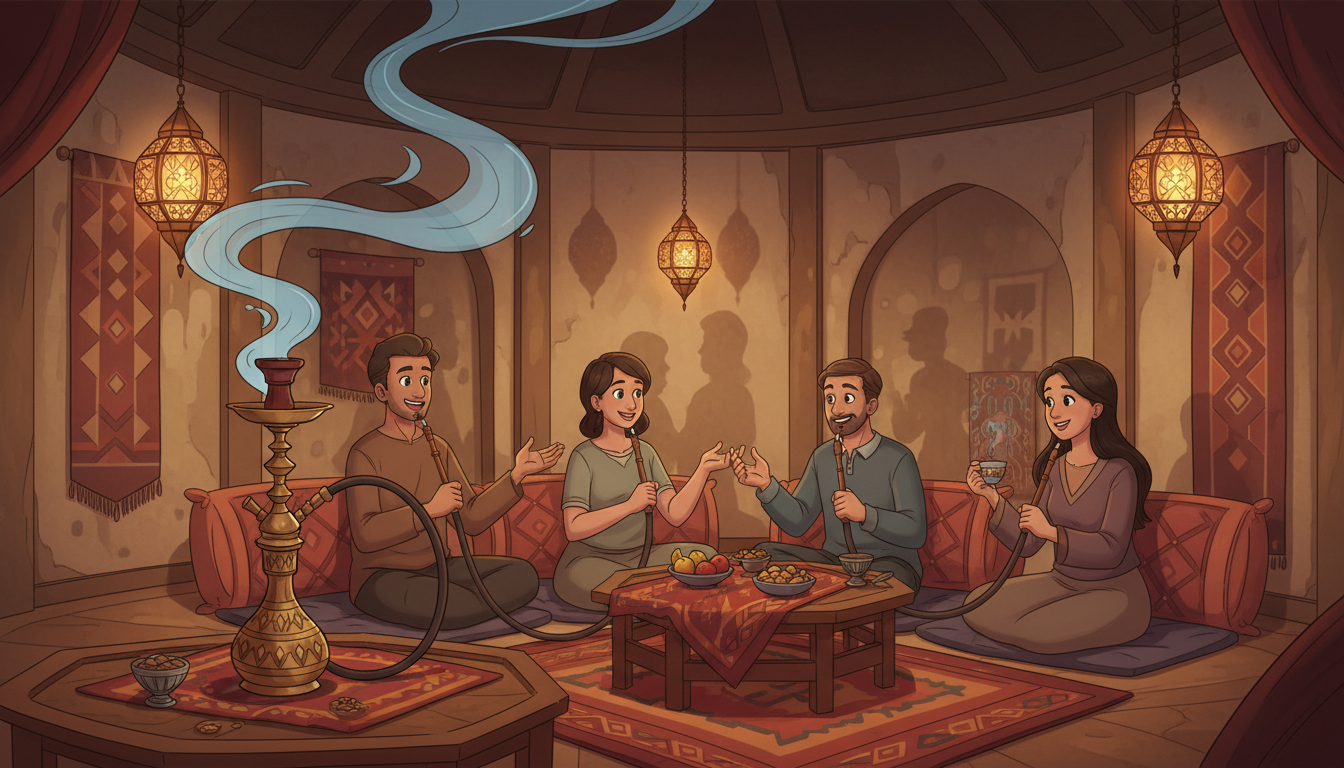
Did you know that over 500 years of social tradition flow through every puff of a waterpipe? This tradition started as a doctor’s invention in 16th-century India. It has grown into a symbol of welcome across many lands.
The story of how this fascinating social ritual began is a topic of debate. Some say it was Abul-Fath Gilani, an Iranian doctor, who made the first hookah for Emperor Akbar. Others believe it was born in Safavid Persia.
Wherever it began, the water pipe quickly won hearts in Asia and the Middle East. It moved from India to Persia and then through the Ottoman Empire. With each stop, it changed, adapting to new cultures.
Today, you’ll find different names for the water pipe in various places. In Egypt, it’s called shisha, in Lebanon, nargileh. In Persia, it’s ghalyan, and in other areas, kalian. Each name tells a story of how communities made it their own.
Hookah is more than just smoking. It’s about hospitality, family, and friendship in Indian, Persian, Turkish, Egyptian, and Middle Eastern cultures. It’s a tradition of welcome and connection, passed down through generations.
Key Takeaways
- Hookah originated either in 16th-century Mughal India through physician Abul-Fath Gilani or in Safavid Persia, with historians debating both claims
- The waterpipe spread from the Indian subcontinent to Persia and then throughout the Ottoman Empire, evolving with each culture
- Different regions developed unique names for hookah—shisha, nargileh, ghalyan, and kalian—reflecting cultural adaptation and acceptance
- Hookah serves as a social bonding tool that strengthens relationships among family members, friends, and business associates
- The tradition represents more than smoking; it embodies hospitality and has been passed through generations in Middle Eastern and South Asian families
How Hookah Became a Global Cultural Phenomenon
Hookah’s journey around the world is a story of immigration, colonization, and the need for connection. It began in the Middle East and South Asia and grew into a worldwide cultural phenomenon. This journey was shaped by key historical periods that helped hookah spread globally.
The British rule in India from 1858 to 1947 played a big role. Thousands of British expatriates tried the water pipe for the first time. They adopted the Hindi word “hookah” and brought it into English, creating the term we use today. This marked the start of hookah’s journey westward.
By the late 1900s, immigration helped hookah spread worldwide. Families from the Middle East, South Asia, and North Africa moved to new countries. They brought their cherished cultural tradition with them, sharing centuries of social customs with their new communities.
The early 21st century saw the rise of a global hookah industry. Companies in the United States used modern technology to improve product quality. This allowed people to enjoy hookah with reliable equipment and consistent preparations.
Al Fakher, founded in Lebanon in 1999, played a key role. This brand helped standardize the mu’assel (flavored tobacco) experience worldwide. Al Fakher helped create the café culture that now exists in cities from Beirut to Berlin to Buenos Aires, making hookah lounges a global phenomenon.
Today, you can find hookah lounges in cities worldwide. These places offer comfortable social spaces, a wide variety of flavored tobaccos, and modern décor. They also have professional staff trained in hookah preparation and service.
The evolution of shisha smoking appeals to younger generations. Hookah lounges are places where friends come together. They offer a space for conversation and building relationships, unlike solitary activities.
Despite its global reach, hookah’s core cultural value remains the same. It’s about creating connections. Whether in Los Angeles, London, or Lagos, the experience is the same. People gather around a water pipe to share stories, laughter, and meaningful time together. This universal appeal is why hookah has successfully crossed cultural and geographic boundaries.
The Ancient Origins of Hookah Smoking
Exploring water pipe history reveals a rich tapestry of cultural innovation. The origins of hookah smoking are a subject of debate among scholars. Two theories suggest it was invented in 16th-century India or Safavid Persia, each with strong evidence.
The hookah device emerged during a key moment in history. Tobacco was spreading across continents through trade and colonial expansion. What started as a health concern became a global cultural phenomenon.
1. The Indian Physician’s Innovation in the 16th Century
In the Mughal courts of India, a widely accepted story exists. In the late 1500s, Roman Catholic missionaries introduced tobacco to Emperor Akbar the Great. This was during his rule from 1542 to 1605.
Tobacco smoking quickly became popular among Indian nobles. Hakim Abul-Fath Gilani, a Persian physician, was concerned about its health effects. His background in Persian medicine led him to create a solution.
Dr. Gilani designed a device that filtered smoke through water before inhalation. He believed this would “purify” the smoke. The timing was perfect, as Indian glass manufacturing was just starting, thanks to British East India Company exports.
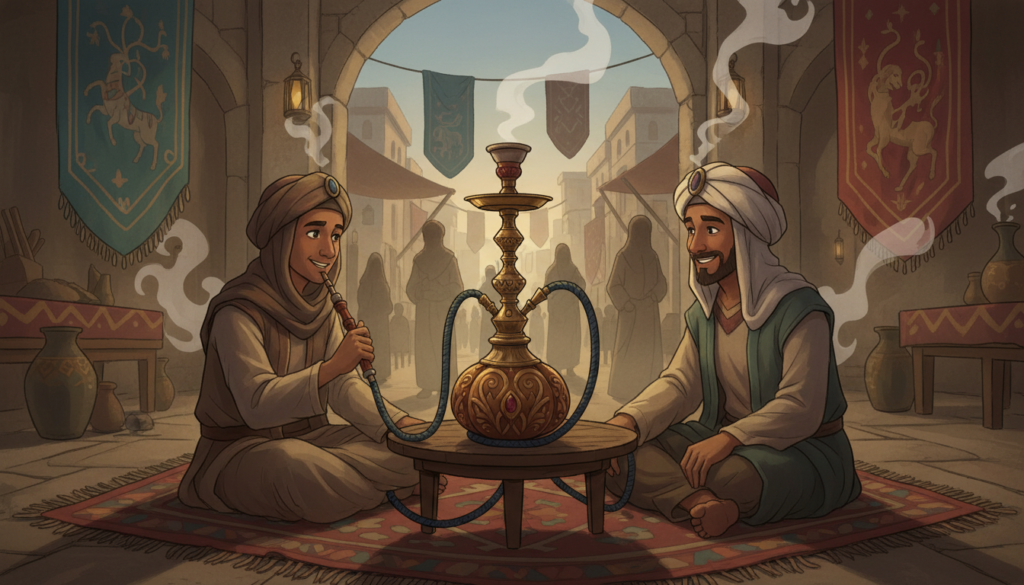
Early water pipes had wooden shafts with secondary stems for smoking. The glass water base became a defining feature. What began as a medical device evolved into something more.
The hookah became a status symbol in Indian society. Having an elaborate hookah showed wealth and social standing. It was more than just a device; it was deeply rooted in Mughal high society.
2. Persian Safavid Dynasty Contributions to Water Pipe History
An alternative theory suggests Persia as the true birthplace of the hookah. The earliest known written reference to hookah comes from Persian literature.
Poet Ahlī Shirazi, who died in 1535, mentioned the ḡalyān in his work. This literary evidence dates back to the Safavid Persia era. It predates Dr. Gilani’s reported invention in India.
Scholars now believe Gilani might have introduced a device already popular in Persia. He might have brought Persian smoking culture to India. This theory resolves the apparent contradiction between the two origin stories.
Persian hookah culture developed its own unique features in the 17th century. Smokers preferred Ajami, a strong dark-leaf tobacco. This practice spread across all social classes in a remarkable way.
Safavid Shah ʿAbbās I initially condemned tobacco use. Yet, by the end of his reign, ḡalyān smoking was common. Women also participated in this practice—a significant social development.
Persian craftsmen took pride in their work. They developed advanced woodworking techniques that advanced hookah innovation. A professional class emerged: the ḡalyāndār, or hookah servants, who maintained and prepared the devices.
Even the Shah employed his own private water pipe attendants. This shows how deeply hookah became woven into Persian court life. The traditions established in Persia influenced hookah culture across the Middle East and beyond.
3. Early Materials: From Coconut Shells to Ornate Brass
The evolution of hookah materials tells a fascinating story of craftsmanship. The word nargilah comes from the Sanskrit word “nārikela,” meaning coconut.
This connection shows that early hookahs were carved from coconut shells. Craftsmen hollowed out coconuts for the water reservoir. Other natural materials included gourds, pottery, and basic glass.
Local glass production often lacked quality. Wealthy patrons imported glass reservoirs from Venice for the finest hookahs. This international trade highlights the high value placed on these devices.
Materials progressed through distinct phases:
- Natural phase: Coconut shells, gourds, and bamboo stems
- Ceramic phase: Pottery and glazed clay reservoirs
- Glass phase: Locally made and imported glass bases
- Metal phase: Brass, copper, and bronze craftsmanship
- Modern phase: Stainless steel, aluminum, and silicone components
Blacksmiths revolutionized hookah design in the 18th century. They cast brass designs adorned with royal and religious markings. These craftsmen transformed simple smoking devices into elaborate works of art.
Their contribution was monumental for water pipe history. The aesthetic innovations they introduced continue to influence modern hookah construction. You can trace design lineages from those early brass artisans to today’s manufacturers.
The dated look of early hookahs gradually disappeared. Metalworkers competed to create more ornate designs. Fine engraving, inlaid patterns, and symbolic imagery became standard on high-quality pieces.
Modern manufacturers have continued this evolution with new materials. Today’s hookahs use stainless steel and aluminum instead of copper and low-quality alloys. These materials resist corrosion better and maintain their appearance longer.
Hose technology has also advanced significantly. Traditional leather and wire hoses have been replaced by silicone rubber compounds. These modern materials make hookahs more durable and easier to clean.
The shift to contemporary materials also addresses hygiene concerns. Silicone resists bacterial growth and doesn’t retain odors from previous smoking sessions. This makes your hookah experience more pleasant and safer.
Understanding the origins of hookah smoking helps appreciate its remarkable journey. From humble coconut shells to precision-engineered stainless steel, each material advancement reflected cultural values. The craftsmanship tradition continues today, blending ancient aesthetics with modern functionality.
The History of Hookah and Its Cultural Significance in Middle Eastern Societies
Shisha has become a big part of daily life in the Arab world and beyond. It creates spaces where people come together and strengthen their bonds. Hookah went from being a luxury item to a cultural practice that brings people together.
Understanding the history and cultural significance of hookah reveals more than just smoking customs. It shows centuries of tradition centered on hospitality, connection, and community.
The water pipe is deeply rooted in Arab, Persian, Turkish, and Egyptian cultures. These traditions shaped how people interact, relax, and welcome guests. What started as a symbol of wealth became a practice that brings people together, regardless of their background.
4. Shisha Cultural Heritage in Arab Coffeehouses
In the Middle East, you’ll find cafés on almost every street corner. These places serve as social gathering spaces, like public houses in Britain or neighborhood bars in America. They are special because they preserve shisha cultural heritage.
Most cafés in the Middle East offer hookahs as a key part of the experience. These aren’t just places for a quick coffee. They are community hubs where people from all walks of life come together as equals, sharing stories and building relationships over fragrant tobacco smoke.
The atmosphere in traditional Arab coffeehouses is remarkable. You’ll see businessmen next to students, elderly gentlemen with young professionals, all united by hookah smoking. This democratic nature came from Turkish high society, where shisha symbolized status and prestige.
As hookah’s popularity grew in the 19th century, specialized shisha cafés were built. These spaces promoted community bonding in unique ways. The leisurely pace of hookah smoking encourages extended conversations and meaningful connections.
When you enter these coffeehouses, you’ll notice specific customs. Patrons settle into comfortable seating, order their tobacco flavors, and enjoy hours-long sessions. The ritual is slow, creating space for genuine social interaction.
These traditional establishments continue their original purpose today. They remain neutral ground for communities to relax, socialize, and maintain bonds. The tradition passes down through generations, with older patrons teaching newcomers the customs and etiquette.
5. Social Rituals of Hookah in Family Gatherings
Exploring hookah culture reveals that family settings have their own social rituals. These intimate gatherings showcase the practice at its most meaningful, strengthening family bonds across generations.
During family hookah sessions, adults gather in a circle to share the water pipe. The setup might include a single, double, or even triple-hose hookah. Conversations flow naturally as the hose makes its rounds from person to person.
Knowing the proper etiquette is important in these settings. When you finish taking a puff, you can either place the hose back on the table or hand it directly to the next person. The key detail is to fold the hose back on itself so the mouthpiece never points at the recipient—doing so would be considered disrespectful.
These gatherings are more than just recreation. They are acts of hospitality and relationship-building that Indian, Persian, Turkish, Egyptian, and other Middle Eastern families have practiced for generations. The social rituals of hookah create dedicated time for meaningful dialogue.
Grandparents pass down smoking techniques and cultural stories to younger adults. Extended families use these sessions to maintain connections despite busy modern schedules. The practice keeps traditions alive while adapting to contemporary life.
What makes these family gatherings special is their focus on connectedness. The hookah serves as a conversation catalyst, encouraging participants to put aside distractions and engage with one another. This promotes stronger family bonds and creates opportunities for intergenerational wisdom sharing.
6. Traditional Hookah Customs and Hospitality Practices
Perhaps the most profound aspect of traditional hookah customs involves their connection to hospitality. When someone offers you hookah as a guest, they’re extending trust, respect, and genuine welcome into their space.
These customs carry deep symbolic meaning that has endured for centuries. In historical contexts, withholding hookah from a guest could be seen as a serious insult or sign of hostility. On the other hand, it showed your willingness to build a relationship.
The tradition originated among wealthy nobles during Mughal India and the Persian dynasties. Initially, hookah was “the province of the wealthy” and served as a clear marker of social prestige. Rich and landed classes would smoke hookahs as symbols of their status.
You’ll find fascinating examples of how deeply these hospitality practices became embedded in diplomatic culture. Hookah was regularly smoked after royal dinners and at important state meetings. Consider this remarkable detail: an emissary from Sultan Husayn’s court traveling to meet Louis XV of France brought along a dedicated officer whose sole responsibility was tending the diplomat’s water pipe—even preparing it while the carriage moved toward Versailles.
These traditional hookah customs haven’t disappeared with modernization. Today, whether you’re in Cairo, Istanbul, Tehran, or even American cities, showing respect by sharing hookah with guests remains a revered tradition. The practice continues much as it did hundreds of years ago.
Understanding these Middle Eastern hookah traditions helps you appreciate the deeper cultural significance beyond the smoking itself. It’s about creating bonds, demonstrating generosity, and honoring guests through a time-tested ritual. This practice transcends language and cultural barriers, making everyone feel welcomed and valued.
When you participate in or observe these customs, you’re experiencing living history. The same gestures of hospitality that connected people centuries ago continue building bridges between individuals and communities today.
Hookah in the Ottoman Empire and European Discovery
The Ottoman Empire made hookah smoking an art form. It showed power, refinement, and cultural identity. The hookah in Ottoman Empire was more than just a hobby—it was a tool for diplomacy and status.
The Ottoman sultans loved hookah so much, it caused international problems. Hookah etiquette even led to a crisis between France and the Ottoman Empire. This shows how serious these customs were.
As the empire grew, it took these smoking traditions with it. The Middle Eastern hookah traditions shaped social customs in North Africa and the eastern Mediterranean for centuries.
7. Royal Smoking Ceremonies in Turkish Palaces
In Ottoman royal courts, nargile was central to state ceremonies. Turkish sultans used hookah in important meetings and dinners. These rituals showed power and prestige.
In the 18th century, Turkish blacksmiths made intricate brass designs for hookahs. They added royal emblems and religious inscriptions, showing Ottoman sophistication.
Today, you can see the Ottoman influence in modern hookah designs. The decorative elements and structural improvements from then are the base for today’s designs.
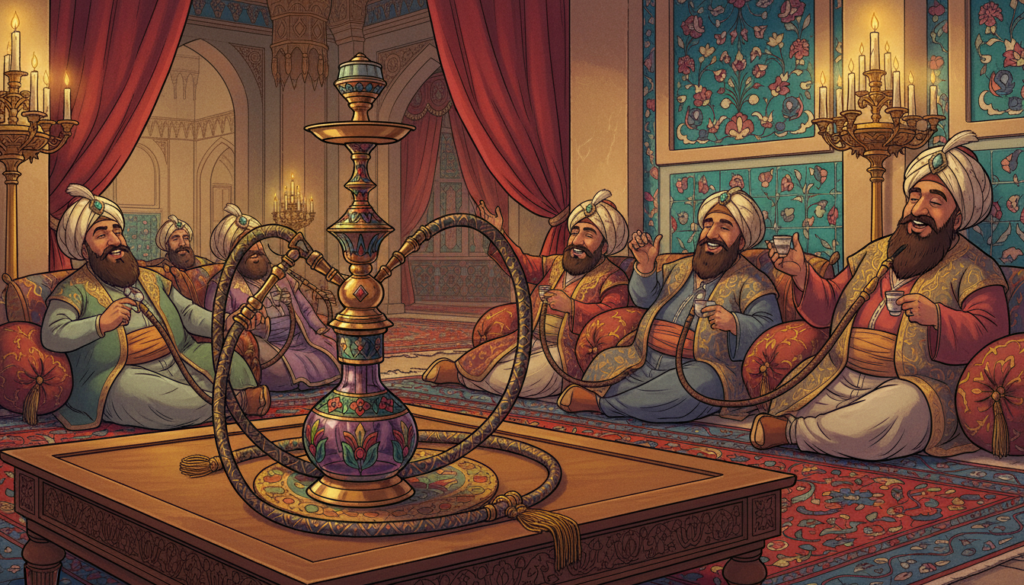
In Turkish high society, fancy nargiles showed status. The most ornate ones were for sultans and high officials. After dinners, hookah helped keep conversations going and strengthen bonds.
These ceremonies were not just for fun. They helped with diplomacy, showed refinement to visitors, and kept social hierarchies clear. The hookah in Ottoman Empire was key to statecraft, and diplomats had to respect it.
8. Middle Eastern Hookah Traditions Spreading to North Africa
The hookah’s journey didn’t stop in the Ottoman heartland. In the 19th century, it spread across vast territories. It went from the Indian subcontinent to Persia, where it was modified into the form we know today.
From Persia, it moved into the Ottoman Empire and then to North Africa. This spread created regional variations that you can see today. Each area had its own names and customs:
- Argila – used in Lebanon and parts of the Levant
- Ghalyan – the Persian term in the Gulf regions
- Nargile – the Turkish name in the Balkans and Anatolia
- Shisha – the Arabic term in Egypt and Sudan
- Čelam – found in specific Middle Eastern communities
Western Turkey was known for its pottery. Local potters made distinctive earthenware nargile bowls. These artisans added to the visual beauty of Middle Eastern hookah traditions.
As hookah culture spread to North Africa, each country developed its own way with it. Cairo’s cafés made shisha a key part of social life. Moroccan mint tea houses added hookah to their tea rituals.
In 2010, Gaza banned women from smoking hookahs in public. This was to keep up cultural values. But, popular opposition led to the ban being lifted the same year, showing the importance of these customs.
Despite changes and local adaptations, the core values of hookah remained the same. In the Middle East and North Africa, it’s a way to socialize, show hospitality, and build community bonds. The Middle Eastern hookah traditions that started in Ottoman courts adapted to local ways while keeping their social purpose.
9. The Introduction of Flavored Tobacco in Egypt
Egypt introduced flavored tobacco in the 19th century. Egyptian tobacco makers created mu’assel, flavored tobacco that changed hookah forever. Mu’assel means “with honey,” referring to the sweetening process.
These innovators didn’t just use honey. They experimented with dried fruits and herbs for new flavors. Early Egyptian mu’assel included:
- Dried lemon for citrus
- Grape for sweetness
- Watermelon for coolness
- Mint for freshness
- Molasses as an alternative sweetener
Egyptian craftsmen also added a purge port (valve) to the shisha. This allowed for cooling the tobacco and removing stale smoke, preserving flavors.
This simple addition changed hookah history. The purge port became standard, improving the smoking experience and flavor preservation. Without it, today’s flavors wouldn’t exist.
The Egyptian innovation spread quickly across Arabic-speaking regions. The term “shisha” became common in Egypt, Sudan, and the Arab Peninsula. This shows Egypt’s key role in reshaping hookah culture.
Today, companies like Lebanon’s Al Fakher have built on this Egyptian legacy. Founded in 1999, Al Fakher became a world-renowned flavored tobacco brand. They made consistent, high-quality flavored tobacco available worldwide.
This Egyptian contribution made hookah culture more accessible. The flavored tobacco offered a smoother experience than the harsh, unflavored tobacco of earlier times. This innovation helped make hookah popular worldwide.
The development of mu’assel in Egypt marked a turning point. It shifted Middle Eastern hookah traditions from exclusive court practices to social customs enjoyed by many. Today’s diverse flavors, from double apple to mint lemon, all come from those pioneering Egyptian tobacco makers of the 19th century.
Evolution of Shisha Smoking in Contemporary Culture
Hookah has changed a lot, mixing old traditions with new designs and social media. Young people all over the world are making shisha smoking their own. What was once just for family gatherings has exploded into a global trend that changes city life.
Hookah lounges are more than just places to hang out. They are where old traditions meet new trends. From big Asian cities to Western towns, hookah has become a modern experience. It’s a place where people come to talk and connect, not just to drink.
Hookah Lounges Reshape Urban Social Spaces
Modern hookah lounges in cities like New York and Chicago are very different from old Middle Eastern cafés. They have sleek modern décor, fusion music, and diverse food menus. These places are trendy spots for college students and young workers looking for something different from bars.
In Southeast Asia, cities like Bangkok and Hanoi now have many hookah bars. Singapore used to have a big hookah scene, but it’s banned now. This shows how fast and sometimes slow the growth of hookah culture can be.
Young people like these lounges because they offer a place to relax and talk, not just loud music and drinks. In places like Karachi, cafés charge by the hour, while Western lounges have their own prices. This shows how different places handle hookah lounges.
Modern hookah lounges are creative in how they bring people together. But, there are worries about underage smoking and health issues. This makes lounge owners work hard to keep things safe and fun.
Technological Innovations Transform Traditional Devices
Today, hookahs are made with new materials like stainless steel and aluminum. This makes them last longer and better than old ones. Modern materials also make cleaning easier and safer.
These new materials make hookahs more durable and get rid of old problems like ghosting. You can clean them well without worrying about damage. This makes using a hookah easier and cleaner.
Hookah technology has also changed with new devices. Electronic hookahs use electricity instead of charcoal. They offer consistent temperature control and are cleaner. LED lights and new designs make them look and work better.
There’s a big change in how people smoke tobacco. More people are using vapor instead of burning tobacco. This makes smoking smoother and might be better for health, but health concerns are important.
But, there’s a balance between new and old in hookah culture. High-end hookahs are popular in cities, while traditional ones are loved in some communities. This shows the mix of old and new in hookah culture.
Social Media Drives Cultural Renaissance
Instagram, TikTok, and YouTube have made hookah popular again among young people. They show off cool hookah setups and tricks. This makes hookah seem like a cool lifestyle choice.
These platforms have made shisha smoking normal for young Westerners. Online, people share tips and reviews. This makes knowledge about hookah easy to find and share.
The early 2000s saw a big change in the hookah industry in the US. New products and flavors were made for today’s tastes. This shows how the industry has grown and changed.
Hookah lounges now focus on being Instagram-worthy. They have beautiful interiors and experiences for online sharing. This shows how hookah culture is both old and new.
Even with all the tech and social media, the core of hookah remains the same. It’s about respect and good company, just like before. This shows that old traditions can fit into today’s world without losing their essence.
| Aspect | Traditional Hookah | Contemporary Hookah | Key Innovation |
|---|---|---|---|
| Materials | Copper, brass, leather hoses | Stainless steel, aluminum, silicone | Durability and easy maintenance |
| Heat Source | Natural charcoal, coal | Electronic heating, heat management devices | Consistent temperature control |
| Social Setting | Coffeehouses, family gatherings | Urban lounges, Instagram-worthy venues | Cross-cultural social spaces |
| Flavor Options | Limited traditional blends | Hundreds of innovative flavors | Appeals to modern taste preferences |
| Knowledge Sharing | In-person mentorship only | Social media communities, online reviews | Global accessibility and democratization |
Conclusion
The history of hookah is a long and fascinating journey. It started in 16th-century Persia and India. Today, it’s enjoyed in lounges all over the world. Hookah has always been about bringing people together.
From simple coconut shells to fancy brass designs, hookah has changed a lot. But its core purpose has stayed the same. Whether in a Middle Eastern coffeehouse or a Western lounge, it’s the same tradition.
Hookah connects people from all walks of life. Learning about its history shows why it’s so popular. Despite new designs and tech, its roots in tradition remain strong.
For many, hookah is a way to connect with their culture. By enjoying hookah, you join a global community. Together, we share stories, laughter, and hospitality across time.
FAQ
Where did hookah actually originate—India or Persia?
Historians debate where hookah first came from. One theory says it was invented in India by Hakim Abul-Fath Gilani in the 16th century. He wanted to make tobacco smoke safer by passing it through water.
But, Persian literary sources show the earliest written mention of hookah, called ḡalyān, in the Safavid dynasty. This makes it hard to say for sure where it started.
What does the word “hookah” mean and where does it come from?
The word “hookah” comes from Hindi, adopted by British expatriates in India. It’s known as “shisha” in Egypt, “nargileh” in Lebanon and Turkey, and “ghalyan” in Persia. These names show how widely used and adapted hookah has become.
Why was hookah originally invented?
Hookah was made to be healthier. Jesuit missionaries brought tobacco to India, and Dr. Abul-Fath Gilani was worried about its health effects. He created a device to filter smoke through water, thinking it would make tobacco safer.
His invention was during the start of Indian glass manufacturing, thanks to the British East India Company’s glass exports.
What materials were early hookahs made from?
Early hookahs were made from coconut shells and later from gourds, glass, and pottery. Because local glass was poor, high-end hookahs used glass from Venice. In the 18th century, blacksmiths made brass designs that are now iconic.
Today, manufacturers use stainless steel and aluminum for durability. Silicone has replaced leather and wire in hoses.
What is mu’assel and how did it change hookah smoking?
Mu’assel, or “with honey,” was a big change in hookah history. In the 19th century, Egyptian tobacco makers mixed tobacco with honey or molasses. This made the smoke sweeter and smoother.
They also added dried fruits and herbs, creating many flavors. Egyptian innovations like the purge valve made hookah more popular and accessible.
What role does hookah play in Middle Eastern hospitality?
Hookah is a sign of trust, respect, and welcome in Middle Eastern and South Asian cultures. It was once a symbol of nobility but now shows respect and hospitality. In the US, it’s a way to show respect and provide hospitality.
How did hookah become part of Ottoman royal ceremonies?
Hookah became important in Ottoman culture from the 17th century. It was smoked after dinners and at diplomatic meetings. Turkish blacksmiths made it into an art form with brass designs.
These ceremonies were not just for fun but showed Ottoman refinement and social hierarchy.
What etiquette should I follow when smoking hookah in a group?
Hookah etiquette is about respect and hospitality. In family settings, everyone gathers around a single hookah. When you’re done, you either put the hose back or pass it to the next person.
This tradition is about building relationships and showing respect through conversation and shared moments.
How did hookah spread from the Middle East to other regions?
Hookah spread through the 19th century from India to Persia, then to the Ottoman Empire. It reached North Africa and eventually the world through immigration. Today, it’s enjoyed in over 100 countries.
What is the cultural significance of Arab coffeehouses in hookah history?
Arab coffeehouses are like British pubs, where shisha smoking is key. They’re places for all people to come together. Shisha cafés emerged to meet the growing demand for water pipe smoking.
They’re not just for smoking but for socializing and building community. These traditions continue today, with cafés as hubs for friends, business, and community.
How have hookah lounges changed in Western cities?
Hookah lounges have become a new part of urban life in the West. They offer a modern take on traditional cafés, with trendy decor and diverse food. They attract young people looking for a relaxed place to hang out.
These lounges have become popular spots for socializing and enjoying hookah, blending tradition with modern tastes.
What modern innovations have changed hookah design and technology?
Modern hookahs use stainless steel, aluminum, and silicone for durability and better performance. They also have new designs and technologies like LED lights and water filtration systems.
Electronic hookahs and heat management devices offer cleaner and more controlled smoking. These changes have made hookah more appealing and accessible, but high production costs keep traditional designs alive.
How has social media influenced modern hookah culture?
Social media has made hookah popular among millennials and Gen Z. Platforms like Instagram showcase hookah setups and smoking tricks, attracting millions. This has made hookah a trendy lifestyle choice.
Hookah lounges have adapted to this trend, becoming popular spots for socializing and enjoying hookah. They offer a mix of tradition and modernity, appealing to a new generation.
Is hookah smoking considered safe because the smoke passes through water?
Hookah was believed to be safer because smoke passed through water. But, modern health research shows it’s not safe. Water filtration makes smoke smoother but doesn’t remove all health risks.
Hookah is valued for its cultural and social aspects, not just health benefits. Many enjoy it for its flavors and traditions, and some have turned to herbal or electronic alternatives.
Why are there different numbers of hoses on hookahs?
Hookah hose numbers reflect practical and social reasons. Single-hose hookahs are traditional and smoke better. But, multi-hose hookahs allow more people to smoke together, making it a social experience.
Choosing between single or multi-hose depends on the occasion and the desire for better smoke quality. Hookah design continues to evolve, balancing practicality and social aspects.