Did you know that over 70% of first-time users don’t get great flavor because they miss a key step? The difference between a bad session and smooth, flavorful clouds often comes down to how you prepare your equipment.
Getting amazing flavor isn’t about spending a lot of money on fancy gear. It’s about knowing how each piece works together to create the perfect smoking experience.
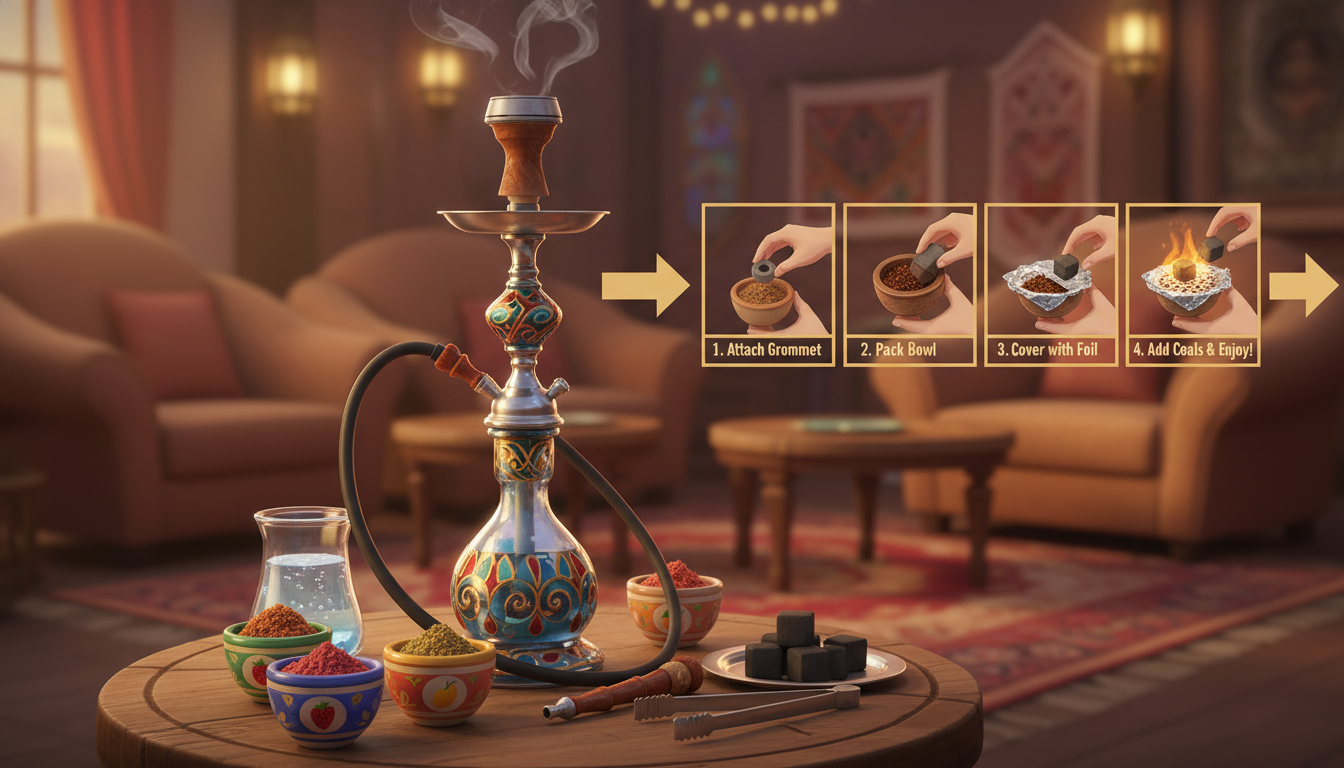
Your journey starts with gathering the right components. A complete hookah beginners kit includes a glass base, metal stem, bowl, plate, hose, and tongs. You’ll also need quality tobacco, charcoal, and either a heat management device or foil.
Modern setups with shorter stems make everything simpler. They require less maintenance and are much easier to handle when you’re just starting out.
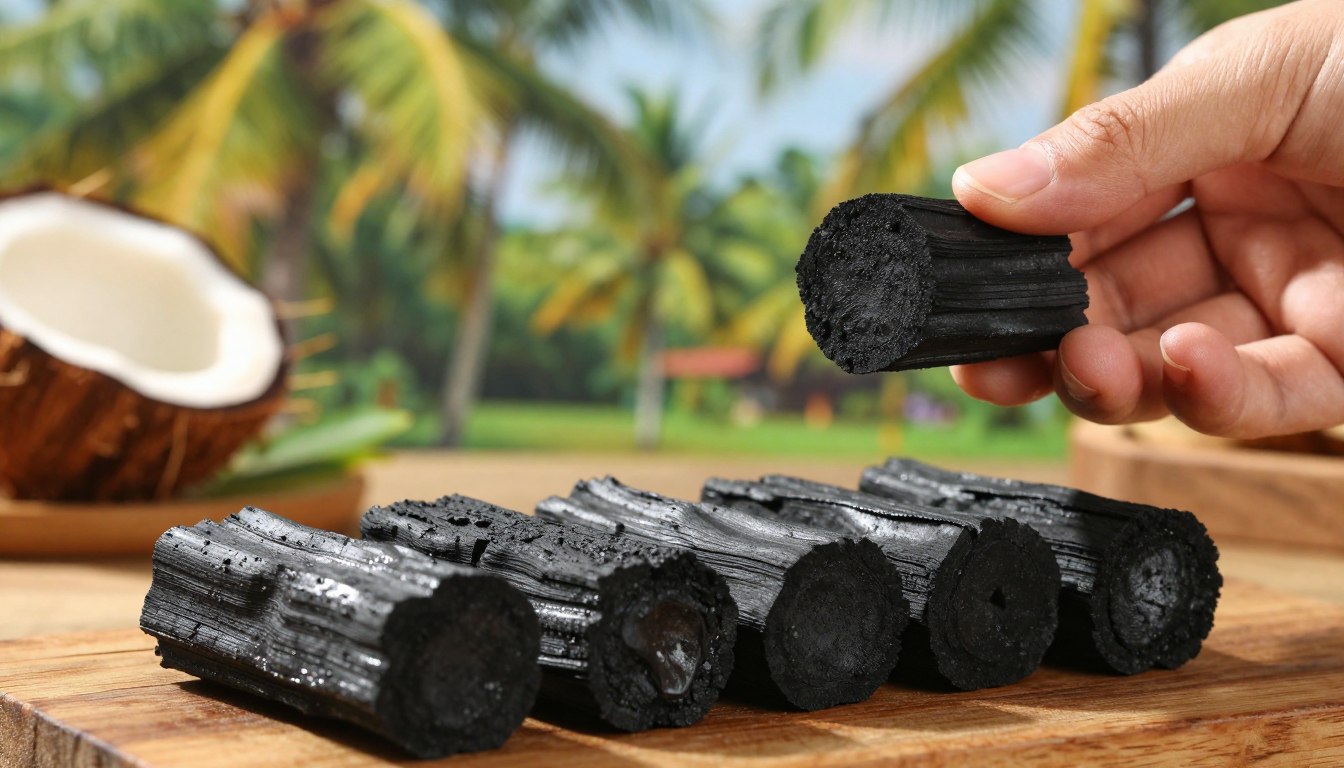
The secret to great flavor lies in choosing natural charcoal made from compressed coconut husks. It produces less ash, burns longer, and doesn’t interfere with your tobacco’s taste.
This hookah setup guide breaks down each step into simple, manageable actions. You’ll discover that creating a premium experience is totally within your reach, even on your first try.
Key Takeaways
- Great flavor comes from proper setup techniques, not expensive equipment
- Your starter kit needs seven basic components: glass base, stem, bowl, plate, hose, tongs, and charcoal
- Natural coconut husk charcoal delivers cleaner taste and longer burn time than quick-lighting alternatives
- Modern shorter-stem designs offer easier maintenance and better usability for newcomers
- Understanding how components work together is the foundation of every successful session
- Heat management devices or foil play a critical role in controlling temperature and flavor quality
Understanding Hookah Charcoal Size for Best Flavour
Choosing the right charcoal size is key for a great hookah experience. The size affects how evenly the heat spreads, how long your session lasts, and the taste of your smoke. Getting this right can make your hookah session unforgettable.
Natural charcoal, made from coconut husks, burns longer and produces less ash. It’s better for keeping flavors in your tobacco. Quick-lighting charcoal, made from chemicals, lights fast but burns out quicker and makes more ash.
Heat Distribution and Session Quality
Charcoal size is important because it controls the heat output your tobacco gets. Different bowls and tobaccos need different heats to smoke right. Using the wrong size can make your smoke taste bad.
Smaller charcoal gives you better control over heat. It lets you adjust the temperature easily. But, larger pieces can be too hot for small bowls.
The right amount of heat is key for flavor. Too much heat burns tobacco, making it taste bitter. Too little heat makes the smoke weak and tasteless.
Common Charcoal Dimensions and Performance
Knowing about different charcoal sizes helps you choose better. The market has several sizes, each affecting your smoking experience differently.
Popular sizes include 25mm cubes, 26mm cubes, and flat pieces. Each size has its own heat level and burn time. Here’s how they compare:
| Charcoal Size | Burn Duration | Heat Output | Best For |
|---|---|---|---|
| 25mm Cubes | 45-60 minutes | Medium | Small to medium bowls |
| 26mm Cubes | 60-75 minutes | High | Medium to large bowls |
| Flat Pieces | 30-45 minutes | Low to Medium | Phunnel bowls, heat-sensitive tobacco |
| Finger Pieces | 50-65 minutes | Medium to High | Traditional bowls, longer sessions |
Larger pieces burn longer but can be too hot for small bowls. This can make your tobacco taste bad. Smaller pieces give better control but need more replacing during long sessions.
Natural coconut charcoal comes in cube shapes. It gives consistent heat distribution and little ash. Quick-light options are round and light fast but don’t taste as good.
Matching Charcoal to Your Setup
Choosing the right charcoal size is key. It should match your bowl type and tobacco amount. Using too much charcoal can ruin your tobacco’s taste.
For small phunnel bowls, start with two or three 25mm cubes. This gives enough heat without burning your tobacco. Medium bowls need three 26mm cubes. Large bowls might need four pieces for even heat.
Here are some tips for choosing charcoal:
- Use smaller pieces for heat-sensitive blonde tobacco
- Choose larger cubes for dark tobacco that needs more heat
- Start with fewer pieces and add more if needed
- Invest in quality tongs for handling different sizes safely
Watch how your tobacco tastes in the first few minutes. If it tastes harsh, you’re using too much heat. If it’s weak, add more charcoal.
The type of charcoal you pick also matters. Natural coconut charcoal needs special lighting but keeps flavors better. Quick-light options are convenient but don’t taste as good.
Learning about charcoal is a key skill for hookah beginners. Each bowl, tobacco, and preference has its own needs. Start with standard sizes and adjust as you learn.
Types of Hookah Charcoal Available
The charcoal market has many options, each with its own benefits. Your choice affects your hookah’s taste and performance. Knowing the differences helps you pick the right one for your needs.
First, you need the right lighting tool. A charcoal burner costs about $20 and keeps your stove safe. It’s a key top hookah accessory for safe, consistent sessions.
The Benefits of Natural Coconut Charcoal
Natural coconut charcoal is a top choice for those who love great flavor. It’s made from coconut husks, burning cleaner than others. This means less ash and better airflow.
Natural charcoal burns for 60 to 90 minutes, perfect for long sessions. It takes 8 to 12 minutes to light, but the taste is worth it. Natural charcoal doesn’t add chemical flavors, letting your tobacco’s taste shine.
Lighting natural coconut charcoal takes patience. It needs consistent heat from a proper burner to light evenly.
Quick-Lite Options for Convenience
Quick-lighting charcoal is fast to light, using just a lighter or match. It’s great for outdoor use or when you’re in a hurry.
But, it has downsides. It makes more ash and burns shorter. It can also add off-flavors or harsh smoke, mainly at first.
Quick-lite charcoal isn’t ideal for flavor-focused sessions. The chemicals that make it light fast also affect the smoke’s purity. Most serious smokers use it only in emergencies.
Exploring Flavored Charcoal Products
Flavored charcoal is a new option, aiming to add flavor to your session. It’s infused with essences to match your tobacco. But, results vary a lot.
Most smokers prefer their tobacco’s flavor without charcoal influence. Good charcoal should burn without adding taste. Flavored charcoal can mess with your tobacco’s taste.
If you try flavored charcoal, start with mild ones and use them little. See how they mix with your tobacco. Natural charcoal might be better for keeping your tobacco’s flavor pure.
Choosing the right charcoal is key for a great hookah accessory set. Natural coconut charcoal is the best for flavor, performance, and long sessions. With a good charcoal burner, you’re set for top-notch hookah sessions.
Preparing Your Hookah Bowl
How you prepare your bowl can make or break your hookah experience. It’s where the magic happens, turning tobacco into delicious smoke. Mastering this is key for any beginner.
The bowl sits atop your hookah stem, holding the tobacco. It’s the heart of your setup. When done right, everything else falls into place.
Choosing Your Bowl Design
Different hookah bowl types offer unique experiences. The material and design affect heat, session length, and flavor. You’ll find bowls in clay, ceramic, and silicone, each with its own traits.
Clay bowls are traditional and hold heat well. They’re affordable and consistent. Ceramic bowls are similar but more durable.
Silicone bowls are durable and easy to clean. They’re great for beginners who worry about drops. But, they don’t hold heat as well as clay.
The phunnel bowl design has changed the game. Unlike traditional bowls, phunnel bowls have a raised center with a single hole. This keeps juices out, ensuring clean smoke.
The Kaloud Samsaris is a top phunnel choice. It’s made of silicone and manages heat well. Many say it’s worth the investment for better sessions.
| Bowl Type | Best For | Heat Retention | Durability |
|---|---|---|---|
| Clay Egyptian | Traditional setups and dense packing | Excellent | Moderate (breakable) |
| Ceramic Phunnel | Juicy tobaccos and longer sessions | Very Good | Good (chip-resistant) |
| Silicone Phunnel | Beginners and travel | Good | Excellent (drop-proof) |
| Vortex Bowl | Medium heat tobaccos | Very Good | Moderate (breakable) |
Mastering Tobacco Loading Methods
Proper bowl packing techniques make all the difference. It affects airflow, heat, and flavor. Finding the right balance is key.
The fluff pack method works well for most tobaccos. Sprinkle tobacco without pressing it down. Leave a gap for heat.
This gap prevents tobacco from burning. Burning tobacco tastes harsh. It’s better to heat it gradually.
For darker tobaccos, use a semi-dense pack. Press it down a bit. This helps it handle heat without burning.
Don’t overpack. Compressed tobacco blocks airflow. It makes drawing smoke hard.
Tools like special forks help with packing. They make even layers and separate clumps. They’re great for beginners.
After adding charcoal, wait three to five minutes before drawing. This lets the tobacco heat up. It makes the first puff rich in flavor.
Creating Proper Air Channels
Airflow is key for great hookah sessions. Proper packing creates channels for air to flow. Without them, smoke is weak.
Think of tobacco as a forest. Air needs paths to move through. Dense packing blocks these paths.
Test your pack by drawing gently. It should feel like sipping milkshake. If it’s too loose or tight, adjust it.
Phunnel bowls help with airflow. Their design ensures air flows, even with imperfect packing. They’re great for beginners.
Adjusting your pack takes practice. Don’t worry if it takes time. Each session teaches you something new.
Water Level for Best Hookah Experience
Your hookah’s water chamber is key for a great smoke. It cools and filters the smoke. Getting the water level right is important for smooth, flavorful clouds.
Newbies often forget about water levels. But it affects how easy it is to draw, the smoke’s temperature, and flavor. Knowing how to adjust the water level makes every session better.
The Perfect Measurement
The ideal water depth is simple. Your downstem should be 1 to 1.5 inches below the water. This balance is perfect for filtration and draw.
Before packing your bowl, test the draw. If it’s too tight, you’ve got too much water. If it’s too loose, add more water for better filtration.
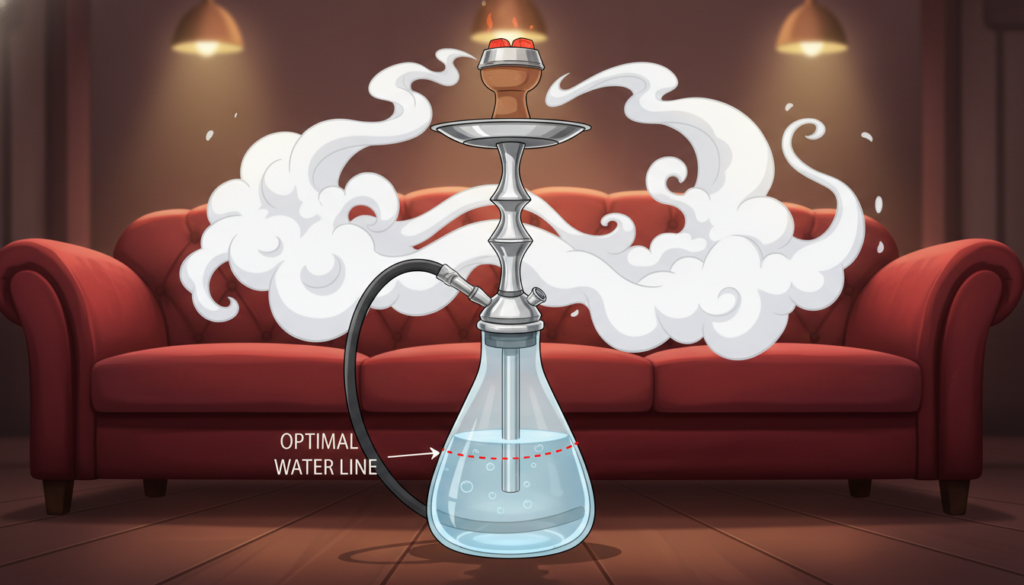
Adjustments depend on your base’s shape. Wide bases might need less water, while tall bases might need more. Watch how your setup performs and adjust as needed.
Protect your hookah with base coasters. These accessories shield your glass base and furniture from scratches and water damage. They’re great for social sessions when your hookah might get bumped.
Science Behind Smoke Cooling
Water filtration does more than look good—it changes your smoking experience. It cools the smoke, making each inhale smoother. This lets you taste the tobacco’s flavor notes better.
The water in a hookah doesn’t just cool the smoke; it acts as a natural filter that removes harsh particulates while preserving the flavor compounds you actually want to taste.
More water doesn’t always mean better filtration. Too much water makes drawing harder without improving flavor or smoothness. It can even make smoking tiring.
The filtration process removes some particles and cools the smoke. But it keeps the flavor compounds in your tobacco. This is why the right water levels enhance your flavors. Your hookah base setup should make drawing easy while cooling the smoke well.
Creative Water Enhancements
Once you’ve mastered water levels, try additives for a unique experience. These can cool the smoke, add flavors, or make it look cool.
Ice cubes in your water make the smoke extra cool. It’s refreshing in summer and lets you taste more flavors. Just adjust the water level as the ice melts.
Adding a bit of fruit juice can enhance flavors. Citrus juices like orange or lemon work well with fruity tobaccos. But use them sparingly to keep the tobacco flavor primary.
Milk makes the smoke clouds thicker and creamier. But you must clean your base right after to avoid spoilage. Clean all parts within an hour of finishing.
Make your setup look good with LED base lights. These lights sit under your base, casting colorful light through the water. They’re striking in dimly lit rooms.
Here’s a quick comparison of popular water additives:
| Additive | Primary Benefit | Maintenance Required | Best For |
|---|---|---|---|
| Ice Cubes | Maximum cooling | Monitor melting levels | Hot weather sessions |
| Fruit Juice | Subtle flavor boost | Rinse after use | Complementing fruit tobacco |
| Milk | Thicker smoke | Immediate deep cleaning | Visual appeal seekers |
| Cold Water Only | Pure flavor delivery | Standard cleaning | Flavor purists |
Protective base coasters are key for keeping your hookah in good shape. They prevent water rings on furniture and keep your setup stable. Good accessories make your hookah last longer and enhance your enjoyment.
Choosing the Right Tobacco
Understanding tobacco options lets you customize your hookah sessions. The type of shisha tobacco you choose affects flavor, smoke, and session length. Remember, shisha tobacco is made for hookahs and has unique flavors. Never use regular tobacco in a hookah.
Choosing the right tobacco ensures enjoyable sessions. Whether you’re new or expanding your flavors, knowing what to look for is key.
Trusted Names in the Industry
The market has many shisha tobacco brands. Al Fakher is well-known for its consistency and wide flavor range. It’s great for both beginners and veterans.
Fumari offers premium American hookah tobacco. Their bold flavors and quality ingredients make sessions memorable. They cost more but are worth it for complex flavors.
Starbuzz is known for exotic blends and unique flavors. Their flavors are sweeter and more intense, appealing to younger smokers. They focus on quality control.
Tangiers is for those who want strong nicotine content. It requires more heat management and is not for beginners. But, it offers rich flavors and strong nicotine.
Many tobacco selection guides suggest starting with Al Fakher or Fumari. A good hookah bundle often includes samples from different brands. This lets you try new flavors without buying a lot.
Exploring Taste Categories
Flavors fall into main categories like fruity, mint, and dessert. Fruity flavors are great for beginners. They offer refreshing, sweet tastes.
Mint and menthol flavors cool your mouth. Adding mint to fruit flavors makes them crisp. These flavors clean your palate between different tobaccos.
Dessert flavors are rich and indulgent. Vanilla, cappuccino, caramel, and chocolate are perfect for evening or cold weather. They satisfy sweet cravings.
- Start with single-flavor tobaccos to understand each taste individually
- Experiment with mixing your own combinations once you know your preferences
- Keep notes on successful flavor pairings for future reference
- Consider seasonal preferences when selecting new varieties
Exotic blends mix flavors in unique ways. They save you time and introduce new combinations. Examples include tropical fruit mixes, spiced chai, and floral-fruit fusions.
Understanding Nicotine Content
The base tobacco affects nicotine levels and heat needs. Virginia tobacco is lighter and has less nicotine. It’s better for beginners.
Virginia-based tobaccos are smoother and milder. They need less heat control. Most fruit and dessert flavors use Virginia leaf.
Burley tobacco has more nicotine and needs more heat management. It’s stronger and lasts longer. But, it’s too harsh for beginners.
Knowing your nicotine tolerance is important. Start with Virginia-based tobaccos and try higher nicotine ones as you get more experience. Listen to your body’s reactions to avoid discomfort.
Product listings give detailed info on each flavor. They include base tobacco, flavor intensity, and heat settings. Reading this helps you choose based on your skill and preferences.
Importance of Using a Wind Cover
Ever had your hookah session ruined by a breeze or air conditioning? That’s why keeping your heat source safe is key. Wind covers are a must-have for beginners. They help keep your heat stable, whether you’re outside or in a room with a fan.
These metal accessories cover your bowl and charcoal, keeping your smoke consistent. Without one, your session can be ruined by outside air. It’s a game-changer for your smoking experience.
The Shield That Protects Your Heat
Wind covers work by blocking air from reaching your coals. This metal shield keeps your heat steady, stopping wind or fans from cooling it down too fast. It traps heat, keeping your smoke smooth and even.
Without a wind cover, air can make your coals burn unevenly. This can even put out parts of your coals. The cover keeps your heat in, making sure your tobacco vaporizes perfectly.
For outdoor hookah setups, this protection is essential. Even a light breeze can mess with your coals. The shield ensures your coals burn right, no matter the weather.
Flavor Enhancement Through Consistency
The wind cover benefits go beyond just keeping your coals warm. It also makes your smoke taste better. When your coals stay at the same temperature, your tobacco heats evenly. This means your smoke is smooth and flavorful from start to finish.
Temperature changes can mess up your smoke’s taste. If coals get too cool, your smoke won’t be strong. If they get too hot, your tobacco can taste burnt. Wind covers help avoid these problems.
Wind covers also make your session last longer. They help your coals burn slower and more efficiently. This means you get 20-30% more smoking time from the same amount of charcoal. It’s a great way to enjoy your hookah for longer without needing to replace coals.
They also make your session safer. The cover stops hot coals from falling off your bowl when you move around. This makes your smoking area safer for everyone.
| Wind Cover Feature | Function | Impact on Session | Best For |
|---|---|---|---|
| Solid Metal Construction | Blocks all airflow completely | Maximum heat retention in windy conditions | Outdoor sessions with strong wind |
| Ventilation Holes | Allows controlled airflow | Prevents overheating while providing protection | Indoor use with moderate air circulation |
| Handle Design | Easy removal without burns | Safe heat management adjustments | Beginners and frequent heat adjusters |
| Wide Base Style | Fits larger bowls and multiple coals | Accommodates various setup configurations | Traditional bowls with 3-4 coals |
Choosing Your Protection Wisely
Choosing the right wind cover is important. It should fit your bowl and your smoking area well. A cover that’s too small won’t protect your coals, while one that’s too big can overheat your tobacco.
Look for wind covers with handles or heat-resistant grips. This makes it easy to adjust or rotate your coals. Some designs have multiple handles for easy lifting from any angle.
Ventilation is key, depending on where you smoke. Solid covers are best for windy outdoor areas, but can trap too much heat indoors. Covers with holes offer a good balance, keeping airflow moderate while preventing heat buildup. Choose based on your smoking location.
If you use a heat management device like the Kaloud Lotus, you might not need a separate wind cover. These devices manage heat on their own. But, a wind cover or charcoal guard is useful as a safety barrier for your charcoal tray.
For beginners, a good wind cover is a smart investment. It improves your smoking experience, whether you’re outside or in a room with air circulation. It shows how every part of your setup affects the taste of your smoke.
Aligning Charcoal with Tobacco
How you arrange charcoal in your bowl affects the taste of your smoke. Once lit, place it on top of the tobacco using an HMD or foil. This guide will show you how to position charcoal for even heat.
Heat management devices help control charcoal heat. They can be made from aluminum or stainless steel. These tools make temperature control easier. But, knowing how to place charcoal is key, whether you use foil or an HMD.
Getting the Spacing Right
Where you place your first charcoal sets the tone for your session. Start by placing coals around the outer edge of the bowl, not in the center. This method heats the tobacco gradually, avoiding burning.
The number of coals needed varies with bowl size. Small to medium bowls use 2-3 coals, while larger ones need 3-4. Too many coals can make tobacco taste bitter.
Place coals evenly around the bowl’s edge at first. This creates a heat ring that warms the tobacco evenly. Let it sit for a few minutes before your first draw to enhance flavor.
Understanding these heat management tips comes with practice. Gentle, gradual heating preserves tobacco flavors. Rushing this process can ruin the taste.
Watching Your Heat Distribution
Experienced hookah users know when heat is right. Your tobacco should produce thick white smoke without harshness. You should be able to take long, comfortable draws.
Rotate your coals every 10-15 minutes for even heating. This prevents overheating on one side. Move each coal about an inch in a clockwise or counterclockwise direction.
Devices like the Kaloud Lotus I+ help distribute heat evenly. They keep flavor smooth and prevent burning. These accessories make manual coal rotation unnecessary.
Monitor smoke quality as you smoke. If it becomes harsh or tastes burnt, remove a coal. If smoke weakens, move coals closer to the center or add another.
Adapting to Your Tobacco Type
Different tobaccos need different heat levels for the best flavor. Blonde leaf tobaccos like Al Fakher and Fumari need less direct heat. Start with coals on the outer edge to avoid burning.
Darker tobaccos like Tangiers require more direct heat. They can handle coals closer to the center sooner. These tobaccos have more nicotine and molasses, needing higher temperatures for full flavor.
Consider these tips for heat management with different tobaccos:
- Blonde leaf: Start with 2 coals on outer edges, add third coal after 10 minutes if needed
- Dark leaf: Begin with 3 coals, move toward center after initial heat-up period
- Herbal tobacco: Use moderate heat similar to blonde leaf, monitor closely as glycerin content varies
- Mixed blends: Test with lower heat first, gradually increase based on smoke quality
Heat management devices are essential for beginners. They provide consistent heat, making learning easier. You won’t have to adjust coals as much.
Try different placements to find what works best for your tobacco. Keep notes on the best configurations for smooth flavor. Your personal experience is the best guide.
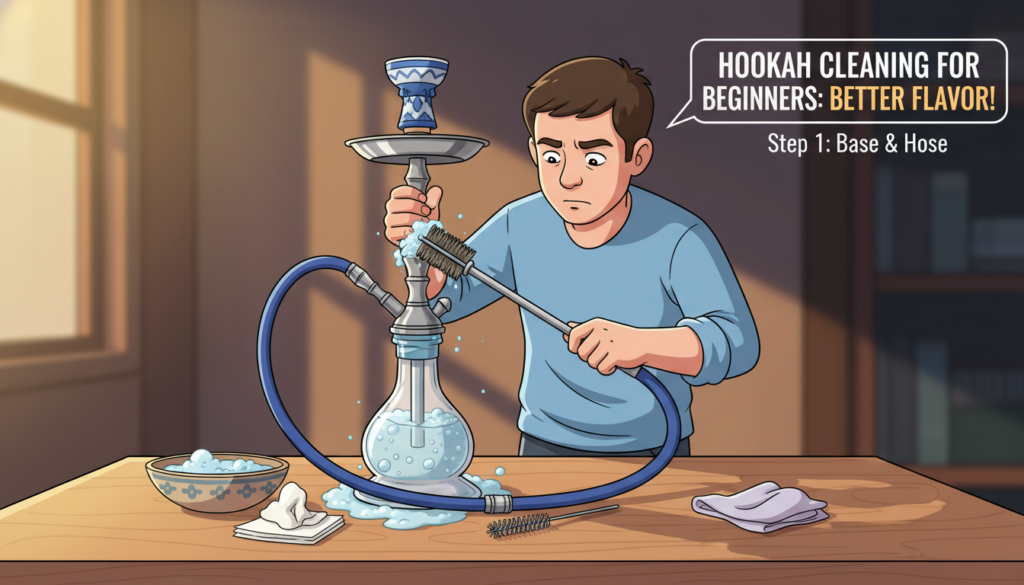
Cleaning Your Hookah for Better Flavour
Cleaning your hookah is key to enjoying pure flavors every time. Many beginners notice their shisha tastes bad after a few uses. This is because residue from previous sessions builds up and ruins the fresh tobacco.
Think of your hookah like a cooking pan. If you don’t wash it after dinner, the next meal will taste like the last one. Your hookah works the same way, except the stakes are even higher because molasses, tobacco particles, and smoke oils coat every surface after just one session.
A solid hookah maintenance guide starts with understanding that cleaning isn’t optional—it’s essential. This section will show you exactly how to keep your equipment in top condition so every bowl tastes exactly as it should.
Why Clean After Every Session
The tobacco you smoke leaves behind more than just pleasant memories. Molasses residue drips down your stem, coating the interior walls. Smoke oils settle in your base water and cling to glass surfaces. If you leave these substances sitting overnight, they begin to develop unpleasant odors that will haunt your next session.
Even worse, moisture combined with residue creates the perfect environment for mold growth. Within just a few days, you might notice dark spots or fuzzy patches inside your base or hose. This isn’t just gross—it’s a genuine health concern that can make you sick.
Regular cleaning after every session prevents these problems completely. You’ll notice the difference immediately: cleaner flavor, smoother smoke, and a setup that looks as good as it performs. For those shopping for hookah supplies for beginners, remember that cleaning tools should be part of your initial purchase.
Effective Cleaning Methods and Products
The most basic cleaning method works surprisingly well: warm water and regular dish soap. After your session ends and everything cools down, disassemble your hookah completely. Rinse each part under warm running water to remove loose residue.
For deeper cleaning, you have several effective options:
- Lemon juice and baking soda – Natural agents that break down molasses buildup without harsh chemicals
- Specialized hookah cleaning solutions – Formulated to dissolve tobacco residue and remove stubborn stains
- White vinegar solution – Mix equal parts vinegar and water for a powerful, natural cleaner
- Isopropyl alcohol and salt – Works like magic on glass bases by scrubbing away stuck-on grime
Investing in proper cleaning accessories makes maintenance much easier. Long-handled brushes reach deep into your stem where your hand can’t. Base brushes with soft bristles scrub your glass without scratching. These tools aren’t expensive, but they dramatically reduce cleaning time and effort.
Here’s a comparison of popular cleaning solutions to help you choose:
| Cleaning Solution | Best For | Effectiveness | Cost |
|---|---|---|---|
| Dish Soap & Water | Regular maintenance | Good for light residue | Very Low |
| Lemon Juice & Baking Soda | Natural deep cleaning | Excellent for molasses | Low |
| Specialized Hookah Cleaner | Stubborn buildup | Superior for tough stains | Moderate |
| Alcohol & Salt | Glass base restoration | Best for glass shine | Low |
Component-Specific Care Instructions
Each part of your hookah requires slightly different care. Your silicone hose is the easiest to maintain—simply rinse it with warm water after each use. Unlike traditional leather or fabric hoses that trap odors, silicone materials release residue easily and dry quickly without developing mold.
Your bowl needs special attention because burnt tobacco can cake onto the surface. Soak it in warm soapy water for 15 minutes, then use a small brush to scrub away any stuck particles. Clay bowls are porous and absorb flavors over time, so deep cleaning them regularly keeps your taste profiles pure.
The stem requires a long brush that reaches from top to bottom. Push the brush through several times, rotating as you go to clean the entire interior surface. Don’t forget to clean your downstem (the part that sits in the water) because molasses often drips down and hardens there.
Your base holds water that contains dissolved residue from smoke. Empty it immediately after your session—never let old water sit overnight. Wash the base with dish soap and a base brush, paying attention to the neck area where residue collects.
Consider adding a molasses catcher to your setup. This accessory fits between your bowl and stem, catching dripping juices before they enter your stem. It significantly reduces cleaning needs and keeps your stem interior much cleaner. This is one of those hookah supplies for beginners that pays for itself in saved cleaning time.
Replace your grommets when they become hard or cracked. Old grommets don’t seal properly, causing air leaks that affect flavor. They’re inexpensive and easy to swap out. Check your hose for wear every few months—if it starts retaining odors even after cleaning, it’s time for a replacement.
After washing all components, let everything dry completely before reassembling or storing. Moisture trapped in your hookah leads to mold and rust. Lay parts on a clean towel or drying mat in a well-ventilated area. Your stem should be stored upright so any remaining water drips out completely.
Optimal Hookah Setup Techniques
Mastering the basics of hookah setup is just the start. Now, it’s time to learn advanced techniques that make every session special. These methods help you get the most flavor, extend your session, and create unique experiences.
The key to a great session is in the details. By using creative packing and timing, you’ll enjoy your tobacco more. You’ll also discover new flavors you never knew existed.
Layering Techniques for Tobacco
Layering tobacco in your bowl can change your session. Instead of mixing everything, place different flavors at different depths. This creates a changing taste experience.
The density gradient method is a great way to pack. Pack the bottom of your bowl tightly and the top fluffier. This ensures even heating and good airflow.
Try horizontal layering too. Put lighter flavors at the bottom and stronger ones on top. As heat moves down, the flavors will change and evolve.
Sectional packing is another creative method. Use a wide bowl and pack different flavors in sections. This lets different tastes come out as you rotate your charcoal, making your session exciting.
Experiment with different tobaccos to find your favorite. Each brand and flavor reacts differently to layering, so try new things.
Mixing Flavours for Unique Profiles
Mixing flavors is where you can really show off your creativity. A good guide starts with knowing which flavors go well together. It’s about finding the right balance.
Mint is a great enhancer for most fruit flavors. Adding 20-30% mint to peach, watermelon, or berry makes it refreshing. Classic mixes like peach-mint or lemon-berry are always satisfying.
When mixing flavors, start with unequal ratios. A 70-30 or 60-40 blend works better than 50-50. This lets one flavor lead while the other supports it.
Here are some proven mixing strategies:
- Sweet and tart balance: Mix sweet flavors like grape or cherry with citrus for complexity
- Layered fruit blends: Combine tropical fruits with berries for depth and richness
- Creamy combinations: Add vanilla or cream-based flavors to smooth out sharp fruit tastes
- Spice accents: A touch of cinnamon or clove can transform simple apple or pear flavors
Keep track of your experiments by writing down what you use. When you find a great mix, you’ll want to make it again. This personal guide will help you create your signature blends.
Timing Your Session for Maximum Enjoyment
Timing is everything in a hookah session. Let the charcoal sit for a few minutes before your first draw. This lets the tobacco heat up and taste better.
Draw slowly to avoid tobacco getting in the hose. Gentle pulls make the smoke thicker and more flavorful than quick, harsh ones.
A typical session lasts 30 minutes to an hour. The sweet spot is usually 15-30 minutes in, when the flavors are at their best.
Hookah is not a race, so take your time. Rushing means missing the best flavors and smoke quality.
Know when to stop when your tobacco is spent. If flavors get harsh or smoke quality drops, it’s time for new tobacco. The best sessions last 45-60 minutes with 3-4 coals rotated well.
These advanced techniques, along with quality accessories, make you a true enthusiast. Every session is a chance to improve and discover new flavors.
Additional Accessories for Enhanced Flavour
Some accessories make a big difference in your hookah experience. They solve common problems that can ruin your sessions. With the right tools, you can control heat, keep flavors pure, and avoid issues.
Quality accessories turn your setup into something special. They make your sessions consistent and enjoyable every time.
Managing Heat with Precision Tools
Heat management devices change how you enjoy hookah. They keep your tobacco safe from direct heat.
HMDs are made from materials like aluminum or stainless steel that spread heat evenly. The Kaloud Lotus I+ is a great choice because it prevents hot spots.
Foil is cheaper but harder to use. It’s easy to over- or under-heat your tobacco.
Heat management devices do more than just control temperature. They protect your setup from wind and make coal rotation easy. These tools keep your bowl safe from interference and help your sessions last longer.
While HMDs cost more upfront, they save you money in the long run. They make your tobacco last longer and your flavors consistent. This means no more frustrating sessions.
Choosing the Right Hose
Knowing about different hookah hose types helps you pick the best one. Your choice affects flavor and how easy it is to draw.
Silicone hoses offer steady airflow and keep flavors clean when you clean them. They don’t hold odors like other materials. A quick rinse keeps them fresh.
Leather and fabric hoses look nice but hold flavors and moisture. You can’t wash them without damaging them. This means you’ll taste old flavors instead of fresh tobacco.
Think about these things when picking a hose:
- Diameter: Wider hoses are easier to draw from
- Length: Longer hoses are more comfortable but harder to draw from
- Handle materials: Good handles make it easier to hold and last longer
- Washability: Silicone hoses can be cleaned thoroughly for clean flavors
Keeping your hose clean is key to good flavor and smooth draws. Rinse silicone hoses with warm water after each use. Let them dry completely before storing to avoid moisture.
Preventing Air Loss
Air leaks can be a big problem for beginners. They make your smoke less dense and less flavorful.
Hookah grommets fix air leaks by creating tight seals that keep everything secure. They ensure steady airflow and consistent smoke. Without them, your smoke will be less dense.
You can find leaks by covering your hose port and trying to draw air. A good seal should feel tight. If air flows easily, you have a leak.
Quality grommets in the right sizes make airtight connections. They keep air out where it shouldn’t be. This means thicker, more flavorful smoke for you.
Check your grommets often for wear. Replace them if they’re loose or cracked. This simple step keeps your sessions great.
These essentials solve common problems for better smoke. Investing in quality accessories means better experiences every time.
Tips for Hosting a Hookah Session
Hosting a hookah session is more than just smoke and flavor. It’s about creating a memorable experience for your friends. A good host thinks about making everyone comfortable and engaged. Your hookah kit becomes a tool for connection and fun.
Preparation is key to a great session. Have everything ready before guests arrive. This way, you can enjoy the moment without stress. It turns you from a hookah owner to a host who creates lasting memories.
Creating the Perfect Environment
Start with the space. Arrange seating in a circle around the hookah for easy access. This setup encourages conversation and makes passing the hose easy.
Lighting sets the mood. LED lights add style and ambiance. Choose warm, soft lighting to create a cozy atmosphere.
Background music is important. Choose tracks that encourage conversation without being too loud. Keep all accessories within reach, like extra coals and tobacco.
Details matter for a smooth session. Use coasters to protect furniture and keep the space clean. Hookah hose holders prevent dirt and keep things hygienic.
Don’t forget about ventilation. Open windows or use fans to keep the air fresh. This makes the session enjoyable for everyone, even those sensitive to smoke.
Teaching Flavor Appreciation
Being an informative host enhances your guests’ experience. Describe flavors in terms of familiar foods or experiences. This helps them understand what they’re tasting.
Explain the differences between tobacco types. Blonde leaf tobaccos are lighter, while dark leaf varieties are stronger. This knowledge helps guests make informed choices.
Teach newcomers proper smoking technique. Show them how to draw slowly and explain the impact on flavor and smoke. Explain how multi-hose setups work if you have one.
Offer a variety of flavors for guests to try. Explain your adjustments and why. This turns your hosting into an educational experience.
Making Sessions Interactive
Involve guests in the session. Let them vote on flavors to try next. This makes everyone feel involved and might lead to new favorites.
Compare different packing methods or tobacco brands. Set up two bowls and let guests taste the difference. These experiments are fun and educational.
Try a blind flavor guessing game. Guests try to identify flavors without knowing what’s in the bowl. This sparks conversation and reveals taste nuances.
Use personal hookah mouth tips to improve hygiene. Offer these to guests to make them feel more comfortable. Have plenty on hand for each person.
Multi-hose adapters make sessions more interactive. They allow several people to smoke at once. Explain how they work so guests know what to do.
Remember, your hookah kit is a conversation starter and teaching tool. Share your knowledge and enthusiasm. This creates a welcoming atmosphere for everyone to ask questions and experiment together.
Troubleshooting Common Flavour Issues
Even with perfect setup, you might face problems that ruin your session. This guide helps you quickly solve common issues.
Recognizing Burnt Tobacco
Burnt taste is harsh and makes you cough. Check your tobacco if this happens. Dark ash or charred spots mean too much heat.
Move coals to the bowl’s edges. Remove a coal if the problem persists. Packing tobacco too close to heat causes quick burning. Leave 2-3mm space between tobacco and heat.
Fixing Harsh Smoke
Smoke that feels too strong but isn’t burnt comes from drawing too hard. Pull your hose slower and gentler. Check your water level if harshness continues.
Low water doesn’t cool smoke right. Quick-light coals can add chemical taste. Switch to natural coconut coals for cleaner flavor. Replace your bowl when tobacco loses flavor instead of trying to extend dying sessions.
Improving Weak Draw
Weak smoke means airflow problems or not enough heat. Test your draw before adding coals. If drawing is hard, check all connections.
Tobacco packed too tightly blocks airflow. Repack with looser density. Missing grommets create air leaks that reduce smoke. Keep hookah starter kit accessories like backup grommets and cleaning brushes handy for fixing problems fast.
FAQ
What size charcoal should I use for my hookah bowl?
The right charcoal size depends on your bowl size and tobacco type. For small to medium bowls, 25mm cube coals work well. They provide good heat control without overwhelming your tobacco.
Larger 26mm cubes burn longer and produce more heat. They’re ideal for bigger bowls or dense tobacco packs. If you’re just starting out, 25mm natural coconut charcoal cubes offer the best balance of heat output and manageability.
You’ll typically use 2-3 coals for most beginner setups. Having quality tongs as part of your essential hookah accessories for beginners makes handling different charcoal sizes much safer.
Is natural coconut charcoal really better than quick-light charcoal?
Yes, natural coconut charcoal is significantly better for flavor quality. It takes 8-12 minutes to light on a charcoal burner. It burns cleaner without chemical additives, produces minimal ash, and lasts 60-90 minutes per session.
Most importantly, it doesn’t add any off-flavors to your tobacco. Quick-light charcoal ignites in seconds but contains chemical accelerants that can create harsh smoke and unpleasant tastes. For the best flavor experience, natural coconut charcoal is worth the extra lighting time.
A quality charcoal burner should be considered one of your must-have hookah accessories.
How do I know if I’ve packed my hookah bowl correctly?
A properly packed bowl should have tobacco loosely distributed (for blonde leaf) or slightly denser (for dark leaf). There should be a small gap of about 2-3mm between the tobacco and your foil or heat management device.
Before adding heat, take a test draw—you should feel slight resistance but air should flow smoothly without blockage. If drawing feels like sucking through a straw with your finger partially covering it, that’s perfect.
If there’s no resistance at all, your pack is too loose; if you can barely draw any air, it’s too tight. Using a phunnel bowl like the Kaloud Samsaris makes this easier. It has a raised center spire that prevents tobacco juices from dripping into your stem.
Having a hookah fork in your hookah accessory set helps you achieve consistent packing every time.
How much water should I put in my hookah base?
Your downstem should be submerged about 1 to 1.5 inches below the water surface. This provides optimal filtration and smoke cooling without making your draw too restrictive.
The easiest way to test this is to take a gentle draw before adding your bowl and charcoal—you should hear a pleasant bubbling sound and feel moderate resistance. If drawing feels too hard, you have too much water; if it feels too easy with minimal bubbling, you need more water.
Different base shapes may require slight adjustments, but this 1-1.5 inch rule works for most setups. Having hookah starter kit accessories like base protectors and coasters helps prevent water damage to your furniture while you’re experimenting with different levels.
Which tobacco brand should I start with as a beginner?
Al Fakher is widely considered the best brand for beginners. It offers consistent quality, a huge variety of flavors, and is very forgiving with heat management. Their blonde leaf tobacco is easy to pack and doesn’t require precise temperature control to produce good flavor.
Popular beginner-friendly flavors include Double Apple, Mint, Watermelon, and Peach. Fumari is another excellent choice if you want premium American-made tobacco with bold, authentic flavors. Start with single-flavor tobaccos before experimenting with mixing your own combinations.
Choose fruit or mint flavors which tend to be more approachable than dessert or exotic blends. Many hookah accessory bundles include tobacco sample packs that let you explore different options without buying large quantities.
Do I really need a wind cover for indoor smoking?
While wind covers are most obviously beneficial outdoors, they’re also valuable indoors if you have air conditioning, ceiling fans, or any air circulation that affects your coal temperature. Even gentle air movement can cause uneven heating and make your coals burn faster on one side, leading to inconsistent flavor throughout your session.
A wind cover creates a stable heat environment around your bowl, ensuring your tobacco heats evenly and your coals maintain consistent temperature. Wind covers are relatively inexpensive additions to your essential hookah supplies for beginners that solve a problem you might not even realize you have.
How should I position my charcoal on the bowl?
Start by placing your coals around the outer edge of the bowl. This “ring method” allows the tobacco to heat gradually from the outside in, preventing the harsh, burnt taste that comes from concentrated heat in one spot. For most small to medium bowls, use 2-3 coals positioned evenly around the perimeter.
After about 10-15 minutes, once the tobacco is warmed up and producing good smoke, you can move coals slightly closer to the center if needed. Rotate your coals every 10-15 minutes to ensure even heating throughout your session. If the smoke becomes harsh or tastes burnt, immediately move coals further toward the edges or remove one coal.
Heat management devices are considered top hookah accessories because they simplify this entire process, distributing heat evenly without requiring constant coal repositioning.
How often should I clean my hookah?
You should clean your hookah after every single session for the best flavor quality. Even one session leaves molasses residue, tobacco particles, and smoke oils coating your stem, base, and hose, and this buildup taints future sessions with stale flavors.
A quick rinse with warm water and a brush through the stem takes just 5-10 minutes and makes a dramatic difference in flavor purity. Deep clean with specialized hookah cleaning solutions or lemon juice and baking soda once a week if you smoke daily. Your silicone hose should be rinsed after each use, your bowl should be scraped clean of burnt residue, and grommets should be replaced when they show wear.
Proper cleaning supplies are essential hookah supplies for beginners because without them, even premium tobacco and equipment won’t deliver the clean, true flavors you’re seeking.
What’s the best way to mix different tobacco flavors?
Start with a 70-30 or 60-40 ratio when mixing flavors—this gives one flavor dominance while the other adds complexity. Mint enhances almost any fruit flavor, making it the most versatile mixer. Classic combinations that consistently work include peach with mint, lemon with berry, watermelon with mint, and double apple with orange.
Mix your tobaccos thoroughly in a separate container before packing to ensure even flavor distribution throughout your session. Begin by mastering single flavors so you understand each tobacco’s characteristics before combining them. Keep notes on successful combinations with exact ratios so you can recreate them.
Some hookah beginners kits include small containers perfect for premixing and storing your custom blends.
What are heat management devices and do I need one?
Heat management devices (HMDs) like the Kaloud Lotus are metal containers that hold your charcoal and sit on top of your bowl, creating a controlled heat environment. Instead of placing coals directly on foil, you put them inside the HMD, which distributes heat evenly across your tobacco while preventing direct contact that causes burning.
HMDs eliminate the need for foil and poking holes, make coal rotation easier, protect against wind, and dramatically improve flavor consistency by maintaining steady temperature. While they represent a larger upfront investment than foil, they’re considered must-have hookah accessories by experienced smokers because they make heat management almost foolproof.
For beginners, an HMD removes much of the guesswork and helps you achieve great flavor from your very first sessions.
Why does my hookah hose matter for flavor?
Your hose affects flavor in two major ways: material and airflow. Traditional leather and fabric hoses look attractive but trap odors and residue from previous sessions, causing new tobacco to taste like a muddy mixture of everything you’ve ever smoked. They also can’t be washed, so the buildup only gets worse.
Modern silicone hoses are completely washable, flavor-neutral (you taste only your tobacco, not residue), and typically offer wider diameter for easier draws with less resistance. A quality silicone hose is one of the beginner hookah essentials because it ensures every session tastes fresh and true to the tobacco you’re smoking.
Wider hoses provide easier, more comfortable draws, while hose length affects resistance (longer creates slightly more resistance but better positioning flexibility).
How do I know if my hookah has air leaks?
To test for leaks, cover the hose port with your hand (or plug it with your hose) and try to draw air through the hose. A properly sealed hookah should create significant resistance—you shouldn’t be able to draw much air at all. If air flows easily, you have a leak somewhere in the system.
Check all connection points: where the bowl meets the stem, where the stem enters the base, where the hose connects to the stem, and the purge valve. The most common culprit is worn or missing grommets, which are the small rubber seals that create airtight connections.
Having backup grommets in various sizes as part of your hookah accessory set lets you quickly replace worn ones. Even small leaks dramatically reduce smoke density and flavor intensity because you’re drawing regular air instead of smoke through your tobacco.
What causes burnt taste and how do I fix it?
Burnt taste comes from your tobacco getting too hot, which happens when you use too many coals, place coals too close together, start with coals directly on top of the tobacco instead of on the edges, or pack tobacco too close to your heat source. You’ll recognize it by harsh, acrid smoke that makes you cough, a charred smell, and dark ash on the tobacco.
To fix it immediately, remove one coal and place remaining coals further toward the bowl edges. If the taste doesn’t improve after a few minutes, the tobacco may be damaged beyond recovery and you’ll need to repack with proper spacing—leave 2-3mm between your tobacco and foil or heat management device.
Prevention is easier than fixing, so always start with fewer coals than you think you need (you can always add more) and position them around the outer edge of the bowl first.
Why is my hookah smoke harsh but not burnt?
Harshness without burnt taste usually comes from drawing too aggressively (which pulls excessive heat through the tobacco), using quick-light charcoal that adds chemical taste, insufficient water in your base reducing smoke cooling, or simply smoking the tobacco past its prime when flavors have been depleted. The solution depends on the cause: take slower, gentler draws instead of aggressive pulls; switch to natural coconut charcoal for cleaner smoke; add more water to your base until your downstem is submerged 1-1.5 inches; or refresh your bowl with new tobacco if you’ve been smoking for 60+ minutes.
Sometimes harshness also indicates you need to clean your hookah—residue buildup from previous sessions creates off-flavors that make smoke uncomfortable. Having proper cleaning supplies as part of your hookah supplies for beginners helps you maintain the clean, smooth smoke you’re seeking.
What should I do if my hookah produces weak smoke?
Weak smoke usually means either inadequate heat or airflow restriction. First, check that your charcoal is fully lit—half-lit coals won’t generate enough heat. If coals are fully lit but smoke is weak, you may need to add another coal or move existing coals slightly closer to the center of your bowl.
Check your water level—if it’s too high, it creates excessive resistance that makes drawing difficult and reduces smoke production. Test your pack by taking a draw before adding heat; if it feels completely blocked, your tobacco is packed too tightly and needs to be repacked looser. Also check all connections for air leaks by covering the hose port and trying to draw air—you should feel strong resistance if the seal is good.
Make sure your hose isn’t clogged by blowing through it (away from the hookah) to clear any blockages. Having a hookah beginners kit with backup grommets and cleaning tools helps you quickly address these common issues.
How long should a good hookah session last?
A properly managed hookah session with quality natural coconut charcoal typically lasts 45-60 minutes with excellent flavor throughout. You’ll hit peak flavor around 15-30 minutes in, once the tobacco is fully warmed and producing thick, flavorful smoke.
After 45-60 minutes, flavor quality begins to decline as the tobacco becomes depleted, and continuing to smoke beyond this point often produces harsh, weak smoke that’s unpleasant. Using 3-4 coals that you rotate every 10-15 minutes helps maintain consistent heat and extend your session to the full hour.
If your session is ending much sooner, you may be using too much heat (burning through tobacco faster) or quick-light charcoal (which burns faster than natural coconut). Instead of trying to extend a dying bowl, it’s better to refresh with new tobacco for another quality session.
Proper timing is one of the beginner hookah essentials that separates mediocre experiences from truly enjoyable ones.
Can I use ice or other additives in my hookah base?
Yes, you can experiment with additives in your base water, but plain cold water works perfectly well for most sessions. Ice added to your base water provides extra cooling, making smoke even smoother on your throat—this is nice during hot weather or for extended sessions.
Some smokers add small amounts of fruit juice for subtle flavor enhancement, though this works better with matching tobacco flavors (like orange juice with citrus tobacco). Adding milk creates thicker, more visible smoke clouds, but you must clean your hookah immediately after the session because milk spoils quickly and creates terrible odors if left inside.
Most experienced smokers find that these additives make minimal difference to actual flavor—your tobacco choice and heat management matter much more. If you do experiment with additives, having proper cleaning supplies from your hookah accessory bundle is essential because sugary liquids and milk require more thorough cleaning than plain water.
What’s the difference between phunnel bowls and traditional Egyptian bowls?
Phunnel bowls feature a raised center spire with tobacco packed around it, while traditional Egyptian bowls have multiple small holes in the bottom. The phunnel design prevents tobacco juices and molasses from dripping down into your stem, which keeps your smoke clean and flavorful while making cleanup easier.
With Egyptian bowls, the liquid nature of modern shisha often drips through the bottom holes, creating harsh smoke and messy stems. Phunnel bowls like the Kaloud Samsaris are considered essential hookah accessories for beginners because they’re more forgiving—you can pack them slightly incorrectly and yet get decent results.
Phunnel bowls also work better with heat management devices, which sit perfectly on top of the spire, making them the preferred choice for flavor-focused sessions.
Should I buy a complete hookah beginners kit or individual accessories?
A complete hookah beginners kit is usually the better choice when you’re just starting because it includes all the essential components that work well together—hookah, bowl, hose, charcoal burner, tongs, and often sample tobacco. Buying a coordinated kit ensures compatibility (correct grommet sizes, appropriate hose length, bowl that fits your stem) and typically costs less than purchasing each item separately.
Quality starter kits from reputable brands include must-have hookah accessories like cleaning brushes, extra grommets, and sometimes even a heat management device. Once you’ve gained experience and identified your preferences, you can upgrade individual components (like adding a premium silicone hose or a phunnel bowl) while using the solid foundation your starter kit provided.
The main disadvantage of kits is that you might get accessories you later replace, but for beginners, the convenience and cost savings usually outweigh this concern.